#dusk $DUSK @Dusk
ما زلت أرى الحديث عن تجزئة أصول العالم الحقيقي (RWA) وكأن إنشاء الأصل هو الجزء الأصعب. بدأت أظن أن جزء الدفع هو المكان الذي تظهر فيه الاحتكاكات الحقيقية.
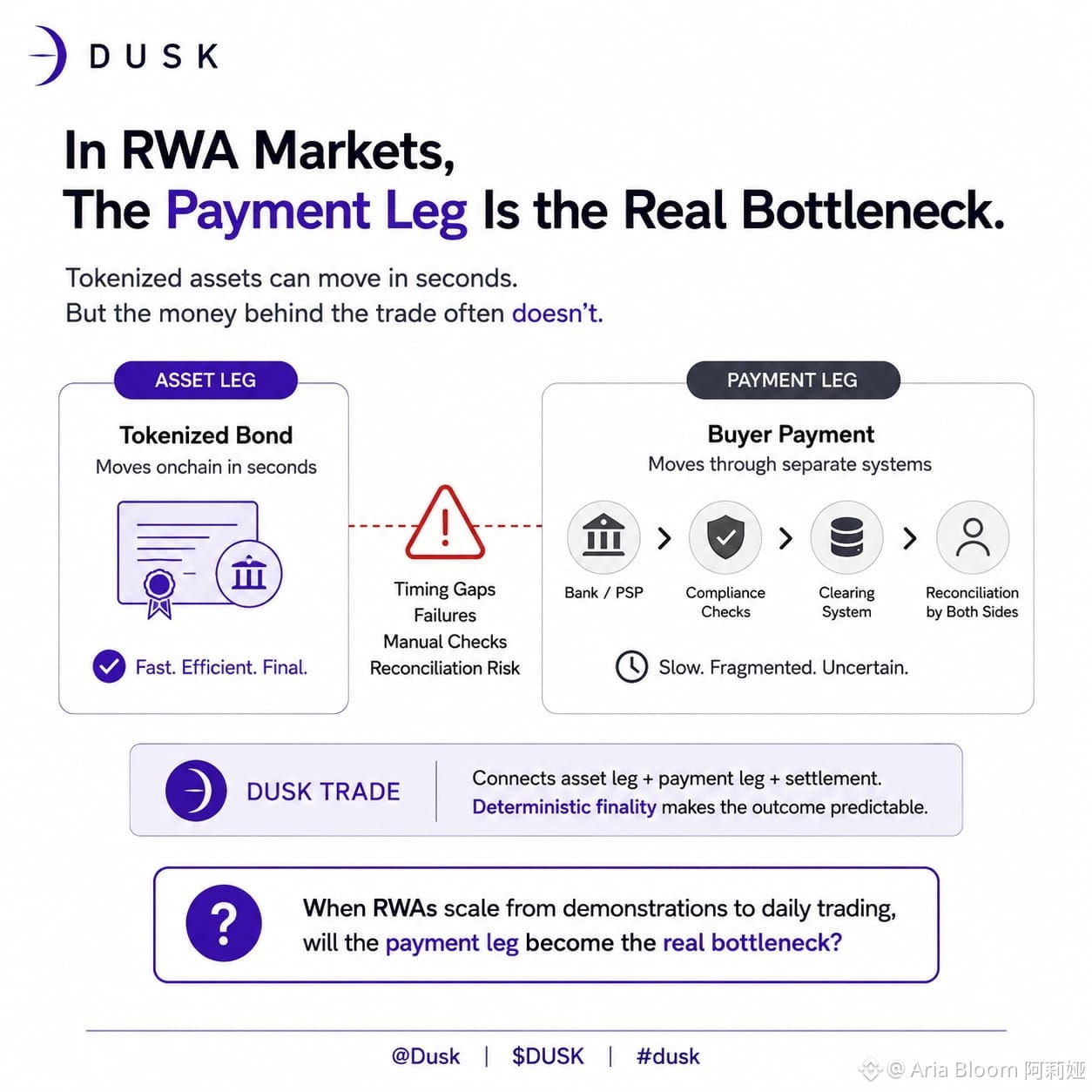
تخيّل سندًا مُرمّزًا يتم تداوله خلال ثوانٍ، لكن مدفوعات المشتري ما تزال يتعين أن تمر عبر نظام منفصل، ثم يحتاج الطرفان إلى التوفيق والتأكد مما إذا كان الأصل والمال قد تم تسويتهما فعليًا معًا. الرمز سريع، لكن المعاملة حوله ما تزال بطيئة. هذه الفجوة تزداد أهمية كلما ارتفعت الأحجام، لأن كل تحويل إضافي يخلق مكانًا آخر لعدم تطابق التوقيت، أو للمدفوعات الفاشلة، أو لفحوصات يدوية.
ما لفت انتباهي حول Dusk هو أن بنيتها التحتية للسوق تتعامل مع تنسيق المدفوعات باعتباره جزءًا من سير العمل، وليس شيئًا يمكن تجاهله بعد الترميز. تصميم Dusk Trade لديها يربط بين جزء الأصل وجزء الدفع وعملية التسوية، بينما يُفترض أن تجعل “النهائية الحتمية” لدى Dusk النتيجة قابلة للتنبؤ.
لكن هنا توجد مسألة عملية. لا يفيد مسار تسوية أكثر نظافة على السلسلة إلا إذا كان جانب الدفع قادرًا فعليًا على دعم السيولة وفحوصات الامتثال وسلوك المستخدم الذي تتطلبه الأسواق الحقيقية. وإلا فقد ننتهي مع أصول مُرمّزة بشكل جميل تنتظر سككًا مالية قديمة.
لذا فأنا فضولي: عندما تتوسع RWAs من العروض التجريبية إلى التداول اليومي، هل سيصبح جزء الدفع هو عنق الزجاجة الحقيقي؟
ما زلت أرى الحديث عن تجزئة أصول العالم الحقيقي (RWA) وكأن إنشاء الأصل هو الجزء الأصعب. بدأت أظن أن جزء الدفع هو المكان الذي تظهر فيه الاحتكاكات الحقيقية.
تخيّل سندًا مُرمّزًا يتم تداوله خلال ثوانٍ، لكن مدفوعات المشتري ما تزال يتعين أن تمر عبر نظام منفصل، ثم يحتاج الطرفان إلى التوفيق والتأكد مما إذا كان الأصل والمال قد تم تسويتهما فعليًا معًا. الرمز سريع، لكن المعاملة حوله ما تزال بطيئة. هذه الفجوة تزداد أهمية كلما ارتفعت الأحجام، لأن كل تحويل إضافي يخلق مكانًا آخر لعدم تطابق التوقيت، أو للمدفوعات الفاشلة، أو لفحوصات يدوية.
ما لفت انتباهي حول Dusk هو أن بنيتها التحتية للسوق تتعامل مع تنسيق المدفوعات باعتباره جزءًا من سير العمل، وليس شيئًا يمكن تجاهله بعد الترميز. تصميم Dusk Trade لديها يربط بين جزء الأصل وجزء الدفع وعملية التسوية، بينما يُفترض أن تجعل “النهائية الحتمية” لدى Dusk النتيجة قابلة للتنبؤ.
لكن هنا توجد مسألة عملية. لا يفيد مسار تسوية أكثر نظافة على السلسلة إلا إذا كان جانب الدفع قادرًا فعليًا على دعم السيولة وفحوصات الامتثال وسلوك المستخدم الذي تتطلبه الأسواق الحقيقية. وإلا فقد ننتهي مع أصول مُرمّزة بشكل جميل تنتظر سككًا مالية قديمة.
لذا فأنا فضولي: عندما تتوسع RWAs من العروض التجريبية إلى التداول اليومي، هل سيصبح جزء الدفع هو عنق الزجاجة الحقيقي؟