#dusk $DUSK @Dusk
لم يستقر الغسق على نموذج معاملات واحد. بل يدير نموذجين.
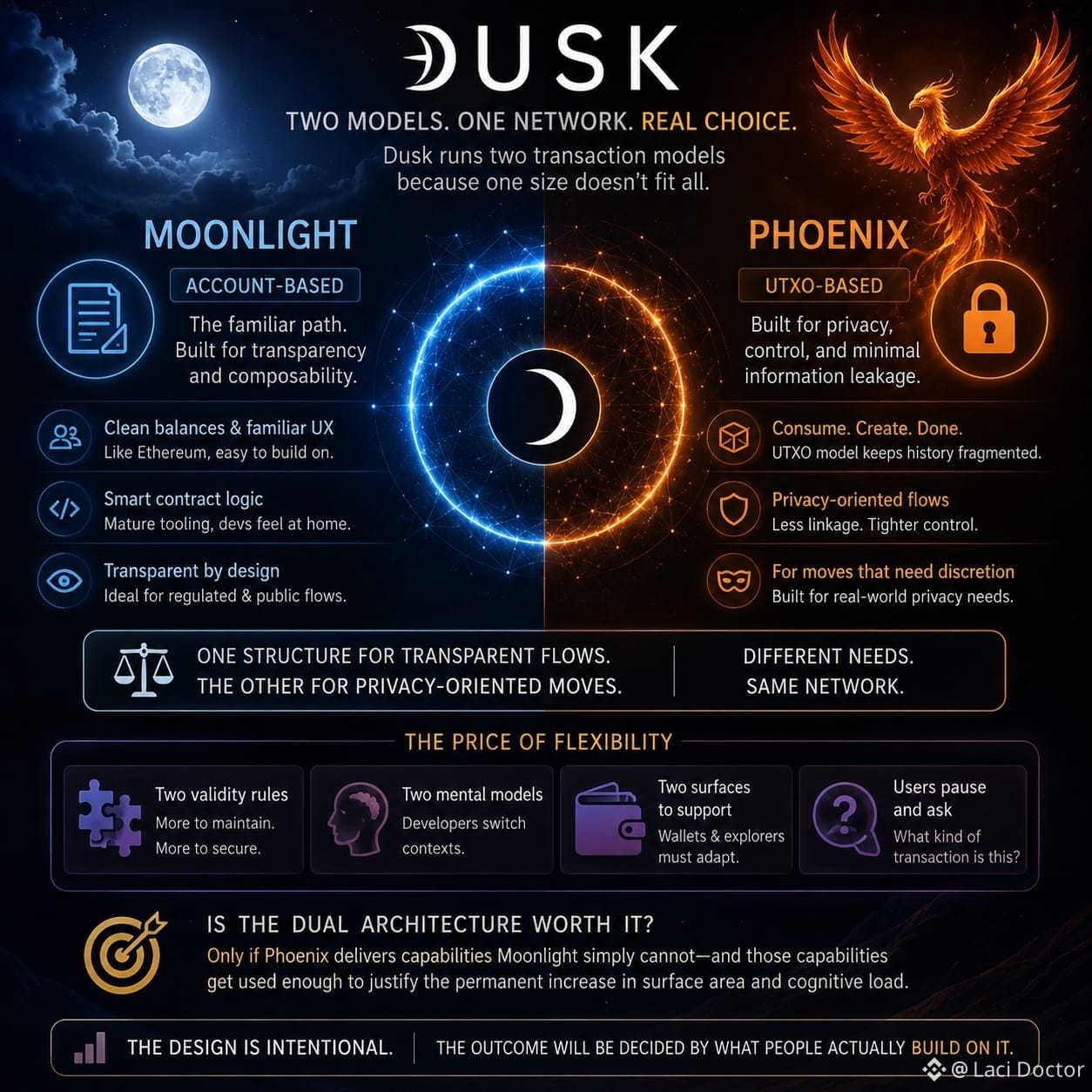
يظل ضوء القمر قائمًا على الحساب—أرصدة نظيفة، ومنطق عقود ذكية مألوف، والمسار الذي يعرفه معظم المطورين بالفعل. أمّا فينيكس فينتقل بالكامل إلى UTXO: استهلك، وأنشئ، واترك تاريخًا متقطعًا أقل ليكون العالم قادرًا على متابعته. بنية واحدة لتدفقات شفافة ومنظَّمة. والأخرى مُصمَّمة للحركات التي تُعنى بالخصوصية وتحتاج إلى تحكم أدق فيما قد يتسرّب.
هذا الانقسام متعمَّد. إذا أجبرت كل شيء على نموذج واحد، فإما أن تُضعف أدوات الخصوصية أو تُشوّه الجانب الشفاف ليصبح أمرًا غير مريح. إن الحفاظ على النموذجين يمنح مرونة حقيقية. لكن كل نموذج إضافي له ثمن: قواعد تحقق مزدوجة، وخريطتان ذهنيتان، ومساحتان ينبغي على المحافظ والواجهات البالغة دعمُهما. يبدّل المطورون سياقاتهم. ويتوقف المستخدمون ليتساءلوا عن نوع معاملة ينظرون إليها. تتراكم التعقيدات بهدوء.
فهل البنية المزدوجة تستحق ذلك؟ فقط إذا وفّر فينيكس قدرات لا يستطيع ضوء القمر تقديمها ببساطة، وفقط إذا استُخدمت تلك القدرات بما يكفي لتبرير الزيادة الدائمة في مساحة السطح والحمل الذهني. تبدو التصميمات مقصودة. إن كان ذلك سيبقى ميزة أم يتحول إلى عبء ميت، فسيُحسم بما يفعله الناس فعليًا عليه—لا بما مدى براعة الخيار الأصلي الذي بدا عليه.$DUSK 👇
لم يستقر الغسق على نموذج معاملات واحد. بل يدير نموذجين.
يظل ضوء القمر قائمًا على الحساب—أرصدة نظيفة، ومنطق عقود ذكية مألوف، والمسار الذي يعرفه معظم المطورين بالفعل. أمّا فينيكس فينتقل بالكامل إلى UTXO: استهلك، وأنشئ، واترك تاريخًا متقطعًا أقل ليكون العالم قادرًا على متابعته. بنية واحدة لتدفقات شفافة ومنظَّمة. والأخرى مُصمَّمة للحركات التي تُعنى بالخصوصية وتحتاج إلى تحكم أدق فيما قد يتسرّب.
هذا الانقسام متعمَّد. إذا أجبرت كل شيء على نموذج واحد، فإما أن تُضعف أدوات الخصوصية أو تُشوّه الجانب الشفاف ليصبح أمرًا غير مريح. إن الحفاظ على النموذجين يمنح مرونة حقيقية. لكن كل نموذج إضافي له ثمن: قواعد تحقق مزدوجة، وخريطتان ذهنيتان، ومساحتان ينبغي على المحافظ والواجهات البالغة دعمُهما. يبدّل المطورون سياقاتهم. ويتوقف المستخدمون ليتساءلوا عن نوع معاملة ينظرون إليها. تتراكم التعقيدات بهدوء.
فهل البنية المزدوجة تستحق ذلك؟ فقط إذا وفّر فينيكس قدرات لا يستطيع ضوء القمر تقديمها ببساطة، وفقط إذا استُخدمت تلك القدرات بما يكفي لتبرير الزيادة الدائمة في مساحة السطح والحمل الذهني. تبدو التصميمات مقصودة. إن كان ذلك سيبقى ميزة أم يتحول إلى عبء ميت، فسيُحسم بما يفعله الناس فعليًا عليه—لا بما مدى براعة الخيار الأصلي الذي بدا عليه.$DUSK 👇