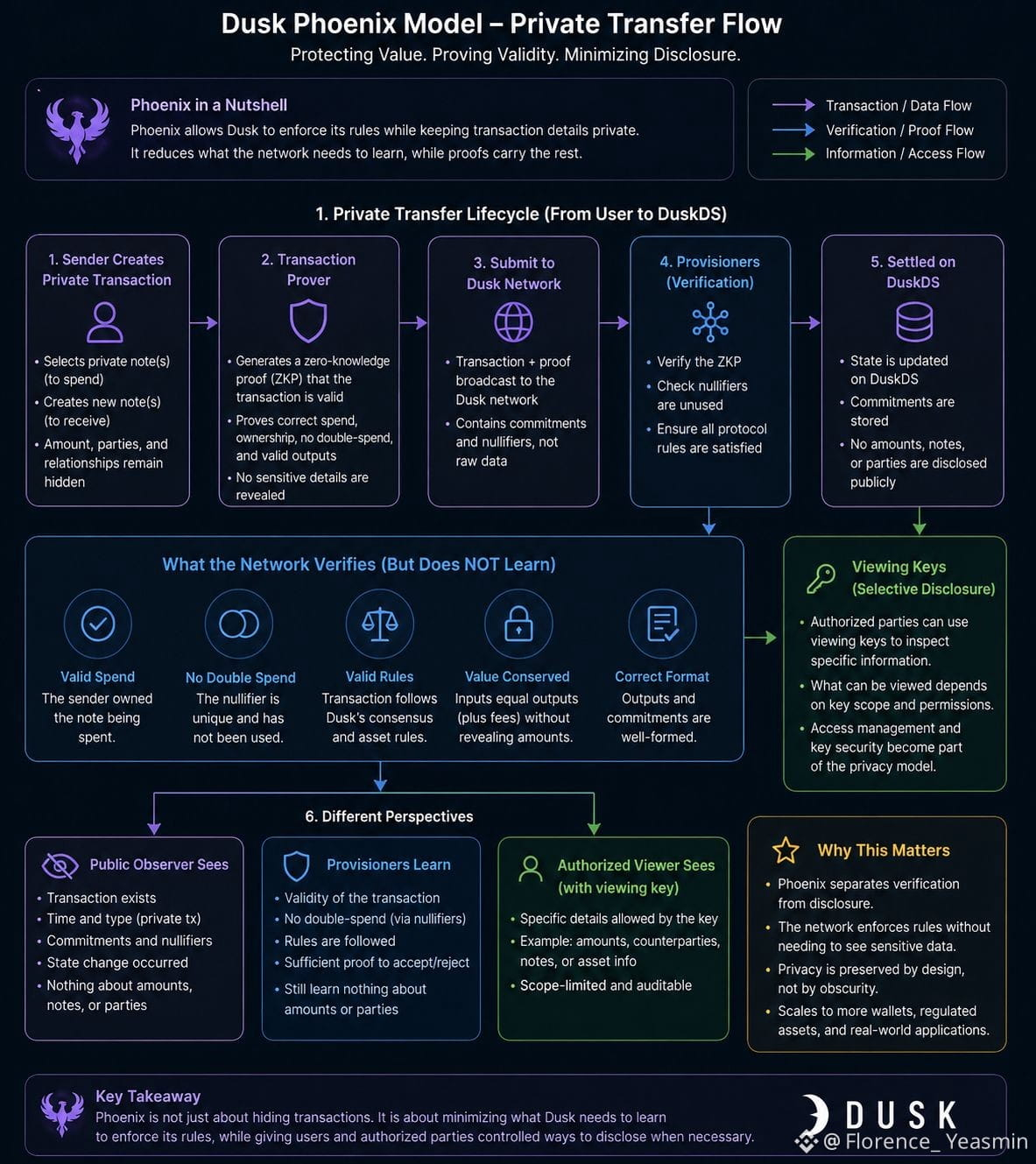
#dusk $DUSK $WAL $ACE @Dusk لاحظت الجزء المفيد من نموذج Dusk’s Phoenix عندما حاولت تتبّع تحويلًا خاصًا من الخارج. استقرّت المعاملة على DuskDS، وتقدّمّت الحالة للأمام، لكن لم أستطع إعادة بناء القصة المالية نفسها التي كنت أتوقعها من تحويلٍ عامٍّ عادي من حساب عام. بدا ذلك غريبًا في البداية. ما زال مُقدّمو خدمات Dusk يحتاجون إلى ما يكفي من الأدلة لقبول المعاملة أو رفضها، لكن Phoenix لا يتعين عليه كشف المبلغ أو الملاحظة الدقيقة التي يتم استهلاكها، أو العلاقة بين الأطراف. تحمل البراهين معظم هذه المسؤولية. تمنح المُبطلات Dusk طريقة لاكتشاف متى يتم إعادة استخدام القيمة الخاصة دون تحويل الملاحظة الأصلية إلى مؤشرٍ عامّ واضح. لذلك توقفت عن النظر إلى Phoenix على أنه مجرد «إخفاء المعاملات». بل هو أقرب إلى تقليل ما يحتاج إلى تعلمه شبكت Dusk من أجل فرض قواعدها. تجعل مفاتيح العرض هذا الحدّ أقل صرامة، وربما عندها تبدأ الأسئلة التشغيلية الأصعب. يمكن لطرفٍ مُصرّح له فحص معلومات لا يستطيعها المراقبون العاديون، لكن عندئذٍ يصبح تسيير الوصول جزءًا من نموذج الخصوصية أيضًا. كنت سأراقب ما يحدث عندما يُستخدم Phoenix عبر محافظ أكثر، وأصول خاضعة للتنظيم، وتطبيقات Dusk، لأن هذا هو المكان الذي يتم فيه اختبار هذا الفصل بين التحقق والإفصاح بشكل صحيح.


نشر

--
ب
DUSKUSDT
دائم
50X
مغلق
الأرباح والخسائر المحققة (USDT)
-0.01
-8.04%
سعر الدخول
0.06579
مُتوسط سعر الإغلاق
0.06583
من بيانات صفقة @jui_1
وقت الإغلاق: 2026-08-15 15:30
إخلاء مسؤولية: يتضمن آراء جهات خارجية. لا تُعدّ نصيحة. يُمكن استخدام Binance AI دون أي ضمان. اطلع على الشروط والأحكام.