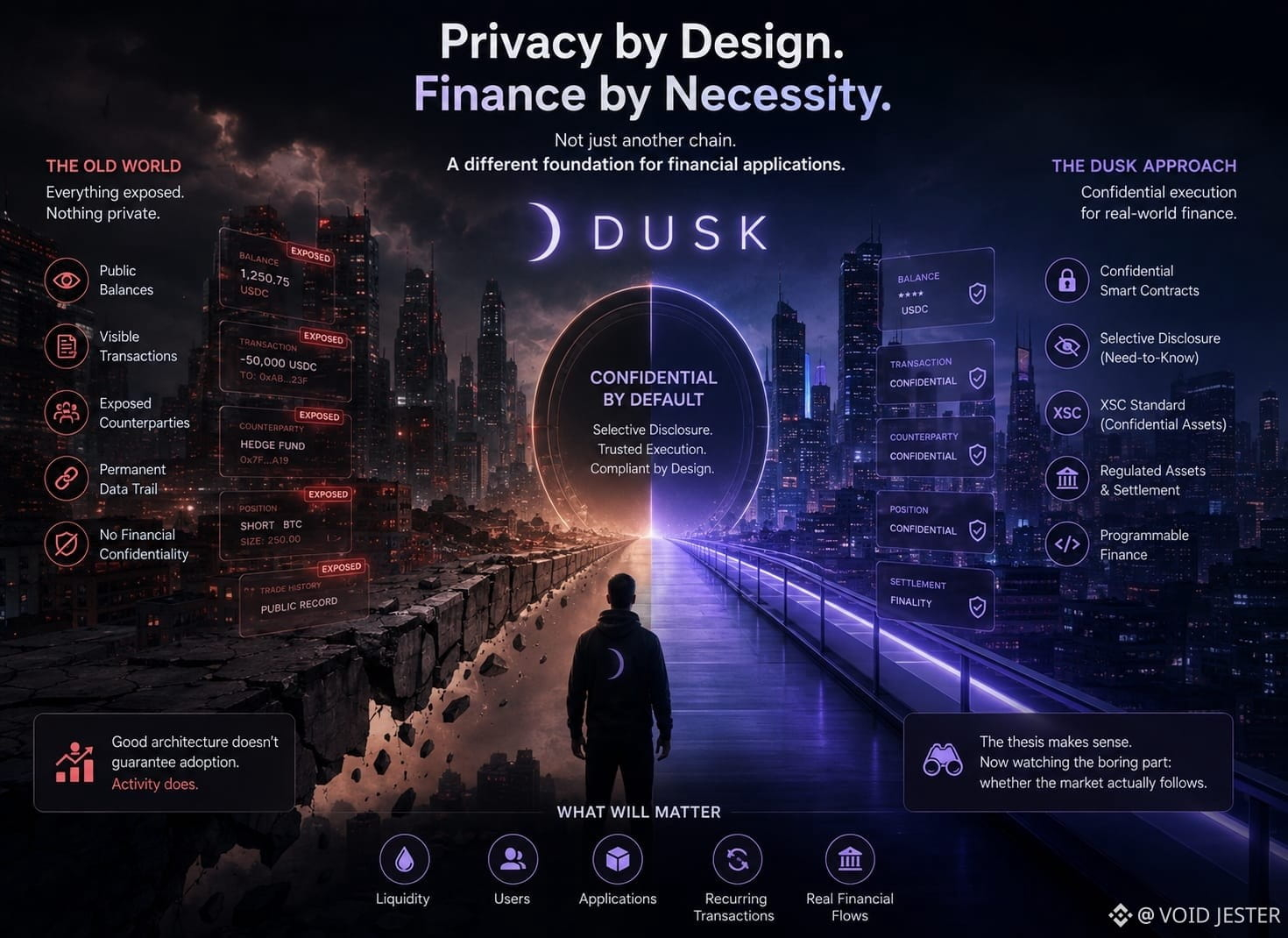
ألاحظ أن Dusk يعيدني دائمًا للعودة لسبب واحد: يبدو أنه لا يعامل الخصوصية كميزة يمكنك لاحقًا تركيبها على سلسلة. الفكرة أقرب إلى جعل السرّية جزءًا من كيفية تنفيذ تطبيقات مالية من الأساس—مع عقود ذكية سرّية، وإفصاح انتقائي، ومعيار XSC موجود داخل بنية المنظومة. 🏗️
لقد رأيت الكثير من المشاريع تبني قصة خصوصية مقنعة ثم تصطدم بالحائط نفسه: لا أحد يهتم ببنية تحتية أنيقة إذا لم توجد تحتها حركة كافية. 📈
وهذا هو المكان الذي ما زلت غير متأكدًا فيه من Dusk.
الأطروحة تبدو منطقية بالنسبة لي. الأسواق المالية ربما لا تريد كشف كل رصيد وكل مركز وكل تفاصيل الأطراف المقابلة وكل تفاصيل المعاملة بشكل دائم. من الواضح أن Dusk يبني حول هذه المشكلة، وأن مجموعته الحالية موجهة مباشرةً إلى الأصول المنظمة، والتسوية، والتمويل القابل للبرمجة.
لكن البنية المعمارية لا تخلق الطلب من تلقاء نفسها.
لا زلت أفكر في الفجوة بين “قد يكون مفيدًا” و“هل الناس تستخدمه بالفعل؟”. السيولة، المستخدمون، التطبيقات، المعاملات المتكررة، والتدفقات المالية الحقيقية—كل ذلك أصعب في “صناعته” من تصميم تقني جيد.
لا أثق بالكامل في الأطروحة بعد، لكني أيضًا لا أريد رفضها.
بعد عدد كافٍ من الدورات، هناك شيء في Dusk يشعر بأنه مختلف—ليس لأنها تضمن التبني، بل لأنها تراهن بشكل محدد إلى حدٍّ ما على الاتجاه الذي قد تحتاج إليه المالية.
الآن أراقب الجزء الممل: هل سيتبع السوق فعلًا أم لا.
@Dusk #dusk $DUSK
لقد رأيت الكثير من المشاريع تبني قصة خصوصية مقنعة ثم تصطدم بالحائط نفسه: لا أحد يهتم ببنية تحتية أنيقة إذا لم توجد تحتها حركة كافية. 📈
وهذا هو المكان الذي ما زلت غير متأكدًا فيه من Dusk.
الأطروحة تبدو منطقية بالنسبة لي. الأسواق المالية ربما لا تريد كشف كل رصيد وكل مركز وكل تفاصيل الأطراف المقابلة وكل تفاصيل المعاملة بشكل دائم. من الواضح أن Dusk يبني حول هذه المشكلة، وأن مجموعته الحالية موجهة مباشرةً إلى الأصول المنظمة، والتسوية، والتمويل القابل للبرمجة.
لكن البنية المعمارية لا تخلق الطلب من تلقاء نفسها.
لا زلت أفكر في الفجوة بين “قد يكون مفيدًا” و“هل الناس تستخدمه بالفعل؟”. السيولة، المستخدمون، التطبيقات، المعاملات المتكررة، والتدفقات المالية الحقيقية—كل ذلك أصعب في “صناعته” من تصميم تقني جيد.
لا أثق بالكامل في الأطروحة بعد، لكني أيضًا لا أريد رفضها.
بعد عدد كافٍ من الدورات، هناك شيء في Dusk يشعر بأنه مختلف—ليس لأنها تضمن التبني، بل لأنها تراهن بشكل محدد إلى حدٍّ ما على الاتجاه الذي قد تحتاج إليه المالية.
الآن أراقب الجزء الممل: هل سيتبع السوق فعلًا أم لا.
@Dusk #dusk $DUSK