
#dusk $DUSK @Dusk
ربما الخصوصية في معاملات الأوراق المالية تحتاج إلى نظام محاسبي أولاً — رسالة SMST من Zedger
كنت أنظر إلى Zedger من زاوية مختلفة قليلاً. معظم نماذج الخصوصية تسأل كيف يمكن إخفاء حساب أو معاملة. لكن للأوراق المالية مشكلة أخرى: الملكية ليست مجرد رقم. فهي تتغير مع الوقت، وحقوق النقل، وحقوق التصويت، وتوزيعات الأرباح، وحالة الموافقة.
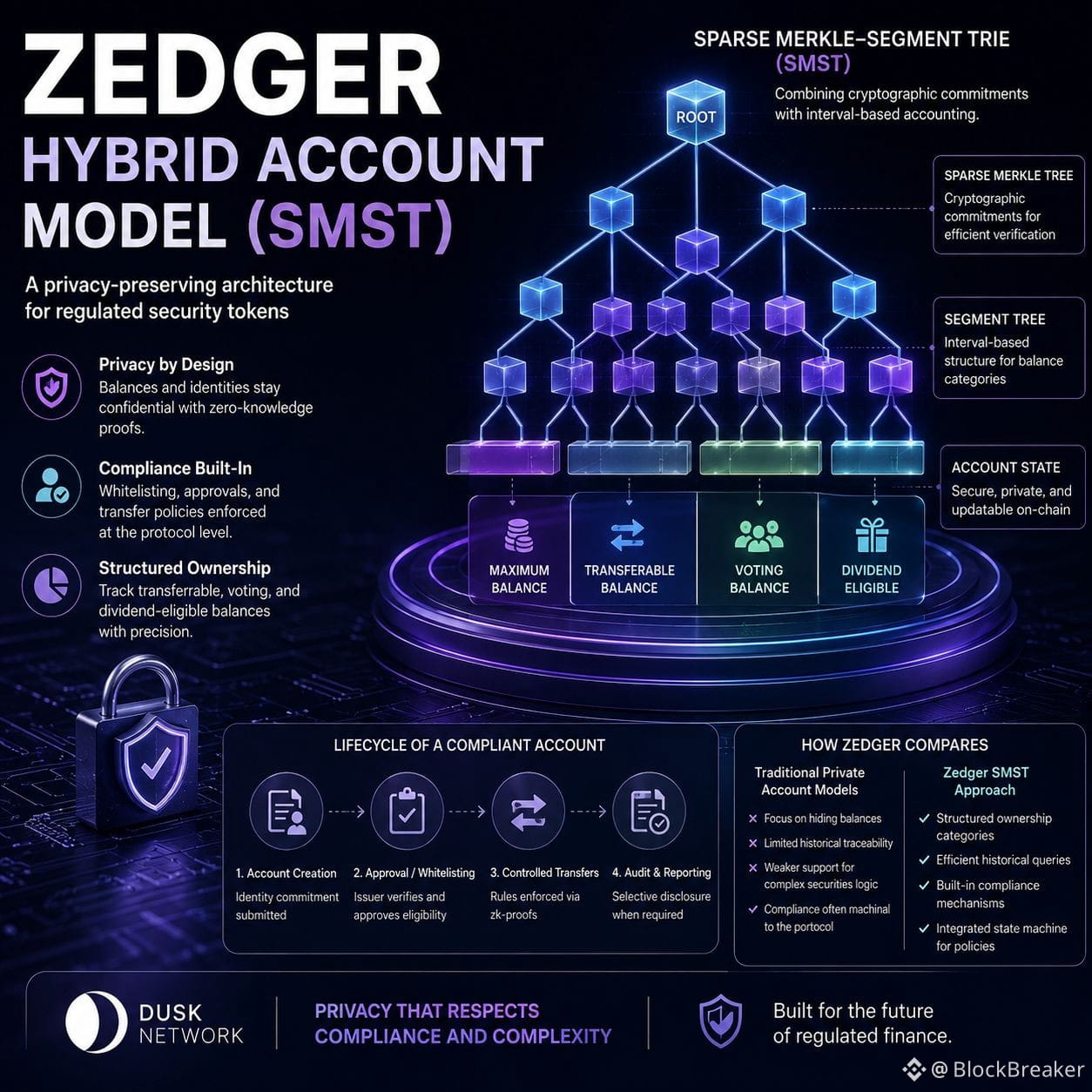
لهذا السبب لفت انتباهي المخططان المتفرق/نقطة ميركل-سيغمنت (Sparse Merkle-Segment Trie). يجمع SMST بين شجرة ميركل المتفرقة Segment Tree، ما يتيح لـ Zedger الالتزام بحالة الحساب مع الاحتفاظ داخل البنية بفئات الرصيد المختلفة. يمكن للتصميم تتبع أرصدة الحد الأقصى، وقابلة للنقل، والأهلية للتصويت، والأهلية لتوزيعات الأرباح، دون وضع سجل الحساب بالكامل في العرض العام.
لقد رأيت نماذج أخرى لحسابات الخصوصية، مثل BlockMaze، تركّز بشدة على إخفاء الأرصدة والعلاقة بين المرسل والمستقبل باستخدام zk-SNARKs. وهذا مفيد للمدفوعات الخاصة، لكن الأوراق المالية للشركات تخلق مشكلة بيانات مختلفة. غالباً ما تحتاج لإثبات أن عملية النقل مسموح بها، وليس فقط إثبات أن القيمة تحركت.
هنا تبدو Zedger لي أكثر تعمّداً. فشجرة القوائم البيضاء وبنية ذاكرة الحساب مرتبطة بآلة الحالة، لذلك لا تصبح الامتثال مجرد لوحة خارجية تتحقق من المعاملات بعد وقوعها.
لا أزال متحفظاً إزاء التعقيد. فكل حقل حالة إضافي وقاعدة إثبات تضيف عبئاً إضافياً على الهندسة والتحقق.
لكن السؤال المثير للاهتمام ليس ما إذا كان SMST يُخفي الأرصدة. بل هو ما إذا كان نموذج حسابات تشفيرياً يمكنه الحفاظ على الحقائق المربكة لملكية الأوراق المالية دون تحويل دفتر الأستاذ إلى قاعدة بيانات عامة للمساهمين.
ربما الخصوصية في معاملات الأوراق المالية تحتاج إلى نظام محاسبي أولاً — رسالة SMST من Zedger
كنت أنظر إلى Zedger من زاوية مختلفة قليلاً. معظم نماذج الخصوصية تسأل كيف يمكن إخفاء حساب أو معاملة. لكن للأوراق المالية مشكلة أخرى: الملكية ليست مجرد رقم. فهي تتغير مع الوقت، وحقوق النقل، وحقوق التصويت، وتوزيعات الأرباح، وحالة الموافقة.
لهذا السبب لفت انتباهي المخططان المتفرق/نقطة ميركل-سيغمنت (Sparse Merkle-Segment Trie). يجمع SMST بين شجرة ميركل المتفرقة Segment Tree، ما يتيح لـ Zedger الالتزام بحالة الحساب مع الاحتفاظ داخل البنية بفئات الرصيد المختلفة. يمكن للتصميم تتبع أرصدة الحد الأقصى، وقابلة للنقل، والأهلية للتصويت، والأهلية لتوزيعات الأرباح، دون وضع سجل الحساب بالكامل في العرض العام.
لقد رأيت نماذج أخرى لحسابات الخصوصية، مثل BlockMaze، تركّز بشدة على إخفاء الأرصدة والعلاقة بين المرسل والمستقبل باستخدام zk-SNARKs. وهذا مفيد للمدفوعات الخاصة، لكن الأوراق المالية للشركات تخلق مشكلة بيانات مختلفة. غالباً ما تحتاج لإثبات أن عملية النقل مسموح بها، وليس فقط إثبات أن القيمة تحركت.
هنا تبدو Zedger لي أكثر تعمّداً. فشجرة القوائم البيضاء وبنية ذاكرة الحساب مرتبطة بآلة الحالة، لذلك لا تصبح الامتثال مجرد لوحة خارجية تتحقق من المعاملات بعد وقوعها.
لا أزال متحفظاً إزاء التعقيد. فكل حقل حالة إضافي وقاعدة إثبات تضيف عبئاً إضافياً على الهندسة والتحقق.
لكن السؤال المثير للاهتمام ليس ما إذا كان SMST يُخفي الأرصدة. بل هو ما إذا كان نموذج حسابات تشفيرياً يمكنه الحفاظ على الحقائق المربكة لملكية الأوراق المالية دون تحويل دفتر الأستاذ إلى قاعدة بيانات عامة للمساهمين.