#dusk $DUSK @Dusk
أعود باستمرار إلى سؤال واحد مع Dusk: ماذا يحدث عندما يتوقف الناس عن الإيمان بالنظام الذي ينسقون من خلاله؟
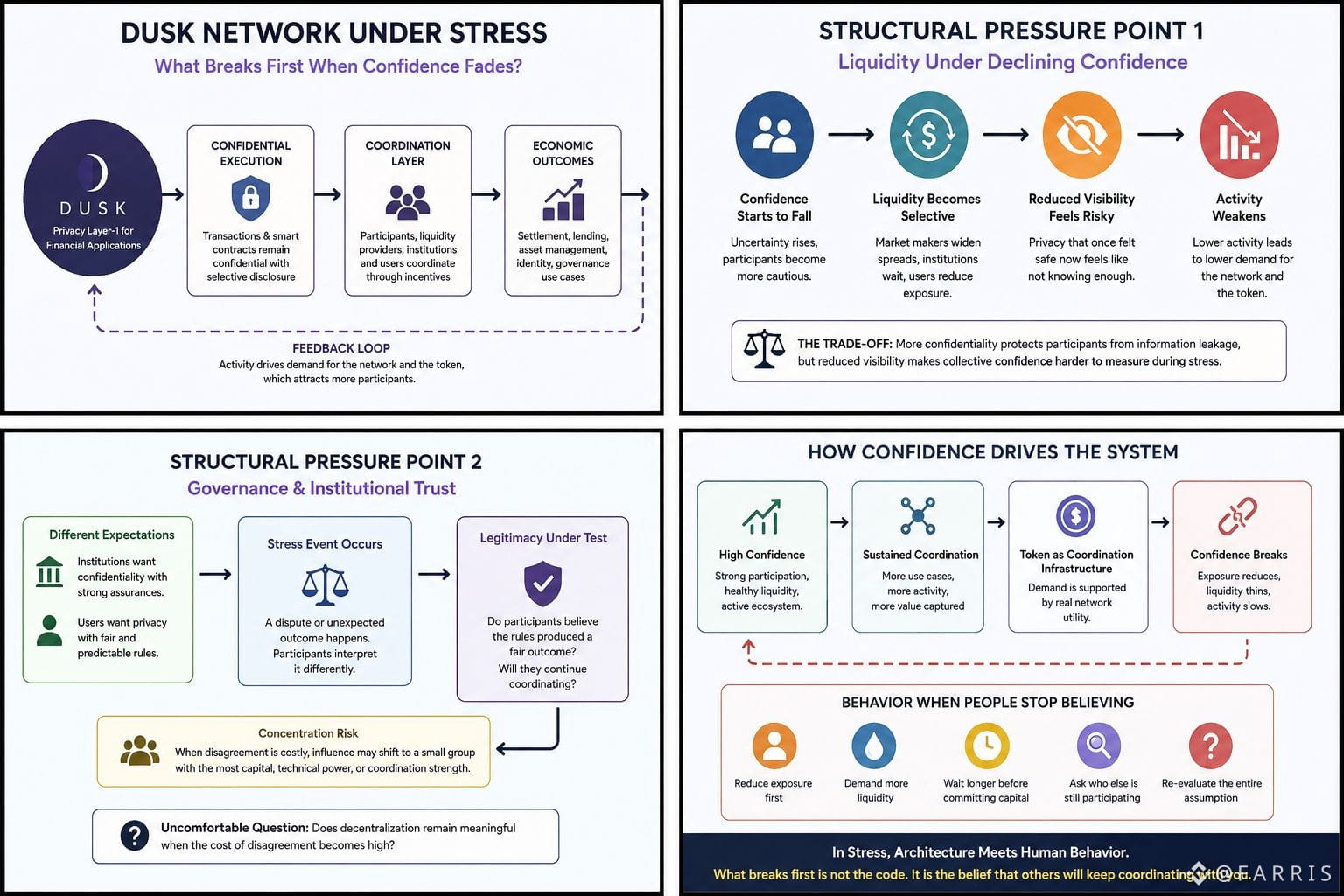
الجزء المثير للاهتمام ليس معماريّة الخصوصية نفسها. بل كيفية تصرّف هذه الخصوصية عندما تصبح الأسواق متوترة. تم تصميم Dusk حول النشاط المالي السري، والإفصاح الانتقائي، والتسوية الحتمية، ما قد يجعل التنسيق المالي الحساس أكثر عملية دون تعريض كل مركز أو معاملة للعلن.
لكن الثقة مشكلة مختلفة.
عندما تكون السيولة مريحة، قد تبدو الخصوصية كحماية. وعندما تختفي السيولة، يمكن أن تبدو الخصوصية نفسها كعدم يقين. يبدأ المشاركون في التساؤل عمّا لا يمكنهم رؤيته، ومن لا يزال مقتنعًا، وما إذا كان المشاركون الآخرون سيبقون نشطين عندما تسوء الظروف.
وهذا يخلق مفاضلة بنيوية: يمكن للسرية الأقوى أن تحمي المشاركين في السوق من تسرب المعلومات، بينما يمكن أن تجعل تقليل الرؤية الحكم على الثقة الجماعية أصعب خلال فترات التوتر.
وتصل التوتر نفسه إلى الحوكمة. قد ينفّذ البروتوكول القواعد بدقة تامة، ومع ذلك يواجه سؤالًا أعمق: من يتحمل تبعات النتائج عندما لا يعود المشاركون يقبلون ما تنتجه تلك القواعد؟
لقد شاهدت رأس المال يتناوب بين السرديات لفترة كافية لأعرف أن الحوافز في النهاية تتحدث بصوت أعلى من نوايا التصميم. إن DUSK مهم هنا كبنية تحتية للتنسيق، لكن اختبارها الحقيقي هو ما إذا كان المشاركون الاقتصاديون سيواصلون إيجاد قيمة في التنسيق عبر الشبكة عندما تصبح الثقة مكلفة.
عندها تتوقف المعمارية عن كونها نظرية وتبدأ في مواجهة السلوك البشري.
#BerkshireAddsToDeltaAndAlphabetHoldings #PolymarketOddsIranBlockadeEndFallTo23% #DollarFallsToMayLow #TradersCutFedRateHikeBetsBeforeMid2027
أعود باستمرار إلى سؤال واحد مع Dusk: ماذا يحدث عندما يتوقف الناس عن الإيمان بالنظام الذي ينسقون من خلاله؟
الجزء المثير للاهتمام ليس معماريّة الخصوصية نفسها. بل كيفية تصرّف هذه الخصوصية عندما تصبح الأسواق متوترة. تم تصميم Dusk حول النشاط المالي السري، والإفصاح الانتقائي، والتسوية الحتمية، ما قد يجعل التنسيق المالي الحساس أكثر عملية دون تعريض كل مركز أو معاملة للعلن.
لكن الثقة مشكلة مختلفة.
عندما تكون السيولة مريحة، قد تبدو الخصوصية كحماية. وعندما تختفي السيولة، يمكن أن تبدو الخصوصية نفسها كعدم يقين. يبدأ المشاركون في التساؤل عمّا لا يمكنهم رؤيته، ومن لا يزال مقتنعًا، وما إذا كان المشاركون الآخرون سيبقون نشطين عندما تسوء الظروف.
وهذا يخلق مفاضلة بنيوية: يمكن للسرية الأقوى أن تحمي المشاركين في السوق من تسرب المعلومات، بينما يمكن أن تجعل تقليل الرؤية الحكم على الثقة الجماعية أصعب خلال فترات التوتر.
وتصل التوتر نفسه إلى الحوكمة. قد ينفّذ البروتوكول القواعد بدقة تامة، ومع ذلك يواجه سؤالًا أعمق: من يتحمل تبعات النتائج عندما لا يعود المشاركون يقبلون ما تنتجه تلك القواعد؟
لقد شاهدت رأس المال يتناوب بين السرديات لفترة كافية لأعرف أن الحوافز في النهاية تتحدث بصوت أعلى من نوايا التصميم. إن DUSK مهم هنا كبنية تحتية للتنسيق، لكن اختبارها الحقيقي هو ما إذا كان المشاركون الاقتصاديون سيواصلون إيجاد قيمة في التنسيق عبر الشبكة عندما تصبح الثقة مكلفة.
عندها تتوقف المعمارية عن كونها نظرية وتبدأ في مواجهة السلوك البشري.
#BerkshireAddsToDeltaAndAlphabetHoldings #PolymarketOddsIranBlockadeEndFallTo23% #DollarFallsToMayLow #TradersCutFedRateHikeBetsBeforeMid2027