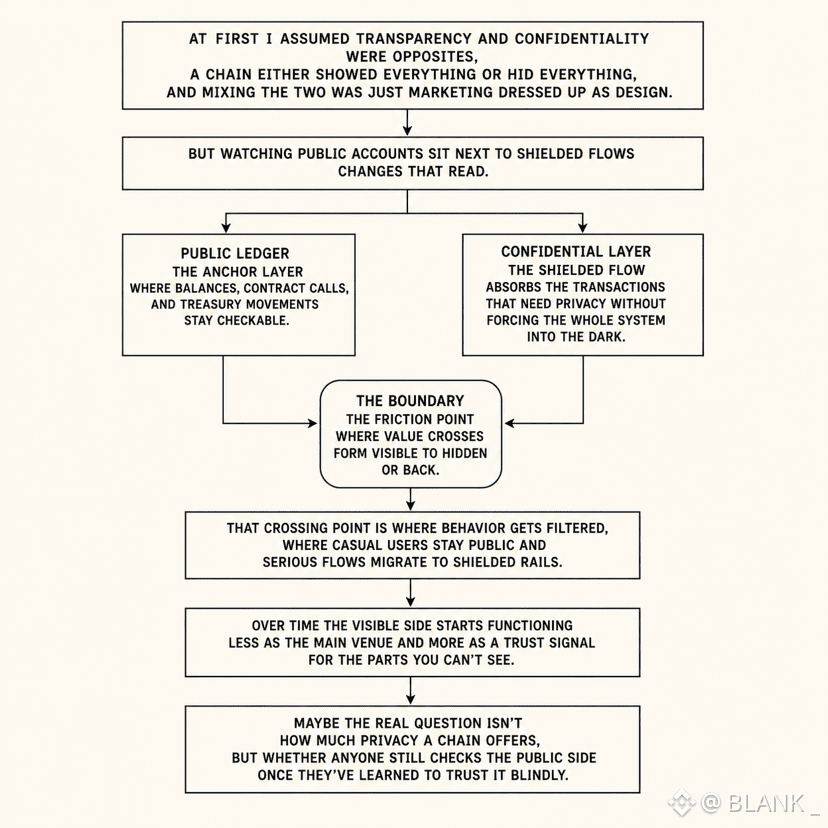

في البداية افترضت أن الشفافية والسرّية نقيضان؛ إما أن سلسلة ما تُظهر كل شيء أو تُخفي كل شيء، وأن خلط الاثنين مجرد تسويق مرتّب على شكل تصميم. لكن مشاهدة الحسابات العامة إلى جانب تدفقاتٍ محمية تغيّر ذلك القراءة. يصبح الدفتر العام نوعًا من المرساة، مكانًا يمكن التحقق فيه من الأرصدة واستدعاءات العقود وتحركات الخزينة، بينما تمتص الطبقة السرّية المعاملات التي تحتاج إلى خصوصية دون أن تُجبر النظام كله على السواد. المثير للاهتمام هو الاحتكاك عند الحدود، لحظة انتقال القيمة من المرئي إلى المخفي أو العكس. عند نقطة العبور هذه تتم تصفية السلوك؛ فيبقى المستخدمون العابرون على العلن، بينما تنتقل التدفقات الجادة إلى مساراتٍ محمية. مع مرور الوقت يبدأ الجانب المرئي بالعمل أقل كمحطة رئيسية وأكثر كإشارة ثقة للأجزاء التي لا يمكنك رؤيتها. ربما ليست المسألة الحقيقية كم الخصوصية التي توفرها سلسلة ما، بل ما إذا كان أي شخص لا يزال يتحقق من الجانب العام بعد أن تعلّم الثقة فيه بشكل أعمى.
@Dusk $DUSK #dusk
@Dusk $DUSK #dusk