$DUSK ISN’T TRYING TO HIDE FINANCE — IT’S TRYING TO REDEFINE WHO GETS TO SEE IT.
كلما تعمّقت في Dusk، زاد اعتقادي بأن قصة الخصوصية فيها تتعلق بأمر أكبر من مجرد إخفاء المعاملات.
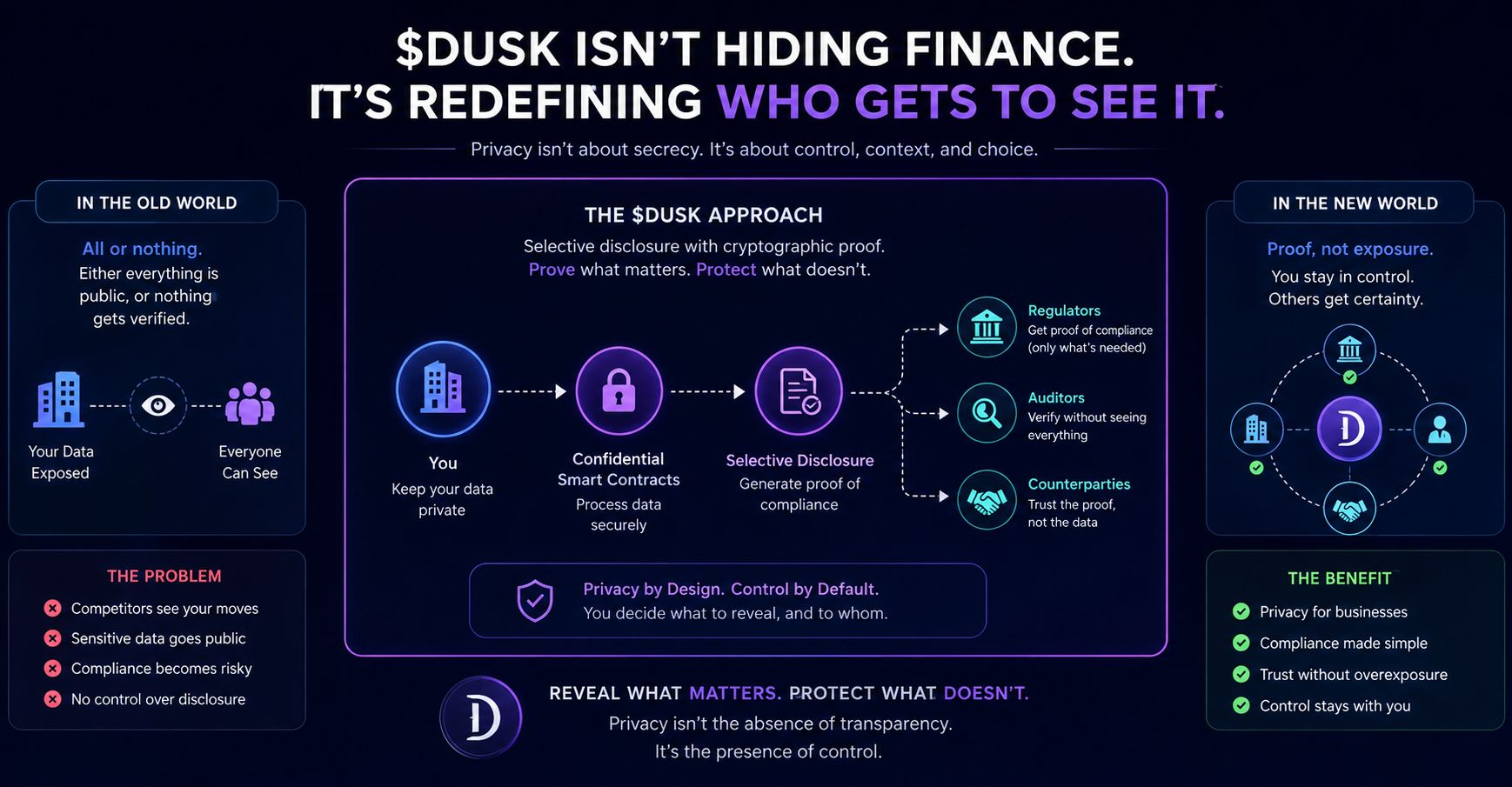
الأسواق المالية الحقيقية تحتاج إلى خصوصية. لا تريد الشركات أن يطّلع المنافسون على كل مركز أو صفقة أو رصيد. لكن الجهات التنظيمية والمدققون والأطراف المقابلة ما زالوا بحاجة إلى دليل عندما تصبح الأمور مهمة.
وهنا يصبح Dusk مثيرًا للاهتمام.
بفضل العقود الذكية السرّية والإفصاح الانتقائي، لا تتمثل الفكرة ببساطة في "إخفاء كل شيء". بل هي أقرب إلى: إثبات ما يجب إثباته دون كشف كل ما عداه.
وبصراحة، هذا يبدو أكثر عملية بكثير.
تخيّل القدرة على إثبات أن شرطًا ماليًا قد تم استيفاؤه دون الكشف عن تاريخك المالي بأكمله.
هنا تبدأ الخصوصية في التحول من مجرد ميزة تقنية.
لتصبح جزءًا من القواعد.
لكن هناك سؤالًا أعود إليه باستمرار:
من يقرر ما الذي ينبغي كشفه؟
يمكن للتشفير حماية المعلومات. ويمكن للعقود الذكية فرض الشروط. لكن التحدي الحقيقي هو ضمان أن يظل لدى المستخدمين تحكم ذي معنى عندما تصبح المتطلبات المؤسسية والتنظيمية أكثر صرامة.
وهذه هي الجزء من $DUSK الذي أتابعه عن كثب.
ربما لا تتمثل مستقبل الخصوصية المالية في جعل كل شيء غير مرئي.
ربما تتمثل في جعل الإفصاح مقصودًا.
كشف ما يهم. وحماية ما لا ينبغي كشفه.
@Dusk $DUSK #dusk
كلما تعمّقت في Dusk، زاد اعتقادي بأن قصة الخصوصية فيها تتعلق بأمر أكبر من مجرد إخفاء المعاملات.
الأسواق المالية الحقيقية تحتاج إلى خصوصية. لا تريد الشركات أن يطّلع المنافسون على كل مركز أو صفقة أو رصيد. لكن الجهات التنظيمية والمدققون والأطراف المقابلة ما زالوا بحاجة إلى دليل عندما تصبح الأمور مهمة.
وهنا يصبح Dusk مثيرًا للاهتمام.
بفضل العقود الذكية السرّية والإفصاح الانتقائي، لا تتمثل الفكرة ببساطة في "إخفاء كل شيء". بل هي أقرب إلى: إثبات ما يجب إثباته دون كشف كل ما عداه.
وبصراحة، هذا يبدو أكثر عملية بكثير.
تخيّل القدرة على إثبات أن شرطًا ماليًا قد تم استيفاؤه دون الكشف عن تاريخك المالي بأكمله.
هنا تبدأ الخصوصية في التحول من مجرد ميزة تقنية.
لتصبح جزءًا من القواعد.
لكن هناك سؤالًا أعود إليه باستمرار:
من يقرر ما الذي ينبغي كشفه؟
يمكن للتشفير حماية المعلومات. ويمكن للعقود الذكية فرض الشروط. لكن التحدي الحقيقي هو ضمان أن يظل لدى المستخدمين تحكم ذي معنى عندما تصبح المتطلبات المؤسسية والتنظيمية أكثر صرامة.
وهذه هي الجزء من $DUSK الذي أتابعه عن كثب.
ربما لا تتمثل مستقبل الخصوصية المالية في جعل كل شيء غير مرئي.
ربما تتمثل في جعل الإفصاح مقصودًا.
كشف ما يهم. وحماية ما لا ينبغي كشفه.
@Dusk $DUSK #dusk