

Anndy Lian
Anndy Lian: Why Autonomous Intelligence Is the Next Chapter for Crypto- #BINANCECONNECT
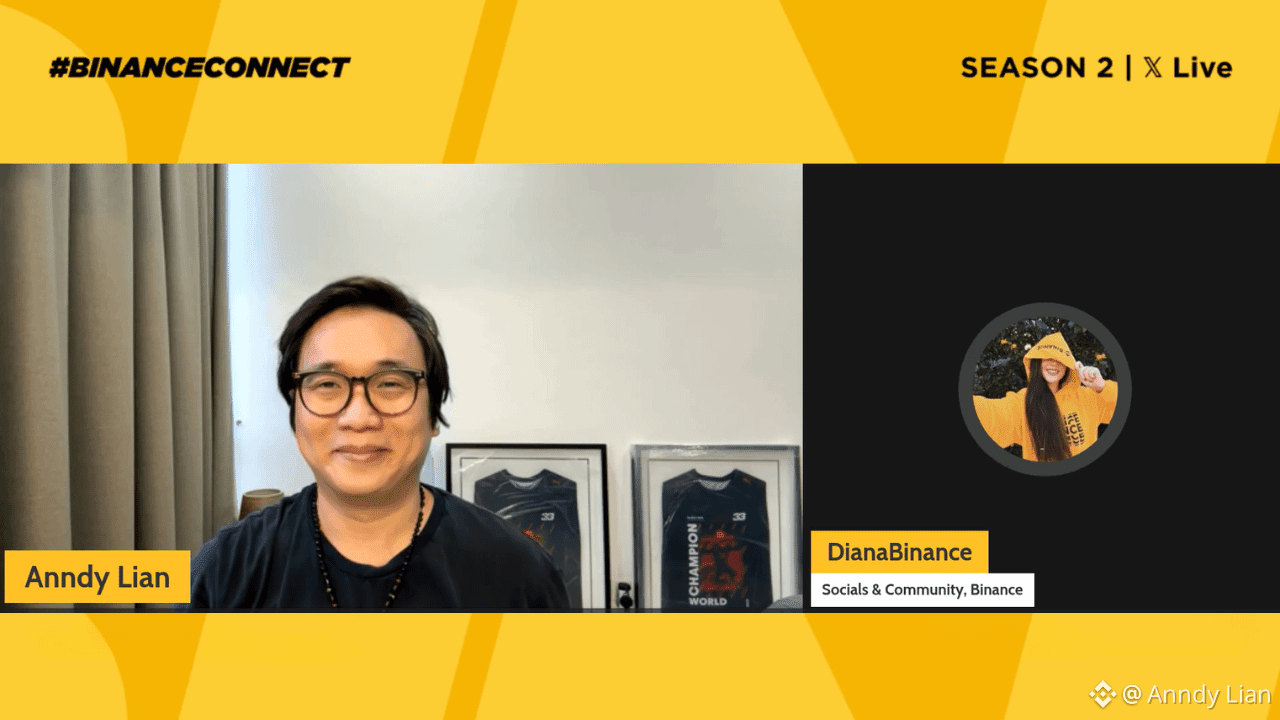 I recently had the pleasure of sitting down with Diana, a Community Associate at Binance, for the season two premiere of Binance Connect. The conversation gave me a chance to unpack the ideas behind my book, Web4: The Age of Autonomous Intelligence. We covered a wide range of topics, from the validity of the term itself to the practical implications of handing decisions over to machines. I want to share some of my deeper thoughts here, expanding on what we discussed live. Is Web4 Just Another Label? Diana opened with a question I hear often. Why do we keep numbering the web? Is this simply another marketing term to generate excitement? I understand the skepticism. People outside our space might hear Web1, Web2, Web3, Web4 and think we are just counting upward for fun. My answer is straightforward. The shift is already happening whether we name it or not. Artificial intelligence is reshaping every layer of the internet, from how we search for information to how financial transactions are executed. You can call it the AI web. You can call it Web AI. The label matters less than the reality underneath. AI is here to stay, and it will bring a new set of values to the entire internet, not just to crypto. What frustrates me about the current state of Web3 is that many people still believe it is decentralized. It is not. Capital flows from a handful of venture firms. A small number of entities control token supplies. If we truly value distributed governance, then we must push harder toward genuine independence. That is what Web4 represents to me. It is the era where we use intelligent agents to actually achieve what Web3 promised but failed to deliver. The Centralization Problem One of the most pressing concerns Diana raised was whether we are trying to build a distributed future on top of centralized intelligence. She pointed out that the most powerful frontier models today are controlled by a small group of massive corporations. Governments can make a single phone call and shut those systems down. Users can be forced to roll back updates they never agreed to. I firmly believe we need our own models. This does not mean rejecting frontier technology entirely. It means running open-weight models on our own servers. It means forming intelligence within a local environment that belongs to us. There is no need to pay exorbitant API fees when affordable open-source alternatives exist. You can even use frontier models as training data for your own agents, which then reside within your private network. I predict that within two to three years, after the major AI companies complete their IPOs, we will see a significant divide. API costs from centralized providers will drop, and more people will migrate toward affordable open-source solutions. Things will balance out. If you want your data protected and your operations independent, running your own model will become as common as owning a laptop. Cognitive Burden and Human Capability Diana asked a thoughtful question about whether removing complexity from our lives makes us less capable. Every time technology gets smarter, we think a little less. Navigation apps decide our routes. Algorithms choose our entertainment. Now agents might trade our assets and vote in governance proposals on our behalf. My view is this. If a person is less capable, AI will not magically make them more capable. If a person is already capable, AI will not diminish them. It is scenario-driven. The cognitive layer I describe in my book acts as a brain. It enables agents to learn quickly. Users who understand how these systems think can improvise, develop their own strategies, and advance their missions. Think of it this way. If you are running a project and cannot figure out the best financial strategy, you ask an intelligent agent. It gives you a suggestion. You can take it as is, or you can tweak it. The tool serves you. You remain in control of the final direction. Who Bears Responsibility? This is a question I get asked frequently. If an AI agent managing your assets makes a bad decision, who is at fault? Is it you who granted permission? Is it the model provider? Does the agent itself carry some form of responsibility? My stance is clear. If the agent resides on a centralized exchange and that platform offers the service, the exchange must bear responsibility. You cannot predict how their proprietary algorithms will react under stress. You cannot see their parameters. The party offering the service must stand behind it. If you are running an agent on your own computer, on your own network, then the responsibility falls on you. You chose to deploy it. You configured it. You accepted the risk. There is no right or wrong answer here. It depends entirely on the hosting arrangement. As for blaming the agent itself, I find that question difficult to answer practically. If you determine the machine is at fault, what can you do? What remedy does it offer? Nothing. You must look at the human or corporate structures surrounding the technology. Jobs and Essential Skills People worry about employment. I take a different view. So far, intelligent agents are not eliminating roles wholesale. They are making people more productive. Developers finish tasks faster. Companies streamline operations. Instead of hiring ten thousand people, a firm might need one hundred. Those who were part of the original team became more experienced and more valuable to other organizations. The most important skill I recommend is clear communication. Learn English, or whatever language allows you to articulate your thoughts precisely. If you cannot write a good prompt, if your mind is unclear about what you want, even the most expensive frontier model will produce poor results. Structure your thinking. Define your desired outcome. That is the foundation of thriving in this new age. Digital Sovereignty In the era of autonomous agents, digital sovereignty becomes critical. When you hand your credentials to a machine, how do you maintain control over your identity afterward? This is not just a philosophical question. It is a practical one. Every user must ask how they will protect their privacy data once agents are driving their interactions across multiple platforms. My Vision Going Forward I believe blockchain should serve as the spine, the trust layer, the immutable record of everything an agent does. AI is the brain. Every decision, every transaction gets recorded on chain. Nobody can alter it. Everyone can audit it. If we get this right, Web4 will eliminate the ability for one person or a small cabal to hoard token supply and manipulate markets. It will bring genuine decentralization to the forefront. It will attract capital back to crypto because people will finally see a clear selling point beyond speculation. I encourage everyone to try the technology. Do not condemn AI before testing it. Ask yourself what outcome you want. Be open. The future is being built right now, and we all have a role in shaping it.
The post Anndy Lian: Why Autonomous Intelligence Is the Next Chapter for Crypto- #BINANCECONNECT appeared first on Anndy Lian by Anndy Lian.