
#dusk $DUSK @Dusk ......... اسأل عشرة أشخاص ماذا يمنحهم سند مُرقمن فعليًا. سيقول تسعة: "السند." لكنهم مخطئون — ومعظم صناعة الأصول المرمّزة RWA بُنيت بهدوء على هذا الفهم الخاطئ.
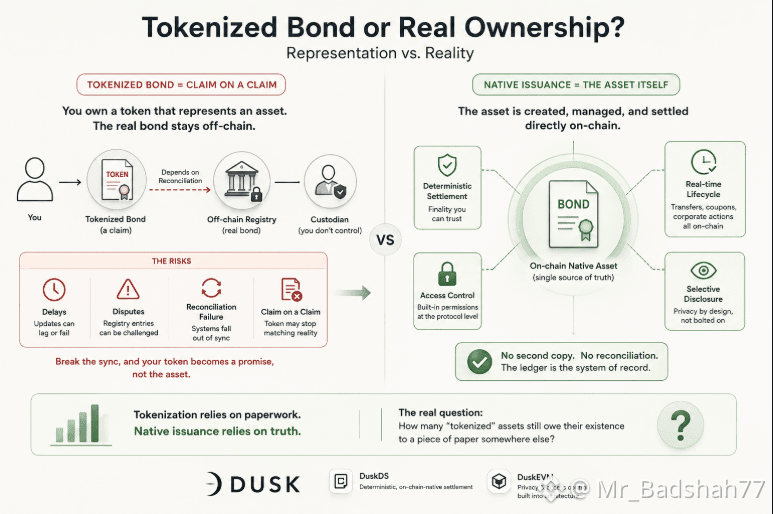
الترميز، بحكم التعريف، يعني إصدار رمز يمثل أصلًا. ليس الأصل نفسه. بل مطالبة عليه. يبقى السند الحقيقي موجودًا خارج السلسلة، في سجل لن تراه أبدًا، لدى جهة حافظة لن تقابلها — ورمزك مهمته الوحيدة هي الاستمرار في التطابق مع تلك الأوراق، إلى الأبد، دون أن يصبحها أبدًا.
هذا ليس مجرد حاشية سفلية. هذه هي نموذج المخاطر بالكامل.......
كل تحويل، كل قسيمة، كل إجراء مؤسسي يجب أن ينعكس بين نظامين — واحد على السلسلة، وآخر ليس عليها.
المواءمة ليست ضوضاء خلفية هنا، إنها جدار الحمل الأساسي.
اتركه ينزلق — تحديث متأخر، أو إدخال سجل متنازع عليه — وما تحمله بهدوء يتوقف عن التطابق مع ما يفترض أن يمثله. عادة تكتشف ذلك في أسوأ وقت: الاسترداد......
الإصدار الأصلي لا يسد هذه الفجوة، بل يزيل الشيء الذي كان أصلًا في خطر أن يحدث فيه انقسام. عندما يُنشأ الأصل ويُحوَّل ويُقدَّم خدمته ويُسوى مباشرة على السلسلة — دون غلاف تركيبي يقف في مكان نسخة مُخزنة في مكان آخر — فلا يبقى هناك نسخة ثانية من الحقيقة يمكن أن تتعارض معها. تتوقف الدفترية عن تتبع الأصل.
ويصبح موطنه الوحيد.....
هذا ما بُني عليه @dusk فعليًا. DuskDS يتولى التسوية الحتمية الأصلية على السلسلة. وDuskEVM يتيح للمطورين تصميم التحكم بالوصول والإفصاح الانتقائي داخل جوهر الأصل، لا أن يُضاف لاحقًا.
عناوين RWA تحب الاقتباس عن مليارات "مُرمّزة". قلّة فقط تسأل كم من تلك المليارات ما تزال تعتمد على ورقة ما في مكان آخر توافق على البقاء متزامنة.
$ACE $ALICE
الترميز، بحكم التعريف، يعني إصدار رمز يمثل أصلًا. ليس الأصل نفسه. بل مطالبة عليه. يبقى السند الحقيقي موجودًا خارج السلسلة، في سجل لن تراه أبدًا، لدى جهة حافظة لن تقابلها — ورمزك مهمته الوحيدة هي الاستمرار في التطابق مع تلك الأوراق، إلى الأبد، دون أن يصبحها أبدًا.
هذا ليس مجرد حاشية سفلية. هذه هي نموذج المخاطر بالكامل.......
كل تحويل، كل قسيمة، كل إجراء مؤسسي يجب أن ينعكس بين نظامين — واحد على السلسلة، وآخر ليس عليها.
المواءمة ليست ضوضاء خلفية هنا، إنها جدار الحمل الأساسي.
اتركه ينزلق — تحديث متأخر، أو إدخال سجل متنازع عليه — وما تحمله بهدوء يتوقف عن التطابق مع ما يفترض أن يمثله. عادة تكتشف ذلك في أسوأ وقت: الاسترداد......
الإصدار الأصلي لا يسد هذه الفجوة، بل يزيل الشيء الذي كان أصلًا في خطر أن يحدث فيه انقسام. عندما يُنشأ الأصل ويُحوَّل ويُقدَّم خدمته ويُسوى مباشرة على السلسلة — دون غلاف تركيبي يقف في مكان نسخة مُخزنة في مكان آخر — فلا يبقى هناك نسخة ثانية من الحقيقة يمكن أن تتعارض معها. تتوقف الدفترية عن تتبع الأصل.
ويصبح موطنه الوحيد.....
هذا ما بُني عليه @dusk فعليًا. DuskDS يتولى التسوية الحتمية الأصلية على السلسلة. وDuskEVM يتيح للمطورين تصميم التحكم بالوصول والإفصاح الانتقائي داخل جوهر الأصل، لا أن يُضاف لاحقًا.
عناوين RWA تحب الاقتباس عن مليارات "مُرمّزة". قلّة فقط تسأل كم من تلك المليارات ما تزال تعتمد على ورقة ما في مكان آخر توافق على البقاء متزامنة.
$ACE $ALICE