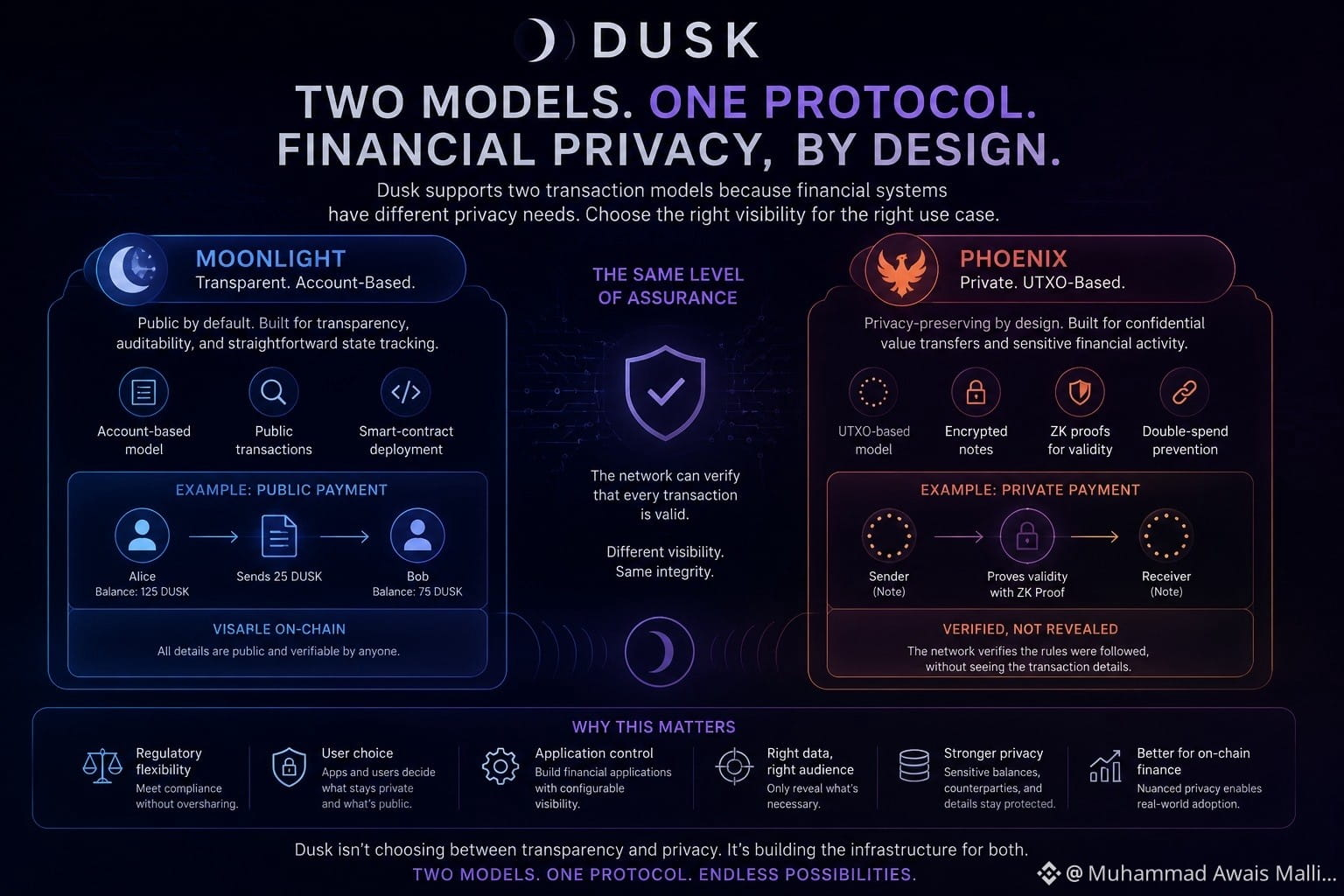
$DUSK تستخدم خيار تصميم أراه ذا صلة خاصة بالتمويل: يدعم Dusk نموذجين للمعاملات بدلًا من إجبار كل المستخدمين على نفس نموذج الرؤية. Moonlight شفاف ويدعم نموذج حسابي، بينما Phoenix قائم على UTXO ويمكنه دعم معاملات مُموّهة عبر إثباتات المعرفة الصفرية.
لماذا يهم ذلك؟ لا توجد متطلبات خصوصية واحدة تناسب كل الأنظمة المالية. قد تستفيد بعض الأنشطة من تنفيذ بأسلوب الحسابات العامة وتتبع الحالة بشكل مباشر. وقد تنطوي أنشطة أخرى على أرصدة أو أطراف مقابلة أو تفاصيل المعاملات التي يجب أن تبقى سرية، مع الاستمرار في إثبات أن ملكية المعاملة، وتوفر الرصيد الكافي، ودفع الرسوم، ومنع الإنفاق المزدوج قد تم استيفاؤها.
يتعامل Phoenix مع ذلك عبر استخدام الملاحظات (notes)، والالتزامات (commitments)، والـ nullifiers، والتشفير، وإثباتات ZK. يمكن للشبكة التحقق من صحة المعاملة الخاصة دون أن تتعلم كل بيانات المعاملة الأساسية. أما Moonlight، فيوفّر نموذج حسابي عام مألوف للمعاملات ونشر العقود الذكية. هذا النهج الثنائي أكثر دقة من القول: «ينبغي أن تكون كل الأشياء خاصة». يجادل Dusk، فعليًا، بأن بلوكتشين ماليًا يجب أن يدعم متطلبات كشف مختلفة على مستوى البروتوكول. وبالاقتران مع XSC واتجاه Dusk الخاص بالعقود الذكية السرّية، يمكن أن يمنح ذلك التطبيقات مزيدًا من التحكم فيما يصبح علنيًا وما يبقى محميًا. بالنسبة للتمويل المُنظّم على السلسلة، قد تكون إمكانية ضبط الرؤية أكثر فائدة من الشفافية الكاملة أو الغموض التام.
#dusk @Dusk
لماذا يهم ذلك؟ لا توجد متطلبات خصوصية واحدة تناسب كل الأنظمة المالية. قد تستفيد بعض الأنشطة من تنفيذ بأسلوب الحسابات العامة وتتبع الحالة بشكل مباشر. وقد تنطوي أنشطة أخرى على أرصدة أو أطراف مقابلة أو تفاصيل المعاملات التي يجب أن تبقى سرية، مع الاستمرار في إثبات أن ملكية المعاملة، وتوفر الرصيد الكافي، ودفع الرسوم، ومنع الإنفاق المزدوج قد تم استيفاؤها.
يتعامل Phoenix مع ذلك عبر استخدام الملاحظات (notes)، والالتزامات (commitments)، والـ nullifiers، والتشفير، وإثباتات ZK. يمكن للشبكة التحقق من صحة المعاملة الخاصة دون أن تتعلم كل بيانات المعاملة الأساسية. أما Moonlight، فيوفّر نموذج حسابي عام مألوف للمعاملات ونشر العقود الذكية. هذا النهج الثنائي أكثر دقة من القول: «ينبغي أن تكون كل الأشياء خاصة». يجادل Dusk، فعليًا، بأن بلوكتشين ماليًا يجب أن يدعم متطلبات كشف مختلفة على مستوى البروتوكول. وبالاقتران مع XSC واتجاه Dusk الخاص بالعقود الذكية السرّية، يمكن أن يمنح ذلك التطبيقات مزيدًا من التحكم فيما يصبح علنيًا وما يبقى محميًا. بالنسبة للتمويل المُنظّم على السلسلة، قد تكون إمكانية ضبط الرؤية أكثر فائدة من الشفافية الكاملة أو الغموض التام.
#dusk @Dusk