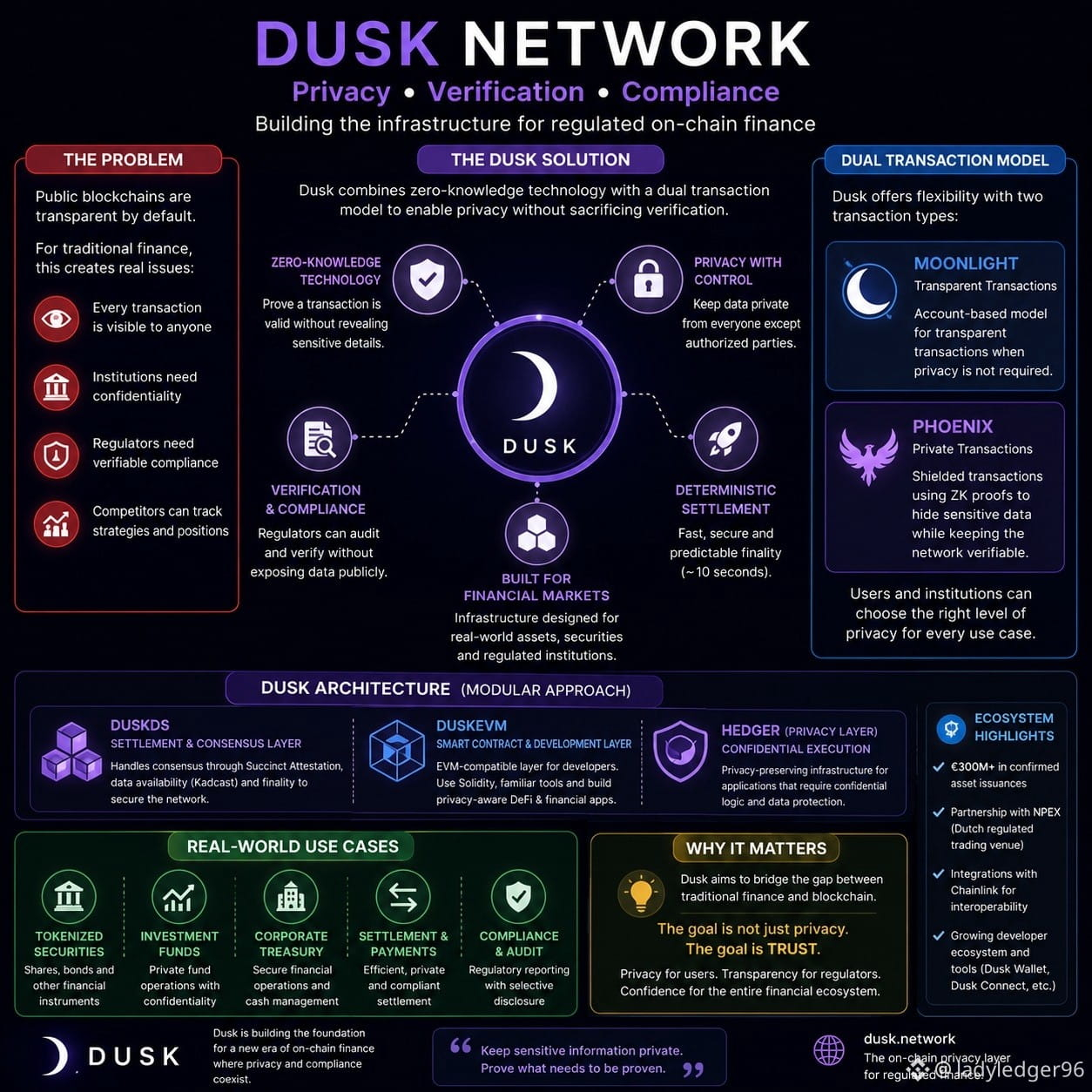
شيء ما أقلقني أثناء بحثي عن Dusk.
نكرر دائمًا أن البلوكتشين سيجعل التمويل التقليدي يعمل على السلسلة (onchain).
لكن بعد ذلك بدأت أفكر
هل سيودّ بنك حقًا أن تكون كل معاملة مرئية للجميع؟
هل سيودّ صندوق استثماري أن يتتبع الناس ممتلكاته؟
هل كنت ستريد أن يعرف الغرباء بالضبط ما هي الأصول التي تملكها؟
وهنا بدأ معنى Dusk يزداد وضوحًا
الأمر المثير للاهتمام ليس فقط أن Dusk يركز على الخصوصية.
بل أنه يحاول جعل الخصوصية تعمل جنبًا إلى جنب مع التحقق والامتثال.
لأن المؤسسات المالية لا يمكنها ببساطة أن تقول: اجعلوا كل شيء خاصًا.
لا يزال على الجهات التنظيمية أن تتحقق من بعض الأشياء.
لذلك يجب أن يكون هناك حل وسط.
تستخدم Dusk تقنيات المعرفة-الصفرية للعمل نحو هذه الفكرة. يمكن أن تبقى تفاصيل المعاملات الحساسة محمية، بينما لا تزال الشبكة قادرة على التحقق من أن المعاملة تتبع القواعد.
يبدو هذا كفرق صغير، لكنني لا أعتقد أنه كذلك.
قد تنتقل السندات والأوراق المالية وصناديق الاستثمار وغيرها من الأصول الواقعية في النهاية إلى السلسلة.
يجب أن تمنح التكنولوجيا المستثمرين خصوصية، والمؤسسات الضوابط المناسبة، والجهات التنظيمية المعلومات التي تحتاجها فعلًا.
وهذه هي المشكلة التي تحاول Dusk معالجتها.
وبصراحة، هذه هي الجزء الذي أجده أكثر إثارة للاهتمام من المعتاد في نقاش "RWA هو المستقبل".
وضع أصل على السلسلة شيء.
أما بناء بنية تحتية يمكن للمؤسسات المالية استخدامها فعلًا، فشيء آخر.
Dusk تراهن على الخيار الثاني.
ما زلت أراقب كيف يتطور النظام البيئي، لأن امتلاك تقنية جيدة لا يعني تلقائيًا حدوث تبنٍّ واسع النطاق.
لكن المشكلة التي يعملون على حلها تبدو حقيقية جدًا.
ربما لا تحتاج سلاسل الكتل المالية إلى الاختيار بين أن تكون خاصة بالكامل وشفافة بالكامل.
ربما توجد إما خيار ثالث
حافظ على المعلومات الحساسة خاصة. وأثبت ما يجب إثباته.
هذه نموذج أستطيع فعلًا أن أتخيله محل اهتمام التمويل التقليدي.
ما رأيك؟
هل ستستخدم بلوكتشين لأصول مالية جادة إذا كان بإمكان أي شخص رؤية سجل معاملتك بالكامل؟
#dusk $DUSK @Dusk
نكرر دائمًا أن البلوكتشين سيجعل التمويل التقليدي يعمل على السلسلة (onchain).
لكن بعد ذلك بدأت أفكر
هل سيودّ بنك حقًا أن تكون كل معاملة مرئية للجميع؟
هل سيودّ صندوق استثماري أن يتتبع الناس ممتلكاته؟
هل كنت ستريد أن يعرف الغرباء بالضبط ما هي الأصول التي تملكها؟
وهنا بدأ معنى Dusk يزداد وضوحًا
الأمر المثير للاهتمام ليس فقط أن Dusk يركز على الخصوصية.
بل أنه يحاول جعل الخصوصية تعمل جنبًا إلى جنب مع التحقق والامتثال.
لأن المؤسسات المالية لا يمكنها ببساطة أن تقول: اجعلوا كل شيء خاصًا.
لا يزال على الجهات التنظيمية أن تتحقق من بعض الأشياء.
لذلك يجب أن يكون هناك حل وسط.
تستخدم Dusk تقنيات المعرفة-الصفرية للعمل نحو هذه الفكرة. يمكن أن تبقى تفاصيل المعاملات الحساسة محمية، بينما لا تزال الشبكة قادرة على التحقق من أن المعاملة تتبع القواعد.
يبدو هذا كفرق صغير، لكنني لا أعتقد أنه كذلك.
قد تنتقل السندات والأوراق المالية وصناديق الاستثمار وغيرها من الأصول الواقعية في النهاية إلى السلسلة.
يجب أن تمنح التكنولوجيا المستثمرين خصوصية، والمؤسسات الضوابط المناسبة، والجهات التنظيمية المعلومات التي تحتاجها فعلًا.
وهذه هي المشكلة التي تحاول Dusk معالجتها.
وبصراحة، هذه هي الجزء الذي أجده أكثر إثارة للاهتمام من المعتاد في نقاش "RWA هو المستقبل".
وضع أصل على السلسلة شيء.
أما بناء بنية تحتية يمكن للمؤسسات المالية استخدامها فعلًا، فشيء آخر.
Dusk تراهن على الخيار الثاني.
ما زلت أراقب كيف يتطور النظام البيئي، لأن امتلاك تقنية جيدة لا يعني تلقائيًا حدوث تبنٍّ واسع النطاق.
لكن المشكلة التي يعملون على حلها تبدو حقيقية جدًا.
ربما لا تحتاج سلاسل الكتل المالية إلى الاختيار بين أن تكون خاصة بالكامل وشفافة بالكامل.
ربما توجد إما خيار ثالث
حافظ على المعلومات الحساسة خاصة. وأثبت ما يجب إثباته.
هذه نموذج أستطيع فعلًا أن أتخيله محل اهتمام التمويل التقليدي.
ما رأيك؟
هل ستستخدم بلوكتشين لأصول مالية جادة إذا كان بإمكان أي شخص رؤية سجل معاملتك بالكامل؟
#dusk $DUSK @Dusk