I've watched crypto turn privacy into a slogan, then compliance into another slogan, usually with the same ending: someone asks for proof, and suddenly the "private" system wants your whole life.
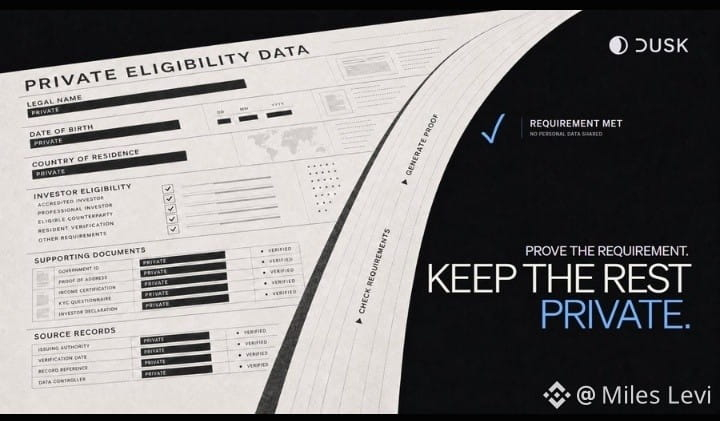
That’s why I keep coming back to this idea in Dusk. Proving you’re allowed to invest without broadcasting why feels more practical than the usual privacy theatre. Dusk’s Citadel layer uses selective disclosure — proving things like residency or investor eligibility without handing an app every piece of your identity data. Regulated markets need evidence and controls, but sensitive information shouldn’t automatically become public.
I've seen this before in crypto: a privacy primitive looks perfect until the real workflow arrives. An auditor needs evidence. A regulator needs access. A restriction still has to be checked. Then the neat cryptographic story meets credentials, permissions, recovery, issuers, and trust assumptions.
So I’m not sold just because ZK is involved. The hard part is everything around it.
Still, something about this feels different. Not because Dusk promises a world where nobody knows anything, but because it accepts that some facts must be proven without making every detail public.
That sounds boring until you remember how often crypto confused transparency with virtue.
Maybe the real test isn’t whether privacy works in a demo. It’s whether selective disclosure survives contact with investors, compliance desks, and money. That’s the part I’m watching.
@Dusk #dusk $DUSK
That’s why I keep coming back to this idea in Dusk. Proving you’re allowed to invest without broadcasting why feels more practical than the usual privacy theatre. Dusk’s Citadel layer uses selective disclosure — proving things like residency or investor eligibility without handing an app every piece of your identity data. Regulated markets need evidence and controls, but sensitive information shouldn’t automatically become public.
I've seen this before in crypto: a privacy primitive looks perfect until the real workflow arrives. An auditor needs evidence. A regulator needs access. A restriction still has to be checked. Then the neat cryptographic story meets credentials, permissions, recovery, issuers, and trust assumptions.
So I’m not sold just because ZK is involved. The hard part is everything around it.
Still, something about this feels different. Not because Dusk promises a world where nobody knows anything, but because it accepts that some facts must be proven without making every detail public.
That sounds boring until you remember how often crypto confused transparency with virtue.
Maybe the real test isn’t whether privacy works in a demo. It’s whether selective disclosure survives contact with investors, compliance desks, and money. That’s the part I’m watching.
@Dusk #dusk $DUSK