كلما فكرت أكثر في Dusk، كلما وجدت نفسي أعود إلى شيء يبدو كأنه مجاملة لكنه في الحقيقة سؤال معقّد
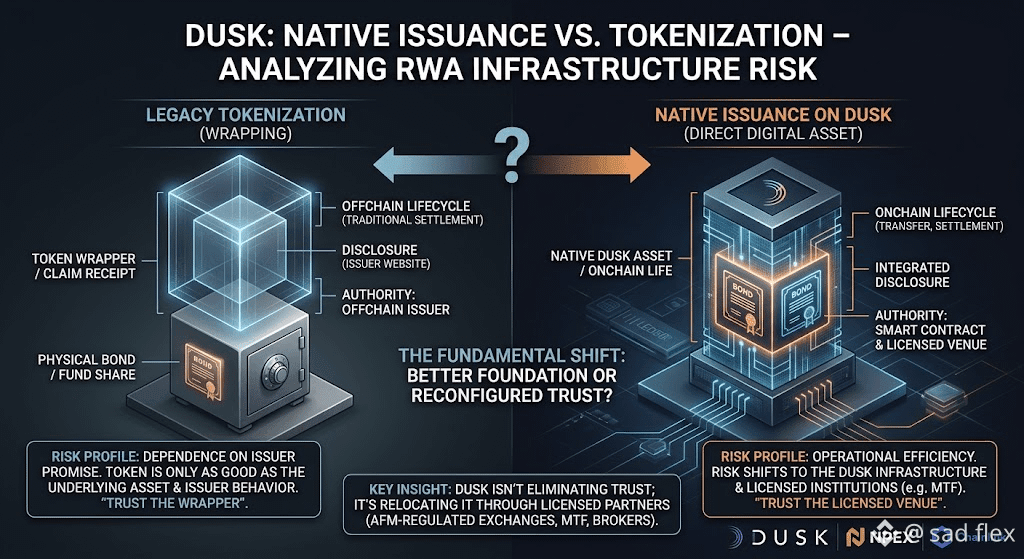
معظم "التجزئة/التوكَنَة" اليوم ليست سوى مجرد تغليف. خذ أصلًا موجودًا، مثل سند، أو حصة في صندوق، ثم ضع توكنًا فوقه يمثل مطالبة به. التوكن هنا إيصال، وليس الشيء نفسه
Dusk تتجه إلى الإصدار الأصلي بدلًا من ذلك؛ حيث ينتقل جزء أكبر من هذه السلسلة داخل السلسلة (onchain) بدلًا من أن ينتهي الأمر بتغليف كل شيء لاحقًا
لذا فالسؤال ليس ما إذا كان الإصدار الأصلي ممكنًا على Dusk
البنية التحتية موجودة بوضوح
السؤال هو: هل هي أساس أفضل للأسواق المنظمة، أم أنها مجرد نسخة على السلسلة (onchain) من المشكلة نفسها المتعلقة بالثقة
عندما يكون التوكن مجرد إيصال، فإن السلطة على الأصل تكون لدى من أصدره خارج السلسلة (offchain). أما الإصدار الأصلي فيعني أن دورة الحياة، والتحويل، والتسوية، والإفصاح تحدث في المكان الذي يعيش فيه التوكن فعليًا. هذا يزيل مخاطرة لم تحلها التوكَنَة أبدًا—إنها فقط نقلتها إلى السلسلة (onchain)
هذه نقطة حقيقية
لكن الإصدار الأصلي لا يعمل إلا إذا كانت الجهة/المنصة التي تُصدر نatively مُرخّصة بدورها. جلب NPEX مبلغًا يتجاوز 300 مليون يورو على السلسلة (onchain) ليس مجرد قرار من Dusk وحدها؛ بل إن Dusk تعمل عبر بورصة مرخّصة من هيئة AFM تمتلك تراخيص MTF وBroker وECSP. تنتقل الثقة من "ثق بأن الغلاف/الوكيل موثوق" إلى "ثق بالمنصة المرخّصة"
Dusk لا تتظاهر بأن الإصدار الأصلي يلغي الحاجة إلى المؤسسات والتراخيص. شراكات Chainlink وNPEX هي Dusk تبني داخل هذا الواقع
ما لم أستقر عليه بعد هو ما إذا كان هذا يغيّر ملف المخاطر بالنسبة لحاملي التوكنات، أو أنه يغيّر فقط المكان الذي تستقر فيه المخاطر
لدى Dusk البنية التحتية وشركاء مرخّصون في الاتحاد الأوروبي يبنون فعليًا عليها
the question i keep returning to is whether native issuance is the shift RWA infra has been missing, or a cleaner version of the same reliance on someone else getting it right
#dusk $DUSK
@Dusk $VELVET $XPL
معظم "التجزئة/التوكَنَة" اليوم ليست سوى مجرد تغليف. خذ أصلًا موجودًا، مثل سند، أو حصة في صندوق، ثم ضع توكنًا فوقه يمثل مطالبة به. التوكن هنا إيصال، وليس الشيء نفسه
Dusk تتجه إلى الإصدار الأصلي بدلًا من ذلك؛ حيث ينتقل جزء أكبر من هذه السلسلة داخل السلسلة (onchain) بدلًا من أن ينتهي الأمر بتغليف كل شيء لاحقًا
لذا فالسؤال ليس ما إذا كان الإصدار الأصلي ممكنًا على Dusk
البنية التحتية موجودة بوضوح
السؤال هو: هل هي أساس أفضل للأسواق المنظمة، أم أنها مجرد نسخة على السلسلة (onchain) من المشكلة نفسها المتعلقة بالثقة
عندما يكون التوكن مجرد إيصال، فإن السلطة على الأصل تكون لدى من أصدره خارج السلسلة (offchain). أما الإصدار الأصلي فيعني أن دورة الحياة، والتحويل، والتسوية، والإفصاح تحدث في المكان الذي يعيش فيه التوكن فعليًا. هذا يزيل مخاطرة لم تحلها التوكَنَة أبدًا—إنها فقط نقلتها إلى السلسلة (onchain)
هذه نقطة حقيقية
لكن الإصدار الأصلي لا يعمل إلا إذا كانت الجهة/المنصة التي تُصدر نatively مُرخّصة بدورها. جلب NPEX مبلغًا يتجاوز 300 مليون يورو على السلسلة (onchain) ليس مجرد قرار من Dusk وحدها؛ بل إن Dusk تعمل عبر بورصة مرخّصة من هيئة AFM تمتلك تراخيص MTF وBroker وECSP. تنتقل الثقة من "ثق بأن الغلاف/الوكيل موثوق" إلى "ثق بالمنصة المرخّصة"
Dusk لا تتظاهر بأن الإصدار الأصلي يلغي الحاجة إلى المؤسسات والتراخيص. شراكات Chainlink وNPEX هي Dusk تبني داخل هذا الواقع
ما لم أستقر عليه بعد هو ما إذا كان هذا يغيّر ملف المخاطر بالنسبة لحاملي التوكنات، أو أنه يغيّر فقط المكان الذي تستقر فيه المخاطر
لدى Dusk البنية التحتية وشركاء مرخّصون في الاتحاد الأوروبي يبنون فعليًا عليها
the question i keep returning to is whether native issuance is the shift RWA infra has been missing, or a cleaner version of the same reliance on someone else getting it right
#dusk $DUSK
@Dusk $VELVET $XPL