هل يجب أن أشتري $AKE و $TUT ؟
i keep thinking the weird part of Dusk Hedger is not even that it keeps DuskEVM financial state confidential. it’s that an encrypted Hedger balance can apparently stay encrypted and still participate in the transaction.
لأنّه عادةً إذا تغيّر الرصيد، فلابد أن يكون الرقم الحقيقي أصبح قابلًا للقراءة أولًا، أليس كذلك؟
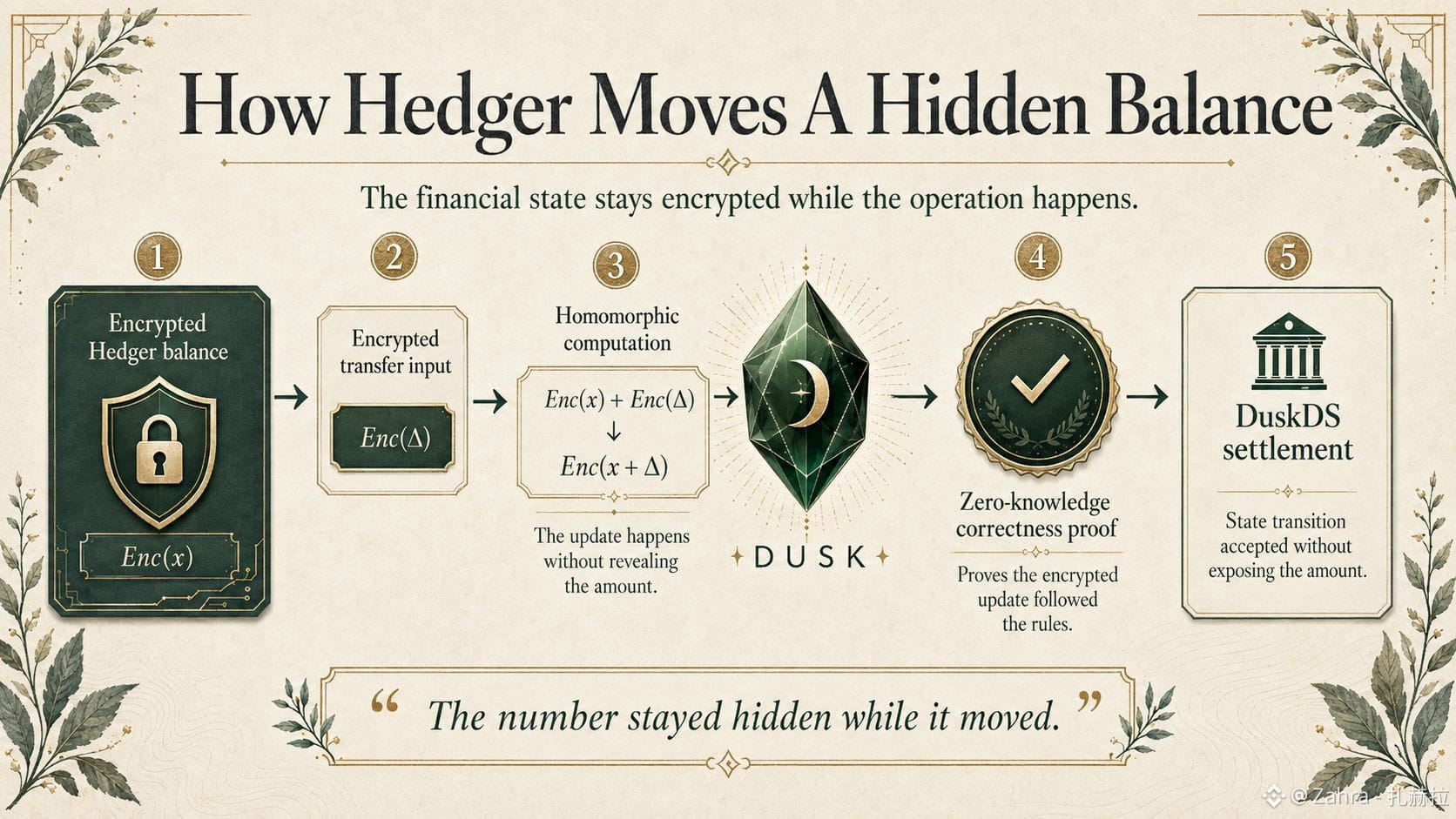
اقرأ الرصيد. احسب عليه. اكتب القيمة الجديدة مرة أخرى. هذا الشكل المحاسبي المعتاد بالكامل. باستثناء أن Hedger يجلس داخل DuskEVM مع أرصدة مشفّرة، والتشفير المثلي بشكل أساسي يرفض ذلك الشكل.
لا يحتاج محرك خصوصية DuskEVM إلى أن تكشف الحالة المالية المشفّرة المبلغ الأساسي إلى الحالة العامة فقط لأن الحالة المشفّرة يجب أن تتغيّر.
وهنا يبدأ دماغي القتال داخليًا ضد الفكرة.
يحافظ Dusk على قيمة Hedger مشفّرة عبر ElGamal على ECC، والحساب المثلي يعمل على تلك القيمة المشفّرة، ثم يجب أن تُظهر إثباتات صحة المعرفة الصفرية أن النقل السري لم يكن يخدع رياضيًا.
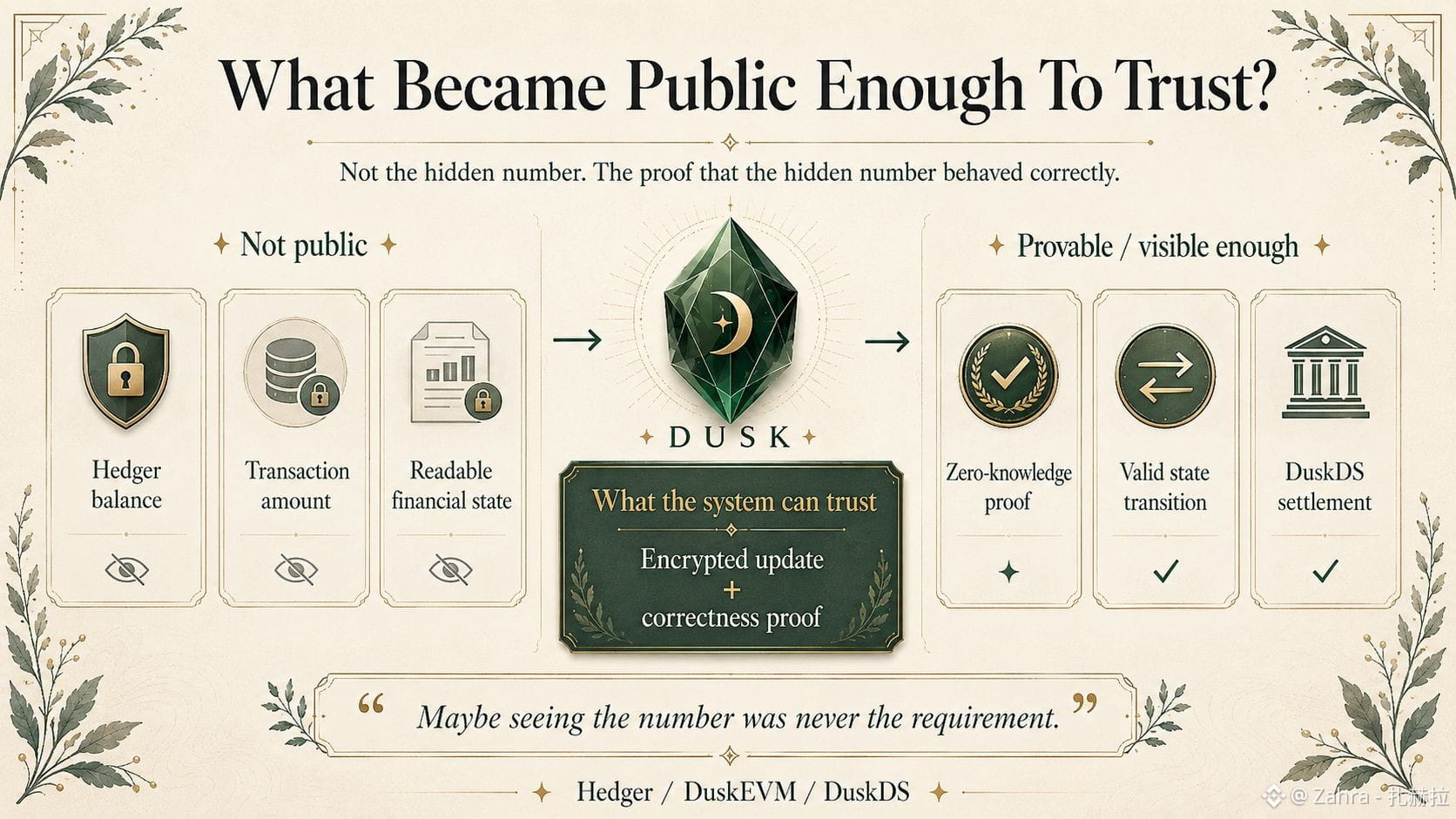
إذًا ما الذي صار عامًا بما يكفي للثقة؟
رصيد Hedger؟
لا.
مبلغ المعاملة المخفي؟
لا يزال لا.
فقط إثبات أن التحرك المشفّر تحقق؟
حسنًا... إذن القيمة قابلة للاستخدام. لكنها لا تحتاج أبدًا أن تصبح قابلة للقراءة أولًا. ولا أعرف لماذا يجعلني هذا أشدّ حدّة من القول إن Hedger يوفّر خصوصية لـ DuskEVM، لأن Hedger لا يخفي الرقم بعد أن ينتهي DuskEVM من التعامل معه. كان الرقم أصلًا مشفّرًا أثناء حدوث العملية المالية.
ثم أصطدم بالجزء الغريب التالي من Dsuk... DuskDS ما زال عليه أن يسوّي ما فعله DuskEVM للتو، فهل يحتاج المبلغ المخفي فجأة لأن يصبح قابلًا للقراءة هناك؟
يبدو أنه لا.
يمكن لإثبات Hedger في Dusk أن يُظهر ما يزال أن التحرك المشفّر تم التحقق منه بينما ينتقل DuskEVM نحو تسوية DuskDS دون أن تجعل ذلك المبلغ علنيًا.
ربما رؤية الرقم لم تكن شرطًا أصلًا، ربما كان المطلوب هو إثبات أن الرقم المخفي تصرّف كما ينبغي.
#dusk $DUSK @Dusk
i keep thinking the weird part of Dusk Hedger is not even that it keeps DuskEVM financial state confidential. it’s that an encrypted Hedger balance can apparently stay encrypted and still participate in the transaction.
لأنّه عادةً إذا تغيّر الرصيد، فلابد أن يكون الرقم الحقيقي أصبح قابلًا للقراءة أولًا، أليس كذلك؟
اقرأ الرصيد. احسب عليه. اكتب القيمة الجديدة مرة أخرى. هذا الشكل المحاسبي المعتاد بالكامل. باستثناء أن Hedger يجلس داخل DuskEVM مع أرصدة مشفّرة، والتشفير المثلي بشكل أساسي يرفض ذلك الشكل.
لا يحتاج محرك خصوصية DuskEVM إلى أن تكشف الحالة المالية المشفّرة المبلغ الأساسي إلى الحالة العامة فقط لأن الحالة المشفّرة يجب أن تتغيّر.
وهنا يبدأ دماغي القتال داخليًا ضد الفكرة.
يحافظ Dusk على قيمة Hedger مشفّرة عبر ElGamal على ECC، والحساب المثلي يعمل على تلك القيمة المشفّرة، ثم يجب أن تُظهر إثباتات صحة المعرفة الصفرية أن النقل السري لم يكن يخدع رياضيًا.
إذًا ما الذي صار عامًا بما يكفي للثقة؟
رصيد Hedger؟
لا.
مبلغ المعاملة المخفي؟
لا يزال لا.
فقط إثبات أن التحرك المشفّر تحقق؟
حسنًا... إذن القيمة قابلة للاستخدام. لكنها لا تحتاج أبدًا أن تصبح قابلة للقراءة أولًا. ولا أعرف لماذا يجعلني هذا أشدّ حدّة من القول إن Hedger يوفّر خصوصية لـ DuskEVM، لأن Hedger لا يخفي الرقم بعد أن ينتهي DuskEVM من التعامل معه. كان الرقم أصلًا مشفّرًا أثناء حدوث العملية المالية.
ثم أصطدم بالجزء الغريب التالي من Dsuk... DuskDS ما زال عليه أن يسوّي ما فعله DuskEVM للتو، فهل يحتاج المبلغ المخفي فجأة لأن يصبح قابلًا للقراءة هناك؟
يبدو أنه لا.
يمكن لإثبات Hedger في Dusk أن يُظهر ما يزال أن التحرك المشفّر تم التحقق منه بينما ينتقل DuskEVM نحو تسوية DuskDS دون أن تجعل ذلك المبلغ علنيًا.
ربما رؤية الرقم لم تكن شرطًا أصلًا، ربما كان المطلوب هو إثبات أن الرقم المخفي تصرّف كما ينبغي.
#dusk $DUSK @Dusk