#dusk $DUSK @Dusk
لقد كنت أفكر في "داسك" من زاوية مختلفة قليلًا مؤخرًا.
تركّز أغلب مناقشات خصوصية البلوك تشين على سؤال واحد:
ماذا يمكن للآخرين رؤيته؟
لكن مع "داسك" وتصميمه XSC،
أعتقد أن السؤال الأكثر إثارة للاهتمام هو:
كم مرة تحتاج إلى إثبات أنك ما زلت مسموحًا لك بالمشاركة؟
هذا يغيّر نموذج الاقتصاد بالكامل.
في التمويل التقليدي،
غالبًا ما يُعامل KYC على أنه باب تعبره مرة واحدة.
لكن الوضع التنظيمي ليس دائمًا. العقوبات تتغير،
الاختصاصات تتغير، الملكية تتغير، وقد تتغير الأهلية أيضًا.
نهج "داسك" يجعل هذه المشكلة أكثر وضوحًا.
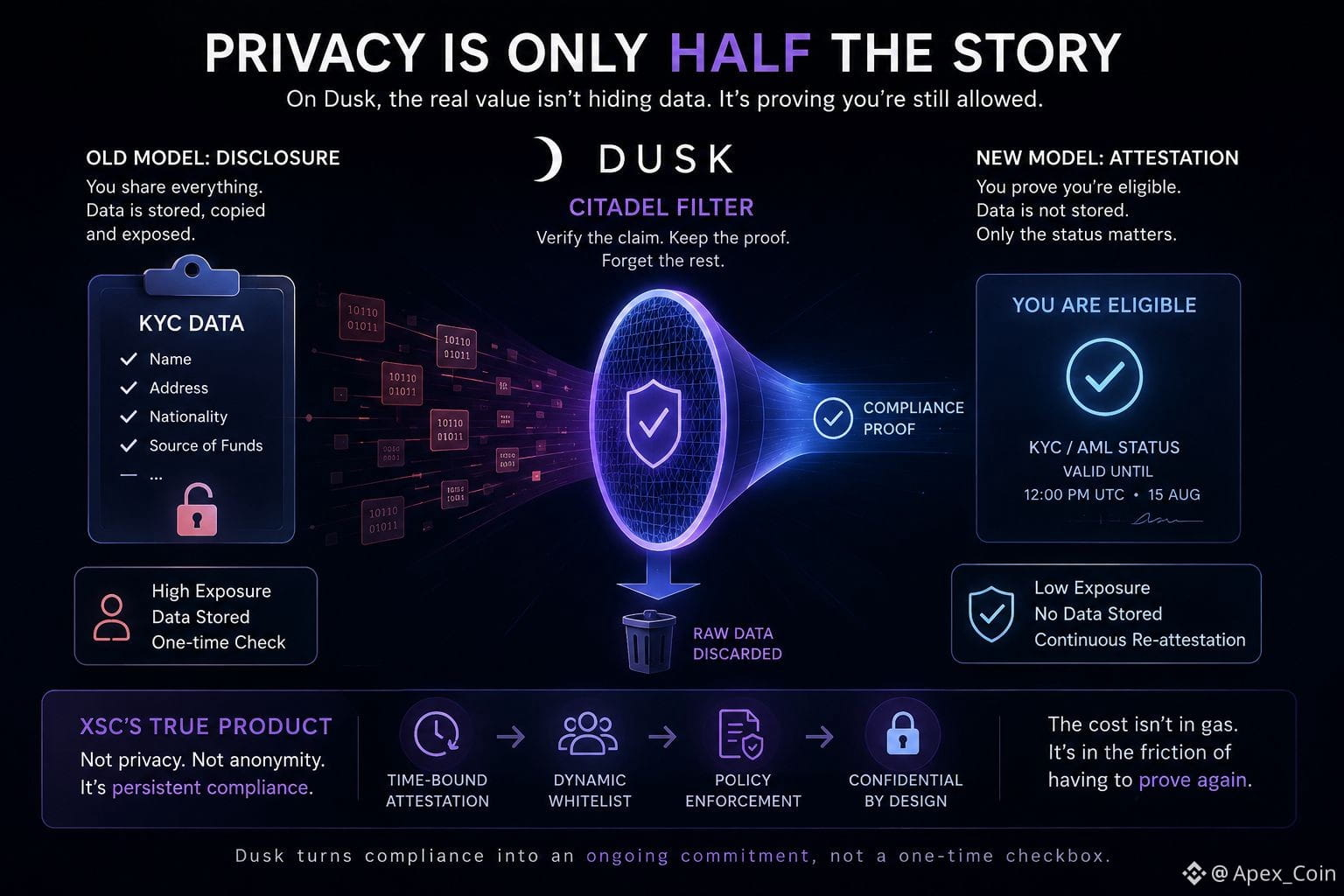
بدلًا من وضع هويتك وتفاصيلك المالية في كل مكان،
يمكنك إثبات أن شرطًا مطلوبًا قد تم استيفاؤه دون الاضطرار إلى كشف المعلومات الأساسية باستمرار.
وهنا أرى القيمة الحقيقية.
الخصوصية تجعل النظام قابلًا للاستخدام،
لكن الامتثال المستمر يجعله ذا صلة بالأصول الخاضعة للتنظيم.
وهناك جانب آخر أقل راحة.
إذا أصبح إثبات أهليتك مكلفًا أو بطيئًا أو يعتمد على مُرجع مركزي،
يمكن أن تتحول الخصوصية إلى نوع آخر من الاحتكاك.
قد يُحاصر مستثمر شرعي نظريًا فقط لأن نظام التحقق قديم أو لأن السياسة تغيّرت.
لذلك لا أعتقد أن الأطروحة هي ببساطة
"الخصوصية هي المنتج".
أرى الخصوصية كمحرّك،
في حين أن الامتثال المستمر هو آلية التوجيه.
الجزء المثير هو أن "داسك" قد يحاول جعل الأصول المُنظمة تتصرف مثل الأصول الرقمية دون التخلي عن القيود التي تجعلها مُنظمة أصلًا.
ثم يأتي السؤال الأكبر:
إذا أصبح الامتثال شيئًا يجب أن تثبته مرارًا وتكرارًا،
فهل سيؤدي ذلك إلى إنشاء شبكة مالية أقوى أم إلى بوّاب أكثر تطورًا؟
لقد كنت أفكر في "داسك" من زاوية مختلفة قليلًا مؤخرًا.
تركّز أغلب مناقشات خصوصية البلوك تشين على سؤال واحد:
ماذا يمكن للآخرين رؤيته؟
لكن مع "داسك" وتصميمه XSC،
أعتقد أن السؤال الأكثر إثارة للاهتمام هو:
كم مرة تحتاج إلى إثبات أنك ما زلت مسموحًا لك بالمشاركة؟
هذا يغيّر نموذج الاقتصاد بالكامل.
في التمويل التقليدي،
غالبًا ما يُعامل KYC على أنه باب تعبره مرة واحدة.
لكن الوضع التنظيمي ليس دائمًا. العقوبات تتغير،
الاختصاصات تتغير، الملكية تتغير، وقد تتغير الأهلية أيضًا.
نهج "داسك" يجعل هذه المشكلة أكثر وضوحًا.
بدلًا من وضع هويتك وتفاصيلك المالية في كل مكان،
يمكنك إثبات أن شرطًا مطلوبًا قد تم استيفاؤه دون الاضطرار إلى كشف المعلومات الأساسية باستمرار.
وهنا أرى القيمة الحقيقية.
الخصوصية تجعل النظام قابلًا للاستخدام،
لكن الامتثال المستمر يجعله ذا صلة بالأصول الخاضعة للتنظيم.
وهناك جانب آخر أقل راحة.
إذا أصبح إثبات أهليتك مكلفًا أو بطيئًا أو يعتمد على مُرجع مركزي،
يمكن أن تتحول الخصوصية إلى نوع آخر من الاحتكاك.
قد يُحاصر مستثمر شرعي نظريًا فقط لأن نظام التحقق قديم أو لأن السياسة تغيّرت.
لذلك لا أعتقد أن الأطروحة هي ببساطة
"الخصوصية هي المنتج".
أرى الخصوصية كمحرّك،
في حين أن الامتثال المستمر هو آلية التوجيه.
الجزء المثير هو أن "داسك" قد يحاول جعل الأصول المُنظمة تتصرف مثل الأصول الرقمية دون التخلي عن القيود التي تجعلها مُنظمة أصلًا.
ثم يأتي السؤال الأكبر:
إذا أصبح الامتثال شيئًا يجب أن تثبته مرارًا وتكرارًا،
فهل سيؤدي ذلك إلى إنشاء شبكة مالية أقوى أم إلى بوّاب أكثر تطورًا؟