
#dusk $DUSK ما لا يتحدث عنه أحد مع Dusk هو جدول الانبعاثات، وبمجرد أن تلاحظه فإنه يشرح الكثير عن المزاج العام للمشروع.
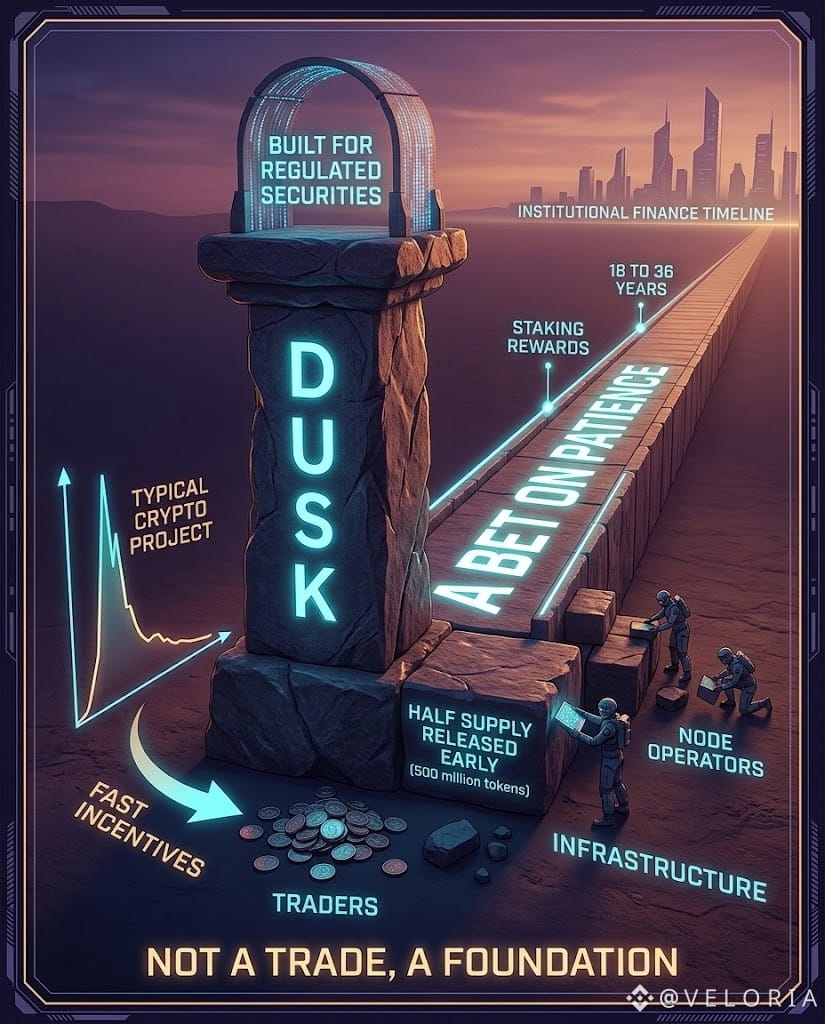
تم إصدار نصف إجمالي المعروض - 500 مليون توكن - مبكرًا. والنصف الآخر يُطلق تدريجيًا على مدى 18 إلى 36 عامًا، غالبًا عبر مكافآت الـ staking. هذه ليست مطابقة خاطئة. معظم المشاريع تُقدّم الحوافز مقدمًا لتوليد نشاط بسرعة، ثم تأمل أن تكون المنظومة قوية بما يكفي لتستمر بعد أن تتناقص المكافآت. Dusk فعل العكس: لقد مدّ “فترة المدرج” حتى تكاد تمتد إلى طول مسيرة مهنية.
وتحت هذا القرار يوجد رهان على الصبر. سلسلة بُنيت للأوراق المالية المُنظّمة لا تحاول الفوز بحرب السيولة هذا الربع. إنها تحاول أن تظل تعمل، وتظل ملتزمة، وتظل موثوقة، بعد عقود من الآن - لأن هذا هو الإطار الزمني الحقيقي الذي تعمل عليه المالية المؤسسية. صندوق التقاعد لا يهتم إذا تضخّم توكنك في مارس. يهتم بما إذا كانت طبقة التسوية ستظل موجودة عندما ينضج السند.
كما أن الذيل الطويل يحدد أيضًا من يبقى. الانبعاثات السريعة تجذب المتداولين الباحثين عن العائد. الانبعاثات البطيئة الممتدة لعقود تُفلتر لمشغلي العقد الذين يهتمون بالبنية التحتية، لا بسرعة الخروج. إنه نوع أكثر هدوءًا من “أثر الشبكة” — عدد أقل من الناس، لكن ارتباط أكثر.
والخطر، بالطبع، هو أن الصبر قد لا يُكافأ إذا لم تصل عملية التبني أبدًا. جدول فتح مدته 30 عامًا لا يعني شيئًا إذا كانت السلسلة غير ذات صلة بعد خمس سنوات.
لكن التصميم يخبرك بما يعتقده Dusk عن نفسه فعليًا: ليس صفقة، بل أساس. وما إذا كان هذا الأساس سيُبنى عليه يبقى، بصراحة، سؤالًا مفتوحًا.
@Dusk
تم إصدار نصف إجمالي المعروض - 500 مليون توكن - مبكرًا. والنصف الآخر يُطلق تدريجيًا على مدى 18 إلى 36 عامًا، غالبًا عبر مكافآت الـ staking. هذه ليست مطابقة خاطئة. معظم المشاريع تُقدّم الحوافز مقدمًا لتوليد نشاط بسرعة، ثم تأمل أن تكون المنظومة قوية بما يكفي لتستمر بعد أن تتناقص المكافآت. Dusk فعل العكس: لقد مدّ “فترة المدرج” حتى تكاد تمتد إلى طول مسيرة مهنية.
وتحت هذا القرار يوجد رهان على الصبر. سلسلة بُنيت للأوراق المالية المُنظّمة لا تحاول الفوز بحرب السيولة هذا الربع. إنها تحاول أن تظل تعمل، وتظل ملتزمة، وتظل موثوقة، بعد عقود من الآن - لأن هذا هو الإطار الزمني الحقيقي الذي تعمل عليه المالية المؤسسية. صندوق التقاعد لا يهتم إذا تضخّم توكنك في مارس. يهتم بما إذا كانت طبقة التسوية ستظل موجودة عندما ينضج السند.
كما أن الذيل الطويل يحدد أيضًا من يبقى. الانبعاثات السريعة تجذب المتداولين الباحثين عن العائد. الانبعاثات البطيئة الممتدة لعقود تُفلتر لمشغلي العقد الذين يهتمون بالبنية التحتية، لا بسرعة الخروج. إنه نوع أكثر هدوءًا من “أثر الشبكة” — عدد أقل من الناس، لكن ارتباط أكثر.
والخطر، بالطبع، هو أن الصبر قد لا يُكافأ إذا لم تصل عملية التبني أبدًا. جدول فتح مدته 30 عامًا لا يعني شيئًا إذا كانت السلسلة غير ذات صلة بعد خمس سنوات.
لكن التصميم يخبرك بما يعتقده Dusk عن نفسه فعليًا: ليس صفقة، بل أساس. وما إذا كان هذا الأساس سيُبنى عليه يبقى، بصراحة، سؤالًا مفتوحًا.
@Dusk