البراهين الصفرية المعرفة ومشكلة خصوصية الأصول المرمّزة
حلّت سلاسل الكتل العامة الشفافية بصورة مثالية—تقريبًا أكثر من اللازم. كل رصيد، كل تحويل، كل مركز—مرئي لأي شخص ينظر. وبالنسبة للأصول المالية الخاضعة للتنظيم، فهذا ليس ميزة. بل إنه عائق.
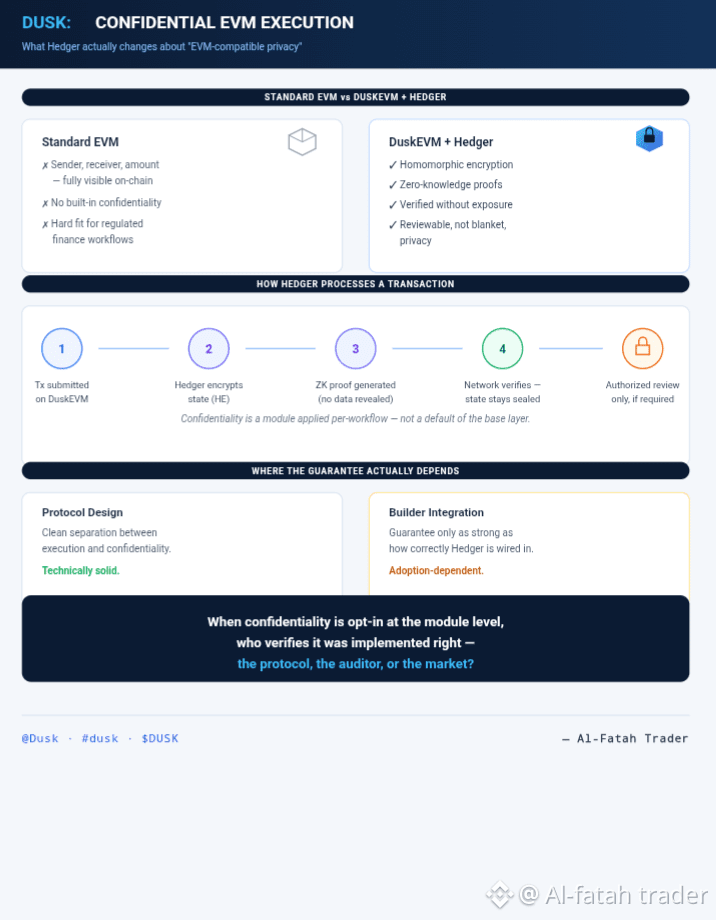
تقترب <@Dusk > من هذا بصورة مختلفة. تتيح البراهين الصفرية المعرفة للمعاملة أن تُثبت أن قاعدة ما قد تم استيفاؤها—تحقق الأهلية، أو قيود التحويل، أو متطلب الامتثال—دون كشف البيانات المالية الأساسية وراء ذلك.
طبّق ذلك على الأوراق المالية المرمّزة: يمكن للعقد الذكي أن يفرض من يُسمح له بالاحتفاظ بأصل أو تحويله، بينما تبقى الأرصدة والهوّيات الفعلية خلف تلك التحققّات خاصة. تُثبت القاعدة. ولا تُنشر البيانات.
هذا هدف أضيق من الفكرة التي توحي بها عادةً عبارة "البلوك تشين الخاص". فليس الأمر إخفاء النشاط—بل فصل ما يجب التحقق منه عمّا يجب بقاؤه سريًا، وتسوية المعاملة على السلسلة في كلتا الحالتين.
ومع ذلك، هناك ما ينبغي فصله عن ذلك: المعمارية ليست طلبًا. <$DUSK > ما زالت بحاجة إلى كسب استخدام حقيقي—مؤسسات تبني عليه فعلًا، وأصول تتحرك فعليًا عبره، لا أن يبقى التصميم مجردًا على الورق.
إذا أمكن أن تستبدل إثباتات الامتثال تعرّض البيانات، فهل يبدأ معنى "الجدير بالثقة" في سلاسل الكتل المالية أن يكون شيئًا مختلفًا—أقل تعلقًا بما يمكنك رؤيته، وأكثر بما يمكن التحقق منه دون رؤيته؟
<#dusk $DUSK > <@Dusk >
حلّت سلاسل الكتل العامة الشفافية بصورة مثالية—تقريبًا أكثر من اللازم. كل رصيد، كل تحويل، كل مركز—مرئي لأي شخص ينظر. وبالنسبة للأصول المالية الخاضعة للتنظيم، فهذا ليس ميزة. بل إنه عائق.
تقترب <@Dusk > من هذا بصورة مختلفة. تتيح البراهين الصفرية المعرفة للمعاملة أن تُثبت أن قاعدة ما قد تم استيفاؤها—تحقق الأهلية، أو قيود التحويل، أو متطلب الامتثال—دون كشف البيانات المالية الأساسية وراء ذلك.
طبّق ذلك على الأوراق المالية المرمّزة: يمكن للعقد الذكي أن يفرض من يُسمح له بالاحتفاظ بأصل أو تحويله، بينما تبقى الأرصدة والهوّيات الفعلية خلف تلك التحققّات خاصة. تُثبت القاعدة. ولا تُنشر البيانات.
هذا هدف أضيق من الفكرة التي توحي بها عادةً عبارة "البلوك تشين الخاص". فليس الأمر إخفاء النشاط—بل فصل ما يجب التحقق منه عمّا يجب بقاؤه سريًا، وتسوية المعاملة على السلسلة في كلتا الحالتين.
ومع ذلك، هناك ما ينبغي فصله عن ذلك: المعمارية ليست طلبًا. <$DUSK > ما زالت بحاجة إلى كسب استخدام حقيقي—مؤسسات تبني عليه فعلًا، وأصول تتحرك فعليًا عبره، لا أن يبقى التصميم مجردًا على الورق.
إذا أمكن أن تستبدل إثباتات الامتثال تعرّض البيانات، فهل يبدأ معنى "الجدير بالثقة" في سلاسل الكتل المالية أن يكون شيئًا مختلفًا—أقل تعلقًا بما يمكنك رؤيته، وأكثر بما يمكن التحقق منه دون رؤيته؟
<#dusk $DUSK > <@Dusk >