الطبقة السرّية لـ DuskEVM: ما الذي يغيّره المُحَوط فعلاً؟
"سلسلة خصوصية متوافقة مع EVM" تبدو بسيطة — نفس الأدوات، شبكة مختلفة. لكن هذا يتجاوز الجزء الذي يهم في التمويل الخاضع للتنظيم.
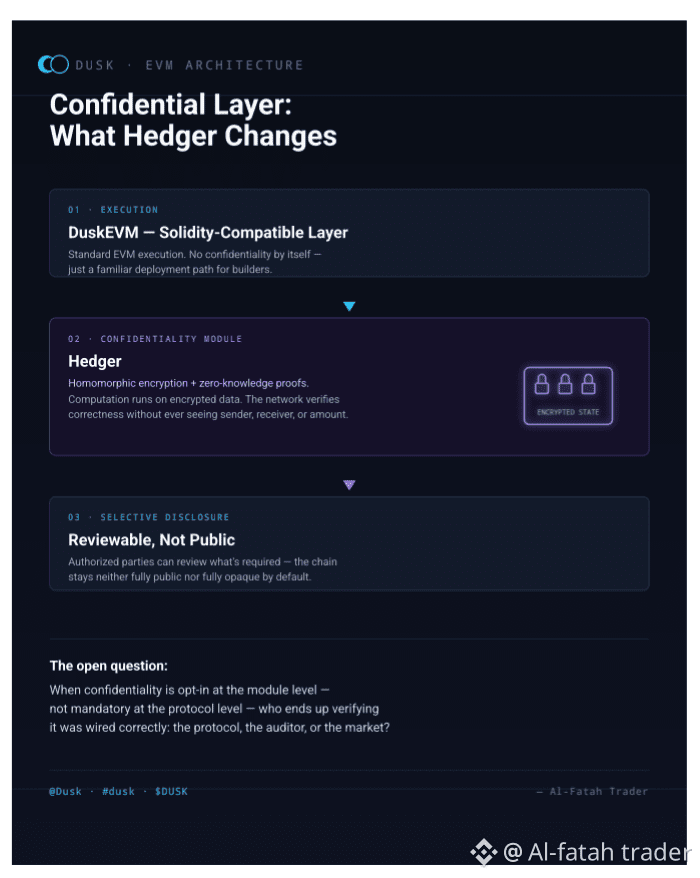
DuskEV هو طبقة التنفيذ: مألوفة، مبنية على Solidity، ولا يوجد فيها أي شيء سرّي بحد ذاتها.
الخصوصية موجودة في Hedger — وحدة منفصلة تستخدم التشفير المتماثل (homomorphic encryption) + إثباتات المعرفة الصفرية. يحدث الحساب على بيانات مُشفّرة. تتحقق الشبكة من صحة العملية دون أن ترى المُرسل أو المُستلم أو المبلغ.
هذا تقسيم مقصود: الخصوصية ليست مدمجة ضمن الطبقة الأساسية — بل تُطبَّق في المكان الذي تحتاج فيه العملية إلى ذلك. خصوصية قابلة للمراجعة، وليست خصوصية شاملة.
وهذا يعني أيضًا أن الضمان لا يكون أقوى من مدى توصيل كل بنّاء لـ Hedger بشكل صحيح. نظريًا نظيف. عمليًا يعتمد على التبنّي.
السؤال الحقيقي إذن ليس ما إذا كان DuskEVM "خاصًا". بل: عندما تكون السرّية خيارًا يُفعّل على مستوى الوحدة، من الذي يَتحقق فعلاً من تنفيذها كما ينبغي — البروتوكول، أم المُدقِّق (auditor)، أم السوق عندما تكتشف الأمر بالطريقة الصعبة؟
@Dusk #dusk $DUSK #BinanceSquareTalks
"سلسلة خصوصية متوافقة مع EVM" تبدو بسيطة — نفس الأدوات، شبكة مختلفة. لكن هذا يتجاوز الجزء الذي يهم في التمويل الخاضع للتنظيم.
DuskEV هو طبقة التنفيذ: مألوفة، مبنية على Solidity، ولا يوجد فيها أي شيء سرّي بحد ذاتها.
الخصوصية موجودة في Hedger — وحدة منفصلة تستخدم التشفير المتماثل (homomorphic encryption) + إثباتات المعرفة الصفرية. يحدث الحساب على بيانات مُشفّرة. تتحقق الشبكة من صحة العملية دون أن ترى المُرسل أو المُستلم أو المبلغ.
هذا تقسيم مقصود: الخصوصية ليست مدمجة ضمن الطبقة الأساسية — بل تُطبَّق في المكان الذي تحتاج فيه العملية إلى ذلك. خصوصية قابلة للمراجعة، وليست خصوصية شاملة.
وهذا يعني أيضًا أن الضمان لا يكون أقوى من مدى توصيل كل بنّاء لـ Hedger بشكل صحيح. نظريًا نظيف. عمليًا يعتمد على التبنّي.
السؤال الحقيقي إذن ليس ما إذا كان DuskEVM "خاصًا". بل: عندما تكون السرّية خيارًا يُفعّل على مستوى الوحدة، من الذي يَتحقق فعلاً من تنفيذها كما ينبغي — البروتوكول، أم المُدقِّق (auditor)، أم السوق عندما تكتشف الأمر بالطريقة الصعبة؟
@Dusk #dusk $DUSK #BinanceSquareTalks