كسرنا الخصوصية إلى من هي في الحقيقة مخصصة له، لأن «الخصوصية القابلة للبرمجة» تبدو مجردة حتى تفصلها حسب الجهة التي تستخدمها. تأطير «ديَسك» هذا يتم في أربعة أجزاء.
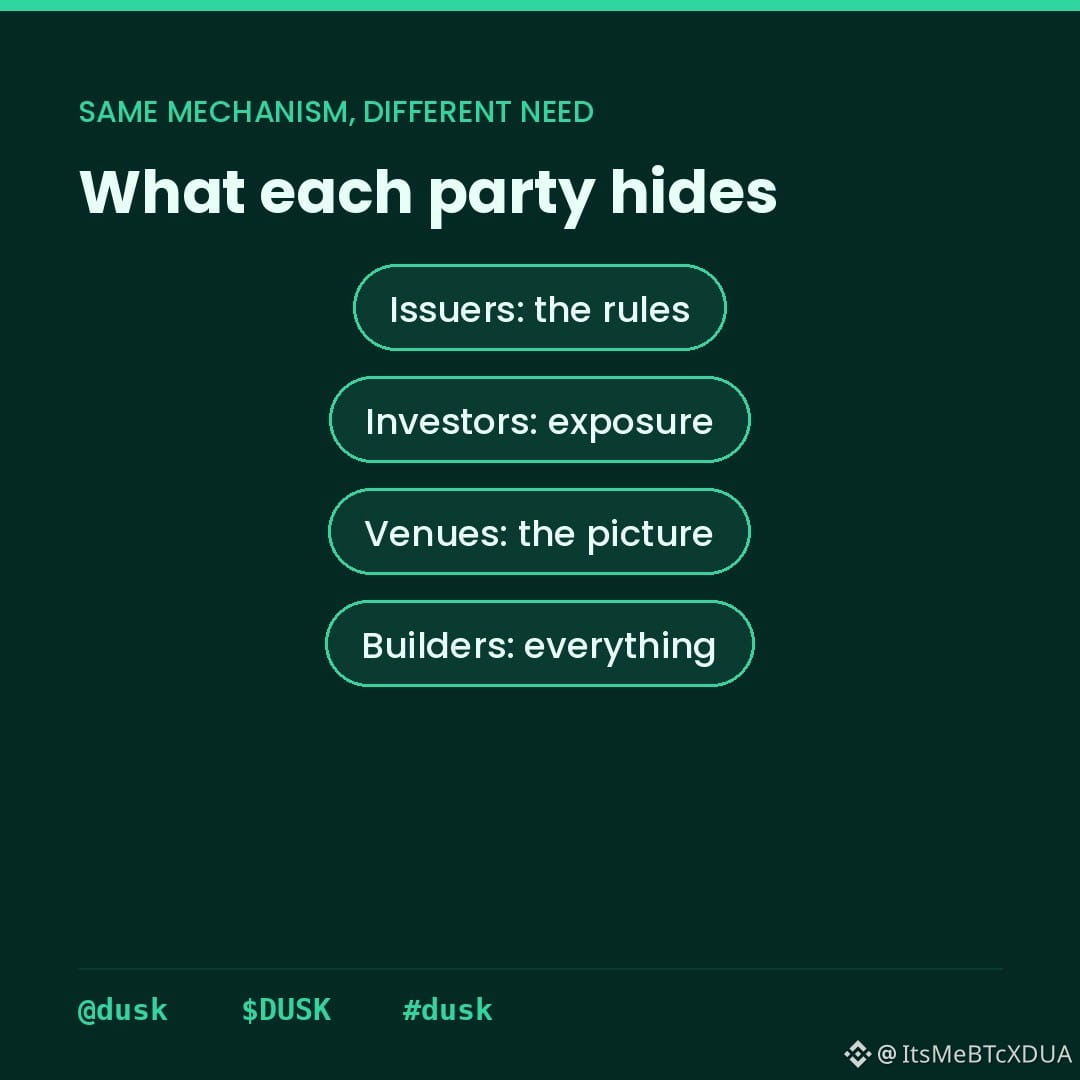
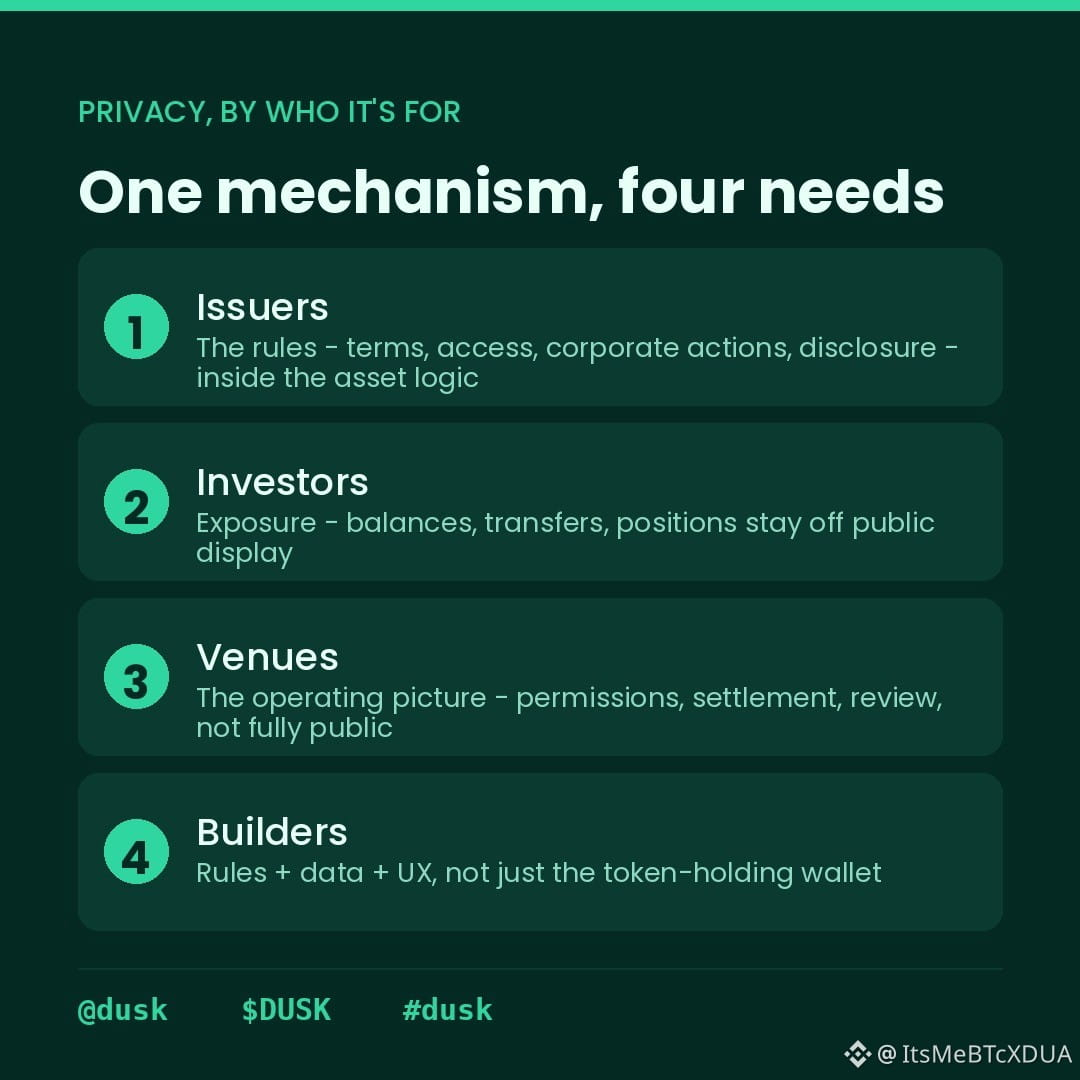
بالنسبة إلى المُصدِرين، الخصوصية تتعلق بالقواعد. يمكن أن تعيش شروط الأصول، وشروط الوصول، والإجراءات المؤسسية ومتطلبات الإفصاح داخل منطق الأصل نفسه، بدلًا من أن تكون ضمن عملية منفصلة خارج السلسلة.
بالنسبة إلى المستثمرين، الأمر يتعلق بالتعرّض. لا يتعين بثّ الأرصدة والتحويلات والمراكز إلى كامل الإنترنت؛ إذ لو كانت السلسلة عامة بالكامل لكان يتوجب عليهم ذلك.
بالنسبة إلى المنصات والمؤسسات، الخصوصية تتعلق بصورة التشغيل. يمكن أن تحدث الصلاحيات والتسوية والمراجعة دون وضع سير العمل كاملًا أمام العرض العام.
بالنسبة إلى المُطوّرين، فهي أوسع من أي عنوان واحد. الخصوصية تشمل القواعد والبيانات وتجربة المستخدم، وليس فقط محفظة الاحتفاظ بالرمز.
لذلك فهذه الخصوصية ليست إعدادًا واحدًا. إنها احتياجات مختلفة لأربع جهات تتشارك آلية واحدة.
والاستنتاج الذي أستخلصه هو أن هذا يوضح لماذا أن «فقط اجعله خاصًا» يقلل من قيمة الفكرة؛ كل طرف يريد إخفاء شيء مختلف أو إظهاره.
وأقل ما أنا متأكد منه هو من يملك سياسة الإفصاح عندما تتداخل هذه الأربعة: إذا تعارضت قاعدة المُصدِر مع إذن المنصة حول ما يمكن أن يراه المُراجع، فأي إعداد يَفوز.
@Dusk $DUSK #dusk
بالنسبة إلى المُصدِرين، الخصوصية تتعلق بالقواعد. يمكن أن تعيش شروط الأصول، وشروط الوصول، والإجراءات المؤسسية ومتطلبات الإفصاح داخل منطق الأصل نفسه، بدلًا من أن تكون ضمن عملية منفصلة خارج السلسلة.
بالنسبة إلى المستثمرين، الأمر يتعلق بالتعرّض. لا يتعين بثّ الأرصدة والتحويلات والمراكز إلى كامل الإنترنت؛ إذ لو كانت السلسلة عامة بالكامل لكان يتوجب عليهم ذلك.
بالنسبة إلى المنصات والمؤسسات، الخصوصية تتعلق بصورة التشغيل. يمكن أن تحدث الصلاحيات والتسوية والمراجعة دون وضع سير العمل كاملًا أمام العرض العام.
بالنسبة إلى المُطوّرين، فهي أوسع من أي عنوان واحد. الخصوصية تشمل القواعد والبيانات وتجربة المستخدم، وليس فقط محفظة الاحتفاظ بالرمز.
لذلك فهذه الخصوصية ليست إعدادًا واحدًا. إنها احتياجات مختلفة لأربع جهات تتشارك آلية واحدة.
والاستنتاج الذي أستخلصه هو أن هذا يوضح لماذا أن «فقط اجعله خاصًا» يقلل من قيمة الفكرة؛ كل طرف يريد إخفاء شيء مختلف أو إظهاره.
وأقل ما أنا متأكد منه هو من يملك سياسة الإفصاح عندما تتداخل هذه الأربعة: إذا تعارضت قاعدة المُصدِر مع إذن المنصة حول ما يمكن أن يراه المُراجع، فأي إعداد يَفوز.
@Dusk $DUSK #dusk