
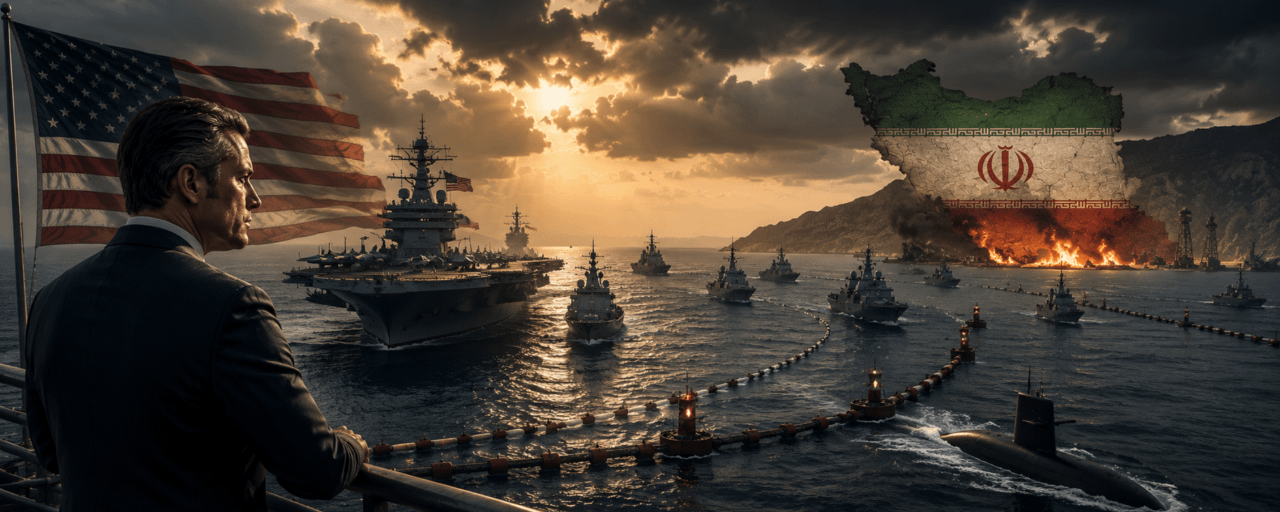
Pete Hegseth flew to Panama this week to address the crew of a guided-missile destroyer. He left reporters with something more consequential.
Asked whether the U.S. Navy can keep its blockade on Iran running for as long as it takes, the defense secretary didn't equivocate. Ships will simply rotate through the region, he said, "as we have, and we'll continue to."
Six months into the war, that's about as close as Washington has come to describing an endgame. There isn't one. Not yet, anyway.
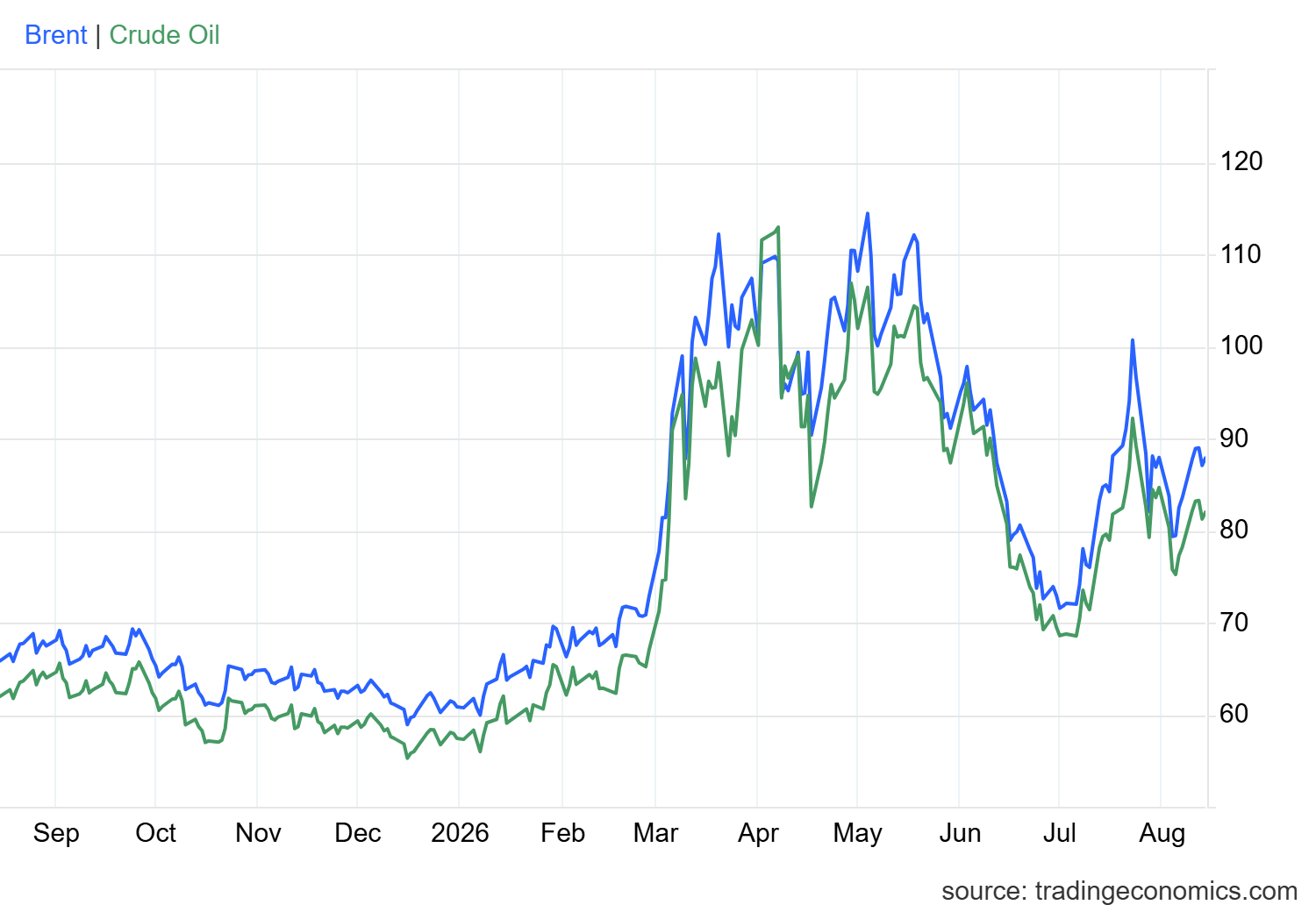
Oil Slips, Then Steadies, as the War Grinds On
Brent crude fell more than 2% Thursday to settle at $87.07 a barrel. West Texas Intermediate dropped to $81.25. Both benchmarks edged marginally higher in early Asian trading Friday, a small give-back after a rough session driven by worries over softening demand.
Then came Yemen's Houthis. The group said Thursday it struck Saudi Aramco's refinery in Jazan for the second time in less than a week, hitting the facility with two drones according to the Houthi-run Saba news agency. Neither Aramco nor the Saudi government had commented by the time markets closed.
Not everything in the crude market points downward. A wave of Middle Eastern oil is finally reaching American shores — at least 9 million barrels bound for U.S. ports this month, according to the maritime intelligence firm Kpler. It's a meaningful jump. It's also only about half of what typically arrived before the war began.
A Carrier Nine Months at Sea
The Navy is preparing to swap out one of the two aircraft carriers it has stationed in the Middle East. USS George Washington, forward-deployed to Japan, is being sent to relieve USS Abraham Lincoln — a rotation officials say was already planned before scrutiny of the Lincoln's living conditions became a story of its own.
That scrutiny has been intense. MS Now reported earlier this month that sailors aboard the Lincoln were running short on food, toothpaste and soap. Lawmakers have since pressed the Pentagon for answers, citing worry that exhaustion and declining mental health are building among a crew that hasn't seen a proper port call in months. The carrier has now logged more than 250 days at sea.
A U.S. official confirmed that a sailor went overboard from the Lincoln this month and was rescued quickly. The Navy did not respond to a request for comment on conditions aboard the ship. Hegseth, for his part, has pushed back hard on the coverage, calling it "completely misrepresented" — though he acknowledged that some deployments run longer and tougher than others.
George Washington, meanwhile, has been making its way west. The carrier transited the Strait of Malacca this week alongside a cruiser and a guided-missile destroyer, according to open-source tracking, after weeks operating in the Pacific.
The Reaper Bill
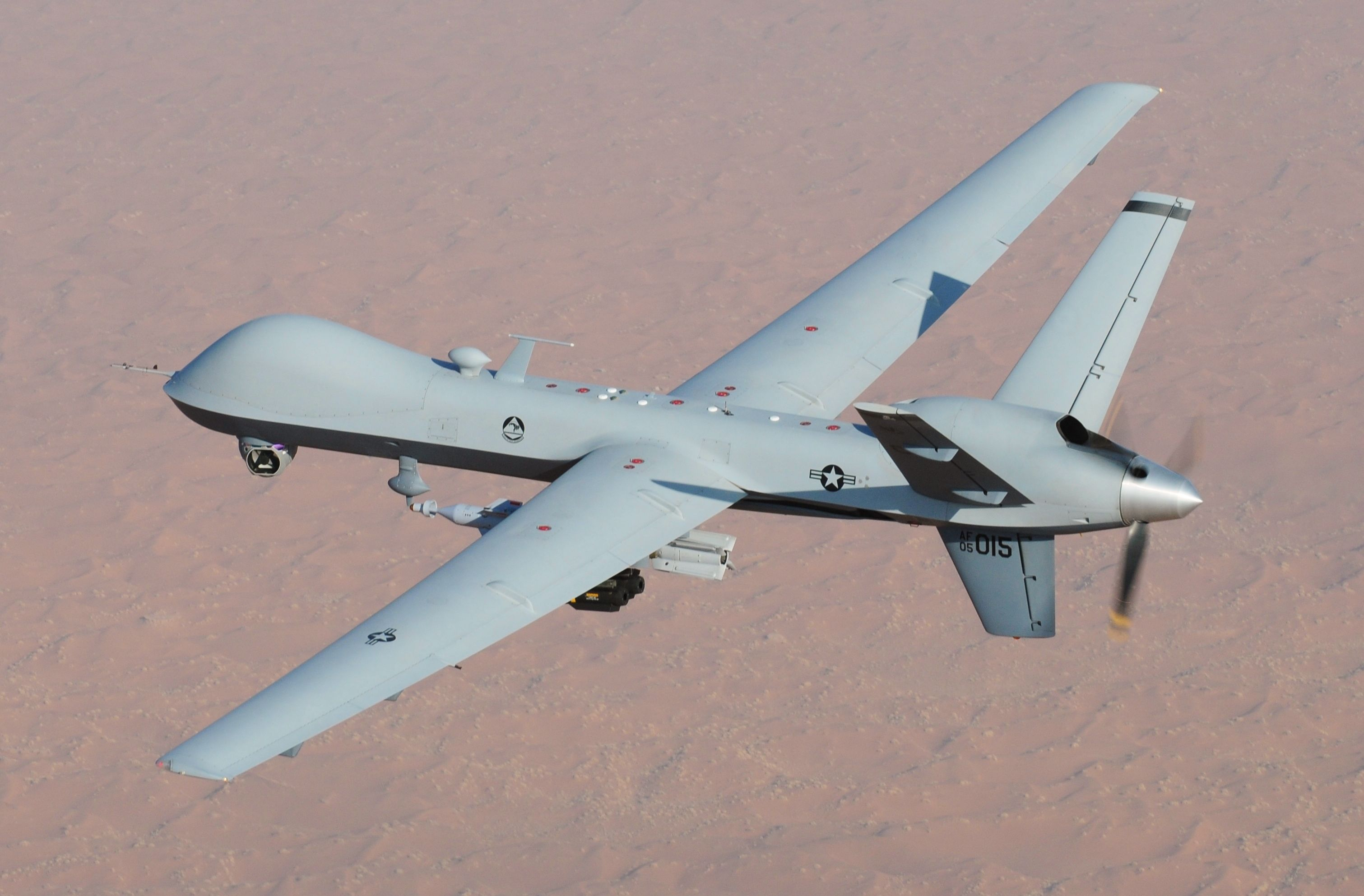
Drones don't survive the Strait of Hormuz corridor well. The U.S. has lost at least 45 MQ-9 Reapers during the war — roughly a quarter of the fleet — according to three officials familiar with the losses.
Each Reaper runs $30 million to $50 million depending on its sensor and weapons package, per the Air Force. Do the math on 45 of them, and taxpayers are looking at a bill north of $1.3 billion for a single weapons system. Some were shot down. Others simply lost their communications link and crashed.
Tehran Claims the Gate
Iran escalated its rhetoric on the Strait of Hormuz this week, moving from threats to close the waterway to something bolder: a claim that it now controls who passes through at all.
Brig. Gen. Ebrahim Zolfaghari, spokesman for Iran's Khatam al-Anbiya Central Headquarters, said no commercial vessel or oil tanker can transit the strait safely without Tehran's permission and supervision. Iran, he said, remains in full control, as it has been all along.
The statement landed a day after President Trump posted on Truth Social that the U.S. has "total control" over Hormuz. Iran's rebuttal was pointed, dismissing American claims of normal shipping traffic as simply false.
The rhetoric matters because it marks a shift. Iran isn't just threatening closure anymore — it's asserting the role of gatekeeper, directly at odds with Washington's insistence that the U.S. controls the waterway and guarantees safe passage.
Underneath the rhetoric, negotiations remain stalled. Iran has tied any reopening to compensation and to changes in the American naval blockade. Actual shipping tells its own story: commercial traffic through the Strait has fallen into the single digits on some days this week, according to tracking data, a fraction of the roughly 130 vessels a day that transited before the war.
Bessent Promises Something 'Never Been Seen'
Treasury Secretary Scott Bessent added his own warning Thursday: more economic pain is coming, and soon.
"Watch this space," he told Newsmax's "Rob Schmitt Tonight," previewing a wave of new measures he described as unlike anything applied to a country in the history of economic isolation. He didn't detail what's coming, only that it will pair deeper economic isolation with the continued blockade on Iranian ports.
It builds on a summer of expanding sanctions. Treasury broadened its targeting of Iran's shipping and financial networks in July, following renewed Iranian attacks on vessels transiting Hormuz.
A Different Message From CENTCOM
Not everyone in Washington's orbit is talking blockade and sanctions. Adm. Brad Cooper, the CENTCOM commander, used a visit to Israel to push for renewed strikes on Iran, according to Israel's Channel 13 — a notable break from the administration's stated goal last week of winding down active fronts.
Cooper's message to senior Israeli officials was blunt: striking Iranian infrastructure again "will change the rules of the game." Whether Washington acts on that view remains to be seen.
Two Chokepoints, One Story
The latest UKMTO assessment paints a grim picture of both major shipping corridors in the region. Hormuz tanker transits remain in the single digits in both directions, with Iran's Revolutionary Guard continuing to harass and surveil merchant vessels. Near Limah, Khasab and Kumzar, projectile strikes and near-miss explosions continue with little pause.
The southern Red Sea tells a similar story. Traffic through Bab el-Mandeb remains depressed following the Houthis' naval blockade declaration against Saudi Arabia on July 20.
None of this required a confirmed attack on a merchant vessel this reporting period. Elevated risk and thin traffic were enough on their own.
Six months in, that may be the war's clearest signature: not the strikes that make headlines, but the ships that no longer show up at all.