#dusk $DUSK
تتضح حقيقة واحدة بسرعة عند التعمق في بنية Dusk. الخصوصية ليست مجرد خيار يمكن تشغيله؛ بل هي ضريبة بنيوية.
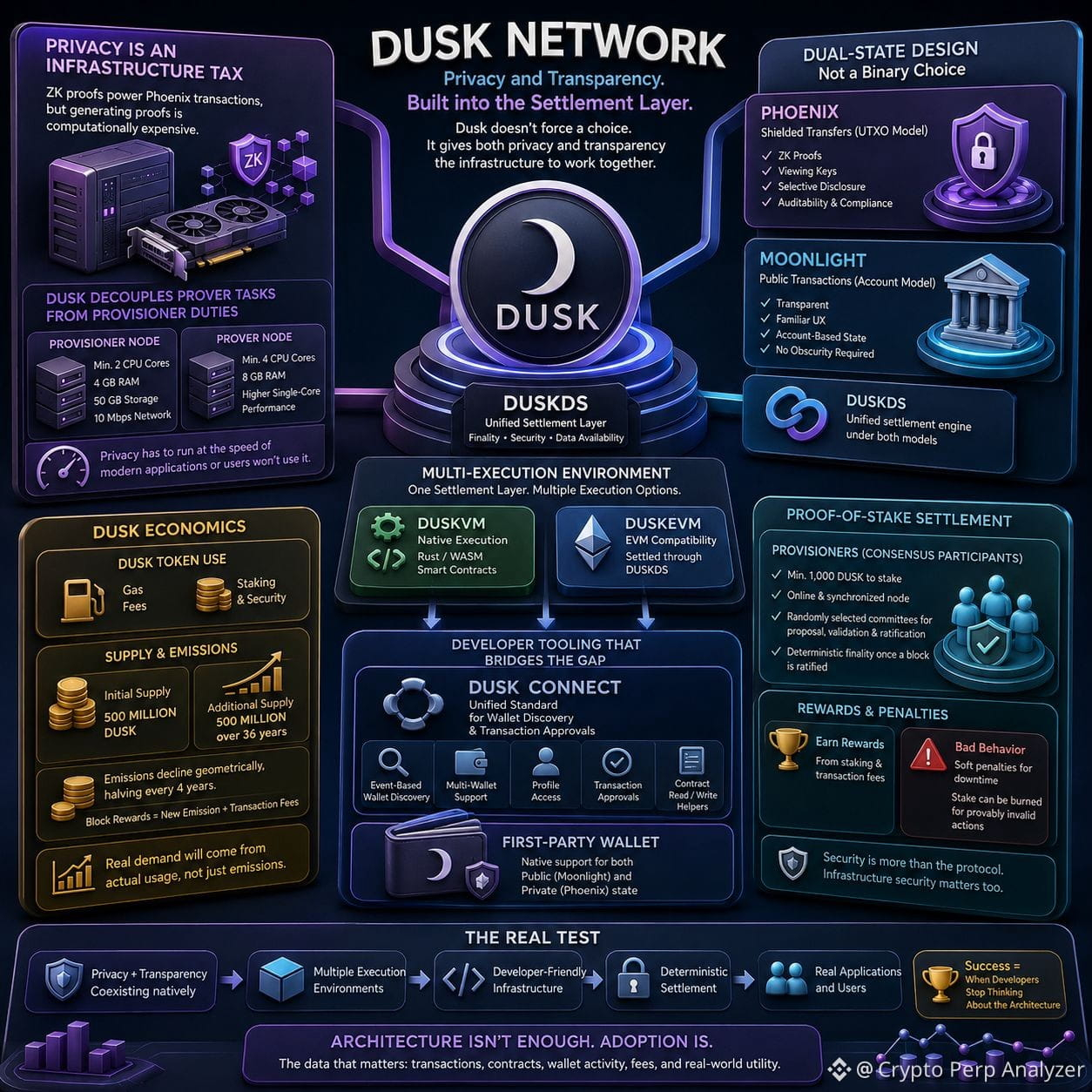
من السهل الحديث عن التشفير التراكمي صفر المعرفة بصياغات رياضية مجردة، لكن الواقع التشغيلي لا يرحم. معاملات Phoenix تعتمد على براهين ZK، وتوليد تلك البراهين عمله قاسٍ على موارد الحوسبة. ولهذا السبب تفصل Dusk صراحةً مهام المُثبّت عن واجبات مُزوّد الخدمة المعتادة، طالبةً مواصفات عتاد أكثر ثقلاً لأي شخص يشغّل عقدة مُثبّت.
يعيد هذا الفصل بين العتاد صياغة كامل نقاش الخصوصية.
قد تكون الرياضيات محكمة، لكن إذا أضاف توليد البراهين تأخيراً مُحبِطاً أو رفع التكاليف التشغيلية، فإن منتج المستخدم النهائي ينكسر. لا يقيم المستخدمون المعاملة بناءً على أناقة الدوائر. بل يقيمونها بناءً على السرعة والموثوقية. يجب أن تعمل الخصوصية بسرعات الأساس نفسها التي تعمل بها تطبيقات الويب الحديثة، وإلا فلن يستخدمها الناس.
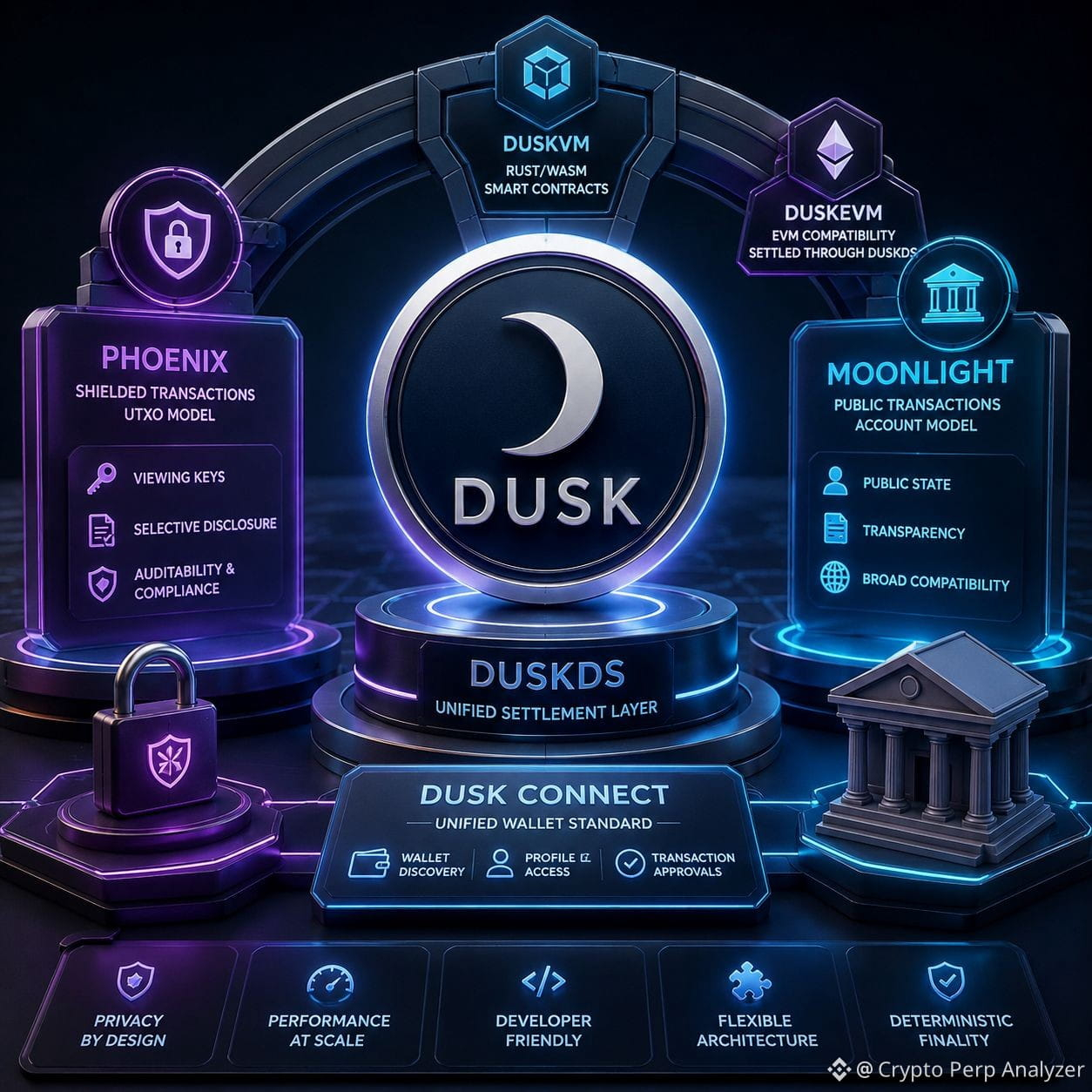
ما يجعل تصميم Dusk مثيراً للاهتمام هو أنه لا يفرض خياراً ثنائياً.
Phoenix يتعامل مع التحويلات المُحصّنة، باستخدام مفاتيح العرض لإمكانية التدقيق والامتثال الانتقائي.
Moonlight يحافظ على نموذج حسابي عام مألوف للحالة لا يتطلب الغموض.
DuskDS يعمل كآلة تسوية موحدة تحت كلٍ منهما.
وجود بروتوكول حالة ثنائي متوازن على الورق شيء واحد، لكن مشاهدة طبقة أدوات المطورين وهي تحاول سد الفجوة عملياً هو المكان الذي تكمن فيه القصة الحقيقية.
مع قيام Dusk Connect بدور معيار موحّد لاكتشاف المحافظ والموافقات على المعاملات، مقترناً بمحفظة طرف أول تتولى كلا من الحالة العامة والخاصة بشكل أصلي أخيراً تتحول المنظومة من هندسة مجردة إلى فائدة منتج.
أنا أقل تركيزاً الآن على العناوين الجذابة بشأن مزاعم الخصوصية، وأكثر اهتماماً بالميكانيكيات اليومية. هل تُزيل طبقات التجريد هذه فعلاً الاحتكاك عن المطورين؟
لأن الأمر في النهاية لا ينجح إلا عندما لا يعود على المطورين أن يفكروا في المعمارية.
@Dusk #dusk $DUSK
تتضح حقيقة واحدة بسرعة عند التعمق في بنية Dusk. الخصوصية ليست مجرد خيار يمكن تشغيله؛ بل هي ضريبة بنيوية.
من السهل الحديث عن التشفير التراكمي صفر المعرفة بصياغات رياضية مجردة، لكن الواقع التشغيلي لا يرحم. معاملات Phoenix تعتمد على براهين ZK، وتوليد تلك البراهين عمله قاسٍ على موارد الحوسبة. ولهذا السبب تفصل Dusk صراحةً مهام المُثبّت عن واجبات مُزوّد الخدمة المعتادة، طالبةً مواصفات عتاد أكثر ثقلاً لأي شخص يشغّل عقدة مُثبّت.
يعيد هذا الفصل بين العتاد صياغة كامل نقاش الخصوصية.
قد تكون الرياضيات محكمة، لكن إذا أضاف توليد البراهين تأخيراً مُحبِطاً أو رفع التكاليف التشغيلية، فإن منتج المستخدم النهائي ينكسر. لا يقيم المستخدمون المعاملة بناءً على أناقة الدوائر. بل يقيمونها بناءً على السرعة والموثوقية. يجب أن تعمل الخصوصية بسرعات الأساس نفسها التي تعمل بها تطبيقات الويب الحديثة، وإلا فلن يستخدمها الناس.
ما يجعل تصميم Dusk مثيراً للاهتمام هو أنه لا يفرض خياراً ثنائياً.
Phoenix يتعامل مع التحويلات المُحصّنة، باستخدام مفاتيح العرض لإمكانية التدقيق والامتثال الانتقائي.
Moonlight يحافظ على نموذج حسابي عام مألوف للحالة لا يتطلب الغموض.
DuskDS يعمل كآلة تسوية موحدة تحت كلٍ منهما.
وجود بروتوكول حالة ثنائي متوازن على الورق شيء واحد، لكن مشاهدة طبقة أدوات المطورين وهي تحاول سد الفجوة عملياً هو المكان الذي تكمن فيه القصة الحقيقية.
مع قيام Dusk Connect بدور معيار موحّد لاكتشاف المحافظ والموافقات على المعاملات، مقترناً بمحفظة طرف أول تتولى كلا من الحالة العامة والخاصة بشكل أصلي أخيراً تتحول المنظومة من هندسة مجردة إلى فائدة منتج.
أنا أقل تركيزاً الآن على العناوين الجذابة بشأن مزاعم الخصوصية، وأكثر اهتماماً بالميكانيكيات اليومية. هل تُزيل طبقات التجريد هذه فعلاً الاحتكاك عن المطورين؟
لأن الأمر في النهاية لا ينجح إلا عندما لا يعود على المطورين أن يفكروا في المعمارية.
@Dusk #dusk $DUSK