After spending enough time around blockchain, AI, and Web3, I’ve noticed how quickly the same ideas come back wearing different clothes. Privacy, scalability, decentralization, real-world utility all important words, but sometimes the substance behind them is surprisingly thin.
What caught my attention with Dusk is that privacy sits much closer to the core of what it is building. Financial activity is different from sending a simple token around. Not every transaction, balance, or piece of business information should necessarily be visible to the entire network just because it happens on-chain.
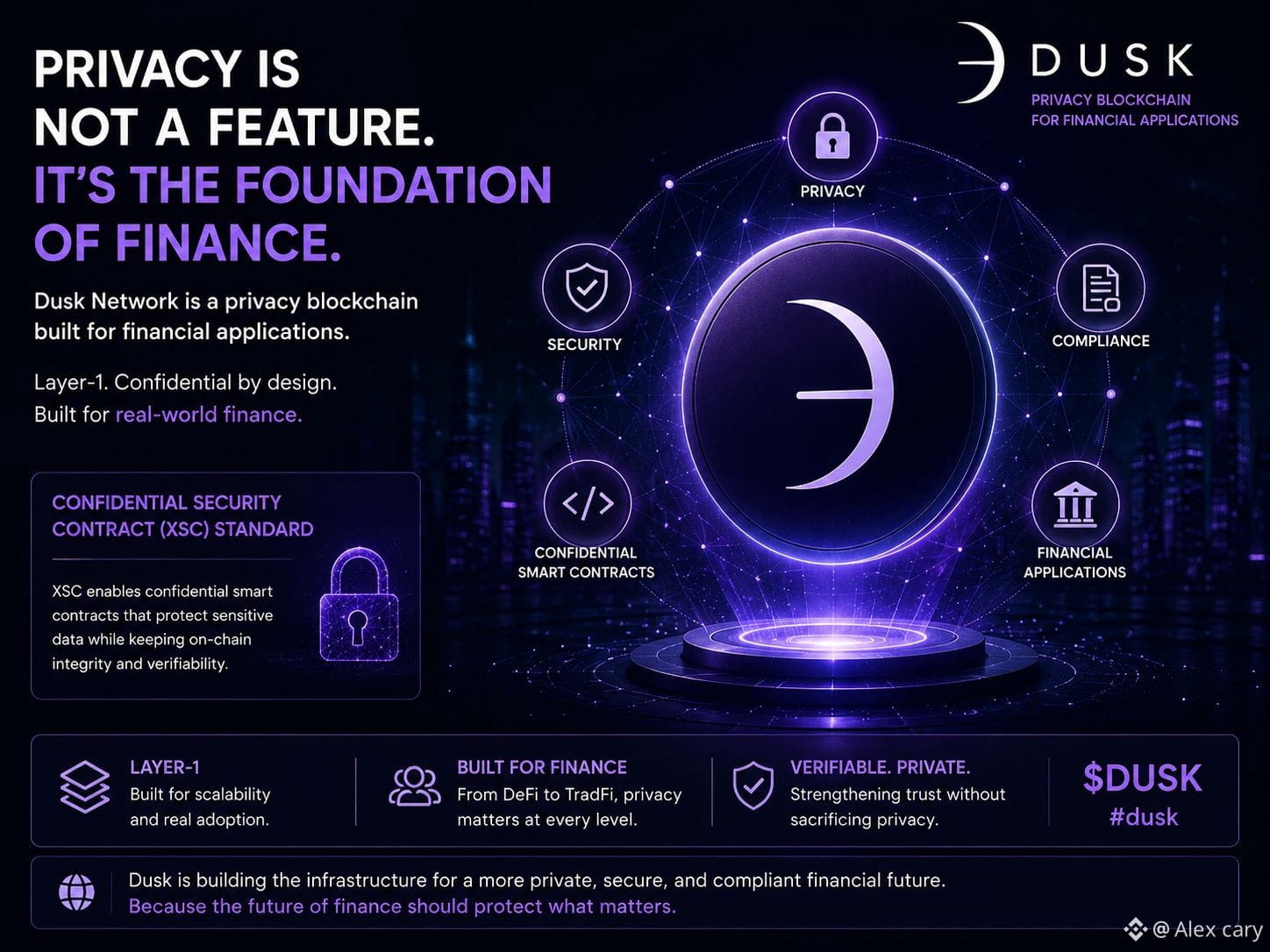
That’s where I find Dusk interesting. Its Layer-1 is designed around financial applications, with confidential smart contracts and the Confidential Security Contract standard forming part of that approach. From my perspective, the bigger idea isn’t simply “private blockchain.” It’s about giving financial applications a way to preserve verifiability while having more control over sensitive information.
Of course, the difficult part starts when real users arrive. Privacy has to work alongside security, compliance, usability, and scale. Those trade-offs are where many projects eventually get tested.
I’m still watching to see how Dusk handles that in practice, but the problem itself feels meaningful. If on-chain finance continues moving toward real-world use, privacy could become infrastructure rather than a feature people mention in a pitch. For me, that makes Dusk worth following beyond the noise of the current cycle.
$DUSK #dusk @Dusk
What caught my attention with Dusk is that privacy sits much closer to the core of what it is building. Financial activity is different from sending a simple token around. Not every transaction, balance, or piece of business information should necessarily be visible to the entire network just because it happens on-chain.
That’s where I find Dusk interesting. Its Layer-1 is designed around financial applications, with confidential smart contracts and the Confidential Security Contract standard forming part of that approach. From my perspective, the bigger idea isn’t simply “private blockchain.” It’s about giving financial applications a way to preserve verifiability while having more control over sensitive information.
Of course, the difficult part starts when real users arrive. Privacy has to work alongside security, compliance, usability, and scale. Those trade-offs are where many projects eventually get tested.
I’m still watching to see how Dusk handles that in practice, but the problem itself feels meaningful. If on-chain finance continues moving toward real-world use, privacy could become infrastructure rather than a feature people mention in a pitch. For me, that makes Dusk worth following beyond the noise of the current cycle.
$DUSK #dusk @Dusk