معظم السلاسل التي تتباهى بـ"النهائية السريعة" تكون في الواقع تتباهى بـ"النهائية الاحتمالية" — فقط انتظر وقتًا كافيًا حتى يصبح احتمال الرجوع للخلف إحصائيًا أمرًا عبثيًا. لا يفعل ذلك "Dusk". فهو يلتزم بإنهاء نهائي فعلي للتسوية، والآلية التي تقف خلف ذلك تستحق التأمل أكثر مما تسمح به صفحة التسويق.
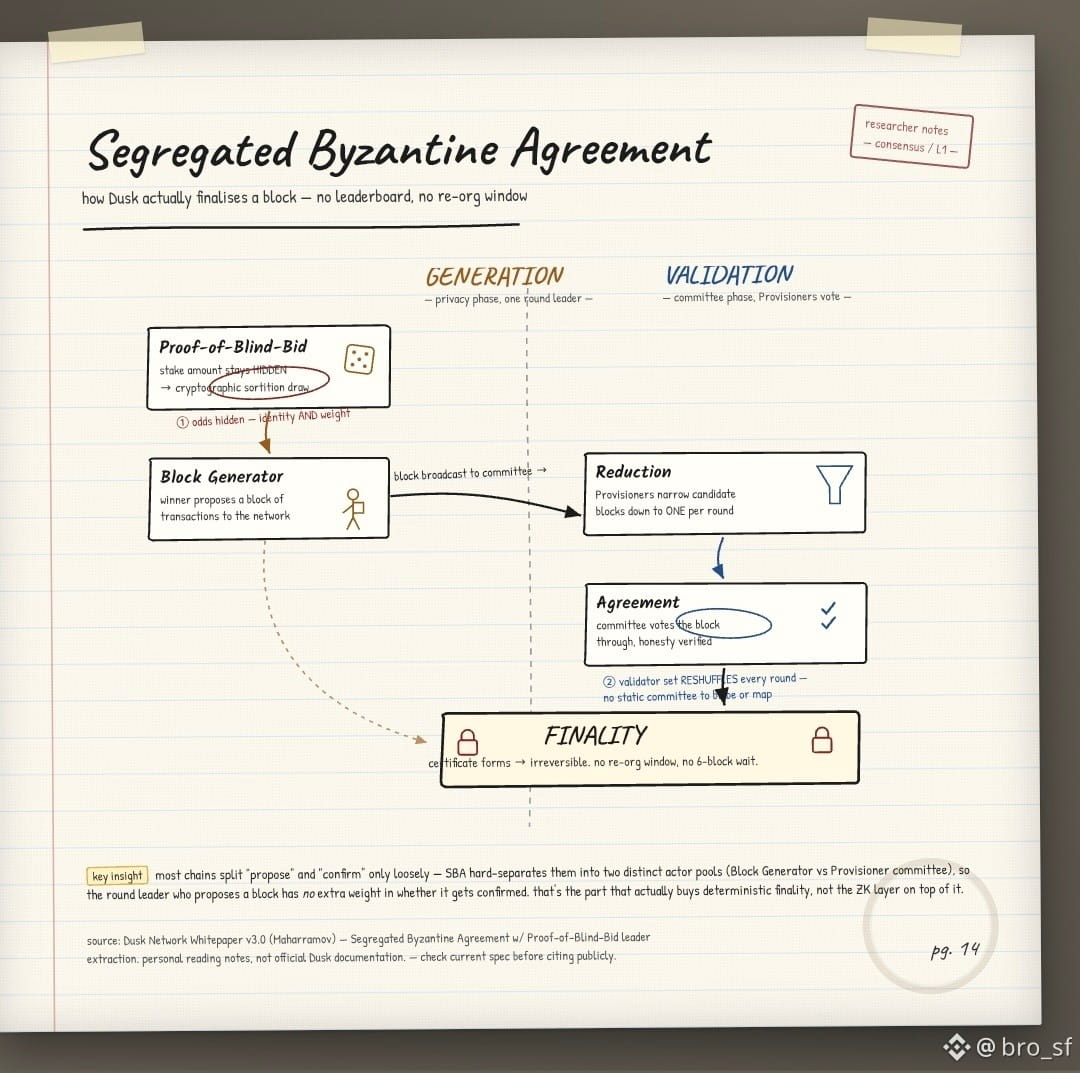
تقسيم اتفاقية بيزنطية مُعزولة (Segregated Byzantine Agreement) يفصل إنتاج الكتل إلى وظيفتين لا تلتقيان أبدًا. يتم التعامل مع الجيل عبر مولّد كتل (Block Generator) يتم اختياره عبر Proof-of-Blind-Bid — وهي عملية فرز (sortition) تُبقي مبلغ الرهان الذي يحدد فرص فوزك مخفيًا، ليس فقط هويتك. أما التحقق فهو وظيفة منفصلة تُدار عبر لجنة دورية من مُقدّمي الخدمة (Provisioners) الذين يصوّتون على الكتلة عبر Reduction ثم Agreement. مرحلتان، مجموعتان مختلفتان من الأطراف الفاعلة، دون دور واحد يجمع بين من يقترح ومن ينجز التثبيت النهائي.
لماذا يهم هذا الفصل أكثر مما يبدو؟ لأن معظم هجمات الإجماع تستهدف التداخل — القائد الذي يستطيع الاقتراح AND يمتلك تأثيرًا أكبر من الطبيعي على التأكيد. بعزل تلك الأدوار، وإخفاء أوزان المزايدة التي تقرر من يتم اختياره لتوليد الكتل، يزيل "Dusk" هدفًا كان سيكون سهلًا للتخريب أو الرشوة. بمجرد تكوّن شهادة في مرحلة Agreement، لا يعود الأمر مجرد انتظار نهائية غير حاسمة لست تأكيدات إضافية — بل يصبح الأمر نهائيًا. وهذه هي النقطة التي تهتم بها المؤسسات فعلًا، لا مجرد شعارات الخصوصية.
المقايضة التي لا يعلن عنها أحد: هذا لا يعمل إلا لأن قوة التصويت تعيد الترتيب في كل جولة. مجموعات المدققين الثابتة أسهل في الفهم وأسهل في التدقيق من الخارج، لكنها أيضًا أسهل في النمذجة والاستهداف. راهن "Dusk" على عدم القابلية للتنبؤ بدلًا من سهولة القراءة.
الأمر مثير للفضول: أين يقع الناس من هذا — لسلسلة تستهدف تسوية الأوراق المالية الخاضعة للرقابة، هل إعادة ترتيب المدققين على أساس كل جولة تُعد ميزة أمنية، أم أنها مجرد نقل لسطح الهجوم من "من هو القائد" إلى "هل يمكنك التنبؤ بمخرجات sortition"؟
#dusk $DUSK @Dusk
تقسيم اتفاقية بيزنطية مُعزولة (Segregated Byzantine Agreement) يفصل إنتاج الكتل إلى وظيفتين لا تلتقيان أبدًا. يتم التعامل مع الجيل عبر مولّد كتل (Block Generator) يتم اختياره عبر Proof-of-Blind-Bid — وهي عملية فرز (sortition) تُبقي مبلغ الرهان الذي يحدد فرص فوزك مخفيًا، ليس فقط هويتك. أما التحقق فهو وظيفة منفصلة تُدار عبر لجنة دورية من مُقدّمي الخدمة (Provisioners) الذين يصوّتون على الكتلة عبر Reduction ثم Agreement. مرحلتان، مجموعتان مختلفتان من الأطراف الفاعلة، دون دور واحد يجمع بين من يقترح ومن ينجز التثبيت النهائي.
لماذا يهم هذا الفصل أكثر مما يبدو؟ لأن معظم هجمات الإجماع تستهدف التداخل — القائد الذي يستطيع الاقتراح AND يمتلك تأثيرًا أكبر من الطبيعي على التأكيد. بعزل تلك الأدوار، وإخفاء أوزان المزايدة التي تقرر من يتم اختياره لتوليد الكتل، يزيل "Dusk" هدفًا كان سيكون سهلًا للتخريب أو الرشوة. بمجرد تكوّن شهادة في مرحلة Agreement، لا يعود الأمر مجرد انتظار نهائية غير حاسمة لست تأكيدات إضافية — بل يصبح الأمر نهائيًا. وهذه هي النقطة التي تهتم بها المؤسسات فعلًا، لا مجرد شعارات الخصوصية.
المقايضة التي لا يعلن عنها أحد: هذا لا يعمل إلا لأن قوة التصويت تعيد الترتيب في كل جولة. مجموعات المدققين الثابتة أسهل في الفهم وأسهل في التدقيق من الخارج، لكنها أيضًا أسهل في النمذجة والاستهداف. راهن "Dusk" على عدم القابلية للتنبؤ بدلًا من سهولة القراءة.
الأمر مثير للفضول: أين يقع الناس من هذا — لسلسلة تستهدف تسوية الأوراق المالية الخاضعة للرقابة، هل إعادة ترتيب المدققين على أساس كل جولة تُعد ميزة أمنية، أم أنها مجرد نقل لسطح الهجوم من "من هو القائد" إلى "هل يمكنك التنبؤ بمخرجات sortition"؟
#dusk $DUSK @Dusk