لقد لاحظت شيئًا أثناء التحقق المتقاطع لتدفق معاملة @Dusk مع نشاط $DUSK EVM الأسبوع الماضي: كانت المعاملات تتم تأكيدها، لكن الفجوة بين وقت الإرسال ووقت الحسم النهائي كانت تتبدّل بنمط لا يتوافق إطلاقًا مع ازدحام الشبكة. كانت افتراضاتي الأولى بسيطة: تسعير الازدحام، وهو النوع الذي تراه على معظم السلاسل عندما يصبح حيز الكتلة مزدحمًا.
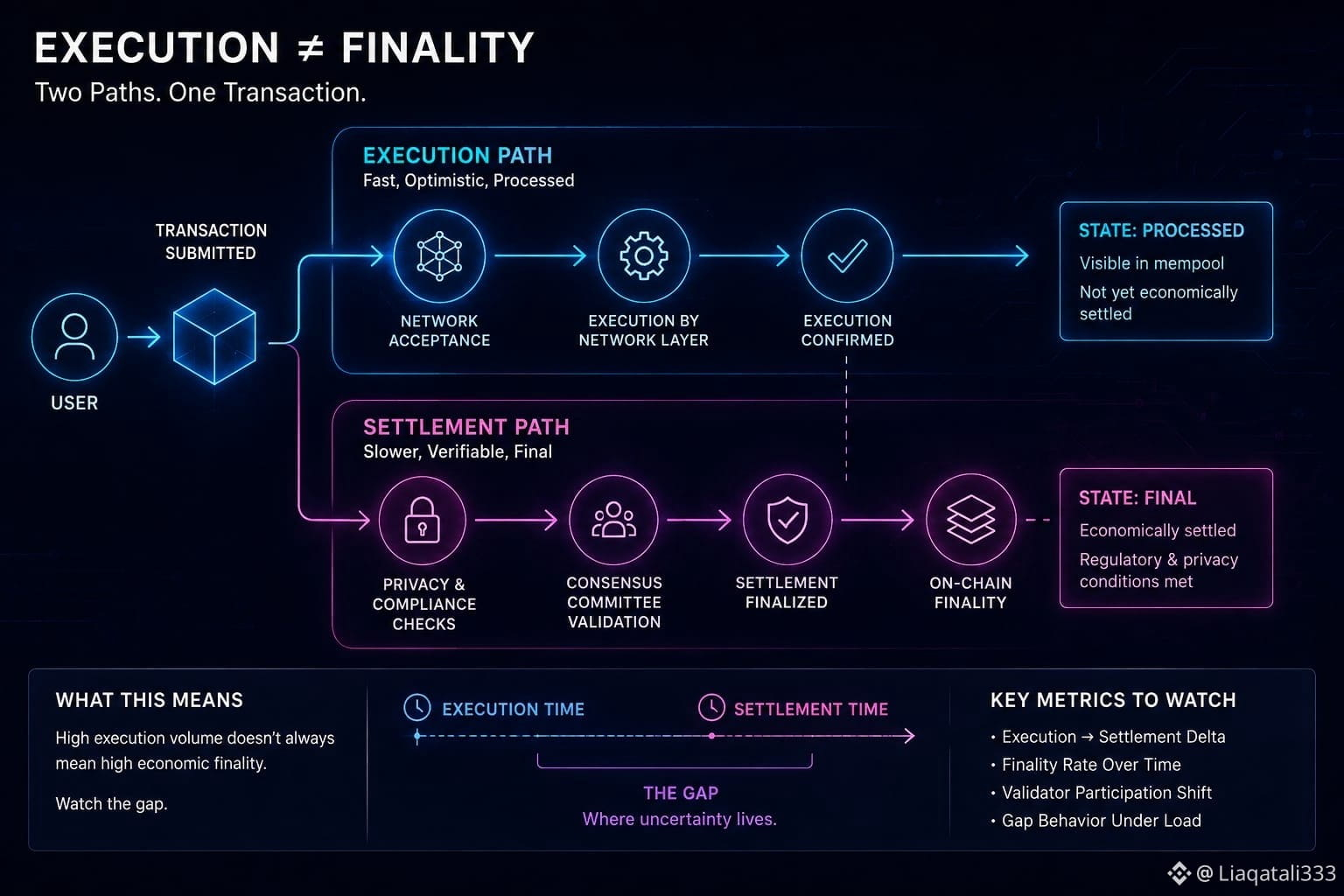
وبعد التعمّق أكثر، تتبعت السبب إلى كيفية فصل Dusk بين تأكيد التنفيذ والحسم النهائي. يمكن أن تُقبل المعاملة وتُعالج من طبقة الشبكة، بينما يتحرك فعل التسوية—وهو الجزء المهم للأصول الخاضعة للتنظيم أو التي تخضع لمفاتيح خصوصية/قيود وصول—عبر مسار إجماع منفصل. هذا ليس ازدحامًا. بل إن البروتوكول يعامل "تمت المعالجة" و"تمت نهائيتها" كحالتيْن مختلفتيْن حقًا، وليس مجرد كلمتين لوصف الحدث نفسه.
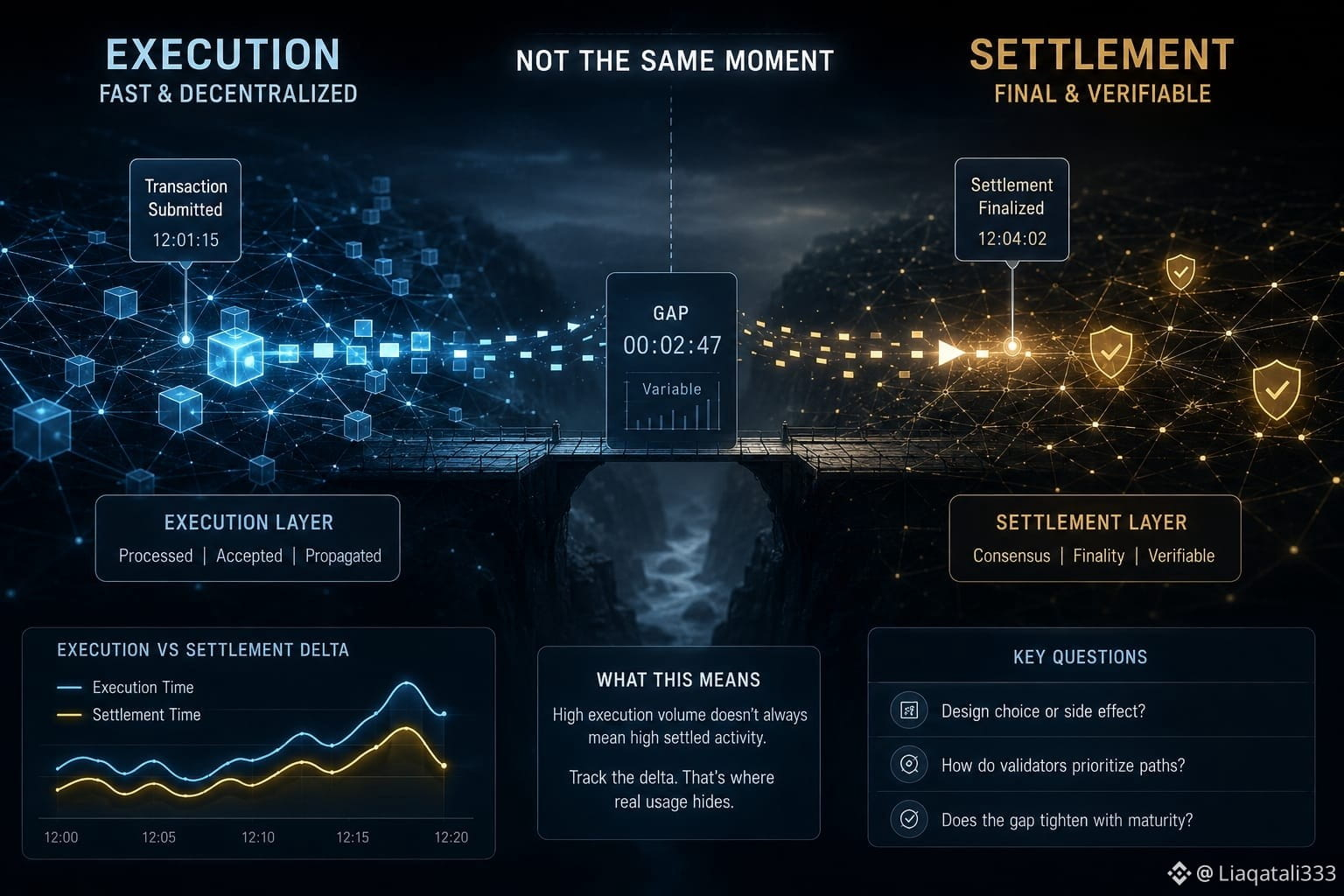
أعاد ذلك صياغة تفكيري بشأن مؤشرات النشاط بالكامل. معظم الناس، وأنا أيضًا حتى وقت قريب، نخلط بين معدل الإنتاجية وضمانات التسوية. لكن إذا كان التنفيذ والحسم النهائي مفصولين حسب التصميم، فإن ارتفاع حجم المعاملات المرئية لا يعني بالضرورة ارتفاعًا في النشاط الاقتصادي المؤكّد. والأثر من الدرجة الثانية هو أن لوحات المعلومات التي تعرض أعداد المعاملات الخام قد تُبالغ في تقدير الاستخدام الحقيقي خلال الفترات التي يتأخر فيها الحسم النهائي عن التنفيذ.
ما لم أحسمه بعد هو ما إذا كان هذا الفصل خيارًا مقصودًا لتعزيز المرونة أم مجرد نتيجة ثانوية لكيفية ترتيب المُدقّقين للعمليات ضمن قيود الكشف الانتقائي. إذا كان مقصودًا، فهذا يشير إلى أن الشبكة تعمل على تحسين سلامة التسوية على حساب سرعة العناوين الرئيسية، وهي مفاضلة حقيقية وليست خللًا، لكنني لا أستطيع بعد تحديد كيفية تحفيز المُدقّقين لأولوية أحد المسارين على الآخر تحت الضغط.
فيما هو قادم، سأراقب الفارق بين طوابع زمن التنفيذ وطوابع زمن التسوية عبر ظروف حمل مختلفة، وليس فقط متوسط زمن الحسم النهائي. وأيضًا أريد معرفة ما إذا كانت مشاركة المُدقّقين تتغير عندما يتّسع هذا الفارق، لأن ذلك سيخبرني إن كان المشغلون يديرونه بشكل فعّال أم أنهم يمتصونه بشكل سلبي.#dusk
وبعد التعمّق أكثر، تتبعت السبب إلى كيفية فصل Dusk بين تأكيد التنفيذ والحسم النهائي. يمكن أن تُقبل المعاملة وتُعالج من طبقة الشبكة، بينما يتحرك فعل التسوية—وهو الجزء المهم للأصول الخاضعة للتنظيم أو التي تخضع لمفاتيح خصوصية/قيود وصول—عبر مسار إجماع منفصل. هذا ليس ازدحامًا. بل إن البروتوكول يعامل "تمت المعالجة" و"تمت نهائيتها" كحالتيْن مختلفتيْن حقًا، وليس مجرد كلمتين لوصف الحدث نفسه.
أعاد ذلك صياغة تفكيري بشأن مؤشرات النشاط بالكامل. معظم الناس، وأنا أيضًا حتى وقت قريب، نخلط بين معدل الإنتاجية وضمانات التسوية. لكن إذا كان التنفيذ والحسم النهائي مفصولين حسب التصميم، فإن ارتفاع حجم المعاملات المرئية لا يعني بالضرورة ارتفاعًا في النشاط الاقتصادي المؤكّد. والأثر من الدرجة الثانية هو أن لوحات المعلومات التي تعرض أعداد المعاملات الخام قد تُبالغ في تقدير الاستخدام الحقيقي خلال الفترات التي يتأخر فيها الحسم النهائي عن التنفيذ.
ما لم أحسمه بعد هو ما إذا كان هذا الفصل خيارًا مقصودًا لتعزيز المرونة أم مجرد نتيجة ثانوية لكيفية ترتيب المُدقّقين للعمليات ضمن قيود الكشف الانتقائي. إذا كان مقصودًا، فهذا يشير إلى أن الشبكة تعمل على تحسين سلامة التسوية على حساب سرعة العناوين الرئيسية، وهي مفاضلة حقيقية وليست خللًا، لكنني لا أستطيع بعد تحديد كيفية تحفيز المُدقّقين لأولوية أحد المسارين على الآخر تحت الضغط.
فيما هو قادم، سأراقب الفارق بين طوابع زمن التنفيذ وطوابع زمن التسوية عبر ظروف حمل مختلفة، وليس فقط متوسط زمن الحسم النهائي. وأيضًا أريد معرفة ما إذا كانت مشاركة المُدقّقين تتغير عندما يتّسع هذا الفارق، لأن ذلك سيخبرني إن كان المشغلون يديرونه بشكل فعّال أم أنهم يمتصونه بشكل سلبي.#dusk