قمتُ الليلة الماضية بجسر بعض DUSK على شبكة اختبار إلى DuskEVM ونشرت عقدًا صغيرًا، وغرضي في الغالب مجرد مراقبة معاملة تتحرك عبر الخط من البداية إلى النهاية. تأكدت بسرعة. وبطبيعة الحال افترضت أن هذا يعني أنها انتهت — ظهور الإدراج، وإغلاق المعاملة، والمضي قدمًا.
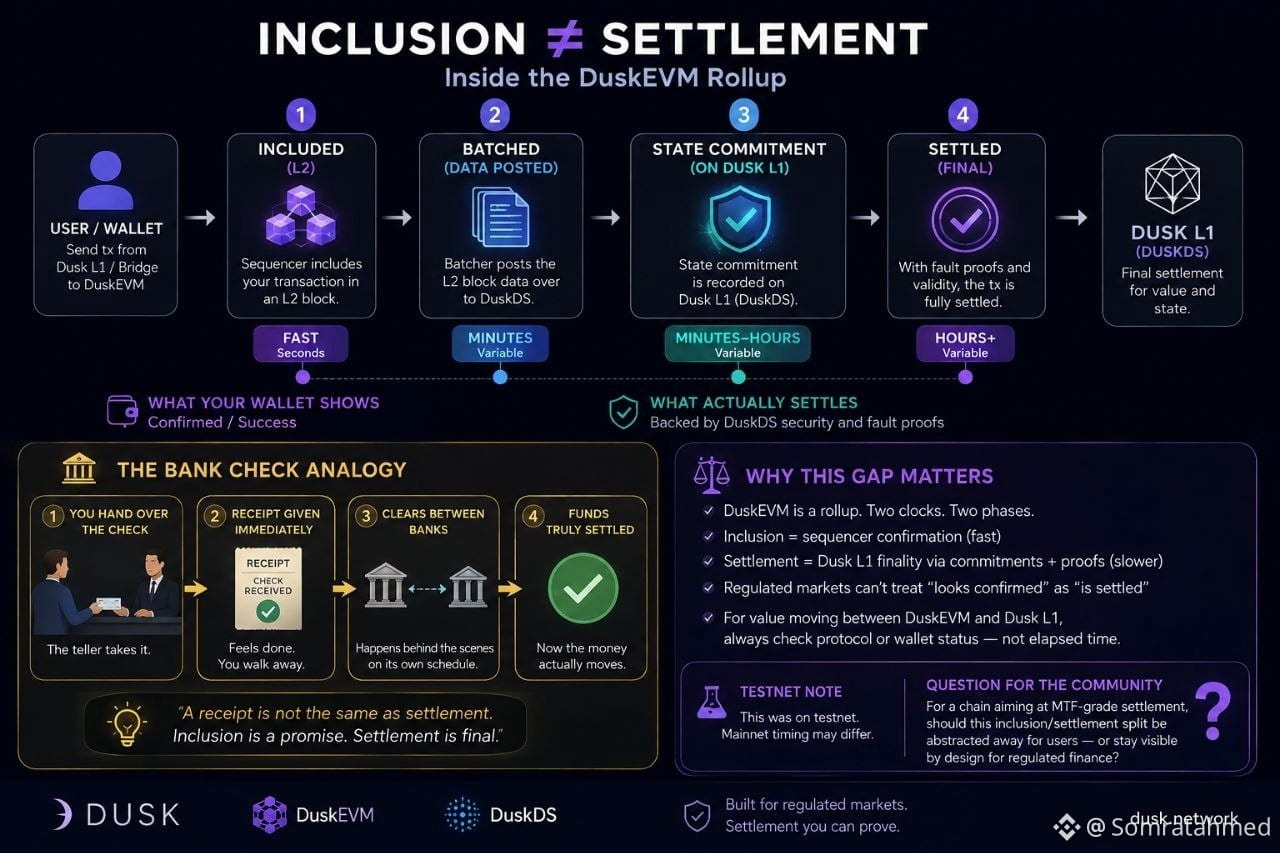
اتضح أن الأمر ليس هو نفسه هنا، وأن الفجوة أهم مما يبدو. يعمل DuskEVM كـ rollup: يقوم مُسلسِل بإدراج معاملتك أولاً داخل بلوك L2، ثم ينشر مُجمِّع البيانات تلك المعلومات بشكل منفصل على DuskDS، ولا يتم التسوية فعليًا إلا بعد أن تتصل الالتزامات بالحالة وأدلة الأخطاء. يحدث الإدراج وفق ساعة واحدة. تحدث التسوية على ساعة أخرى. أظهر لي محفظتي أنها مؤكدة فور حدوث الأول، وليس الثاني.
ذكرني هذا بعملية تصفية الشيك في عدّاد بنك. يعطيك الموظف إيصالًا بمجرد أن يتسلم الشيك — فيبدو الأمر منتهيًا. لكن المال الفعلي لا ينتقل بين البنوك حتى ينتهي الأمر من التصفية خلف الكواليس، وفق جدوله الخاص، بغض النظر عما تقول له الإيصالات.
يبدو مفهومًا لماذا يرسم Dusk هذا الخط بحدة، نظرًا لمن بُنيت هذه السلسلة فعليًا. لا يمكن لجهة منظمة تتعامل مع أوراق مالية حقيقية أن تعامل "يبدو مؤكّدًا" و"تمت تسويته" كشيء واحد — الوثائق واضحة أن أي شيء ينقل قيمة بين DuskEVM وDusk L1 يجب أن يتحقق من حالة البروتوكول أو المحفظة مباشرةً، وليس استنتاج النهائية من مقدار الوقت الذي مر.
من المهم توضيح أن هذا كان على شبكة اختبار — توقيت mainnet قد يبدو مختلفًا بمجرد أن تصبح الخدمة تعمل بالكامل.
ما زلتُ أفكر في الأمر — بالنسبة لسلسلة تستهدف تسوية بمستوى MTF، هل يتم تجريد فرق الإدراج/التسوية بعيدًا عن المستخدم النهائي في النهاية، أم أن التمويل المُنظّم يريد فعلًا إبقاء هذه الفجوة ظاهرة عمدًا؟
#dusk $DUSK @Dusk #DUSK
اتضح أن الأمر ليس هو نفسه هنا، وأن الفجوة أهم مما يبدو. يعمل DuskEVM كـ rollup: يقوم مُسلسِل بإدراج معاملتك أولاً داخل بلوك L2، ثم ينشر مُجمِّع البيانات تلك المعلومات بشكل منفصل على DuskDS، ولا يتم التسوية فعليًا إلا بعد أن تتصل الالتزامات بالحالة وأدلة الأخطاء. يحدث الإدراج وفق ساعة واحدة. تحدث التسوية على ساعة أخرى. أظهر لي محفظتي أنها مؤكدة فور حدوث الأول، وليس الثاني.
ذكرني هذا بعملية تصفية الشيك في عدّاد بنك. يعطيك الموظف إيصالًا بمجرد أن يتسلم الشيك — فيبدو الأمر منتهيًا. لكن المال الفعلي لا ينتقل بين البنوك حتى ينتهي الأمر من التصفية خلف الكواليس، وفق جدوله الخاص، بغض النظر عما تقول له الإيصالات.
يبدو مفهومًا لماذا يرسم Dusk هذا الخط بحدة، نظرًا لمن بُنيت هذه السلسلة فعليًا. لا يمكن لجهة منظمة تتعامل مع أوراق مالية حقيقية أن تعامل "يبدو مؤكّدًا" و"تمت تسويته" كشيء واحد — الوثائق واضحة أن أي شيء ينقل قيمة بين DuskEVM وDusk L1 يجب أن يتحقق من حالة البروتوكول أو المحفظة مباشرةً، وليس استنتاج النهائية من مقدار الوقت الذي مر.
من المهم توضيح أن هذا كان على شبكة اختبار — توقيت mainnet قد يبدو مختلفًا بمجرد أن تصبح الخدمة تعمل بالكامل.
ما زلتُ أفكر في الأمر — بالنسبة لسلسلة تستهدف تسوية بمستوى MTF، هل يتم تجريد فرق الإدراج/التسوية بعيدًا عن المستخدم النهائي في النهاية، أم أن التمويل المُنظّم يريد فعلًا إبقاء هذه الفجوة ظاهرة عمدًا؟
#dusk $DUSK @Dusk #DUSK