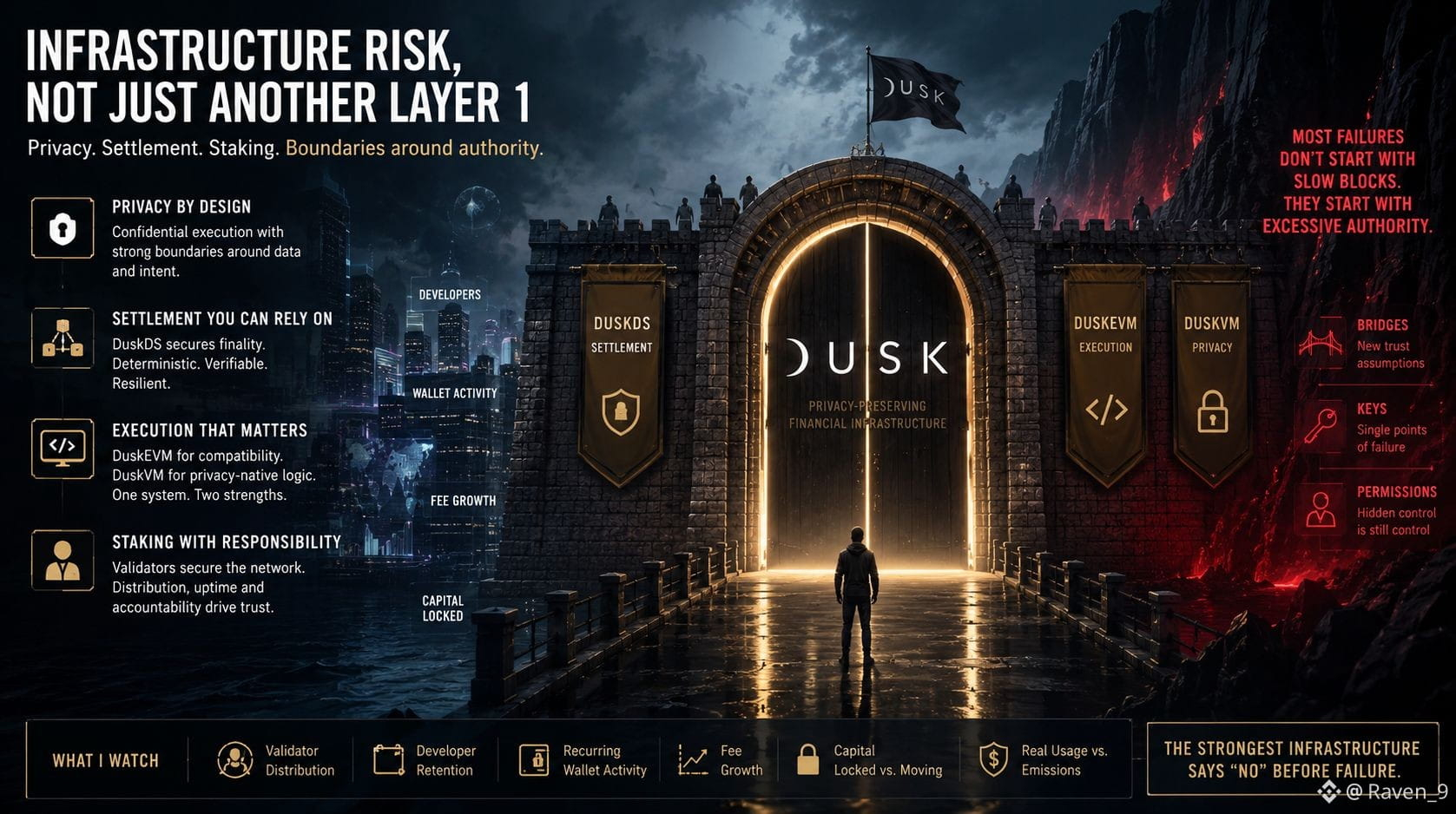
أُقيّم غروب الشمس (Dusk) كاختبارٍ لمخاطر البنية التحتية، وليس كحيلٍ أخرى ضمن الطبقة الأولى (Layer 1) فحسب. ما يهمّني هو ما إذا كانت الخصوصية والتسوية والـتـحـديـد عبر الـتـحـديـد (staking) يمكنها العمل مع حدودٍ قوية حول الصلاحيات. تجمع معمارية Dusk الحالية بين تسوية DuskDS وبيئة تنفيذ DuskEVM وDuskVM، ما يجعل النظام أكثر إثارة من مجرد سردية “السرعة”. أراقب ما إذا كانت الاستخدامات الفعلية قادرة على تبرير اقتصاديات الرمز على المدى الطويل، لأن الانبعاثات وحدها لا تُولِّد طلبًا عضويًا. كما أنني أهتم بتوزيع المُصدّقين، واستبقاء المطورين، ونشاط المحافظ المتكرر، ونمو الرسوم، ومقدار رأس المال الذي يبقى مُقيَّدًا مقارنةً بما يتحرك فعليًا داخل التطبيقات. أكبر سؤال يراودني هو سؤال تشغيلي: هل يمكن للخصوصية وللـتدفقات المالية القابلة للبرمجة أن تقلل التعرض دون إنشاء افتراضات ثقة جديدة حول الجسور (bridges) والمفاتيح والصلاحيات؟ لقد تعلمت أن معظم حالات الفشل الجادة لا تبدأ بكتل بطيئة. بل تبدأ بسلطة مفرطة. بالنسبة لي، أقوى بنية تحتية ليست تلك التي تُعالج كل شيء بأسرع ما يمكن. بل هي التي تستطيع رفض السلوك الخطِر قبل أن يفشل النظام بطريقة متوقعة.
@Dusk #dusk $DUSK
@Dusk #dusk $DUSK