
#dusk $DUSK @Dusk
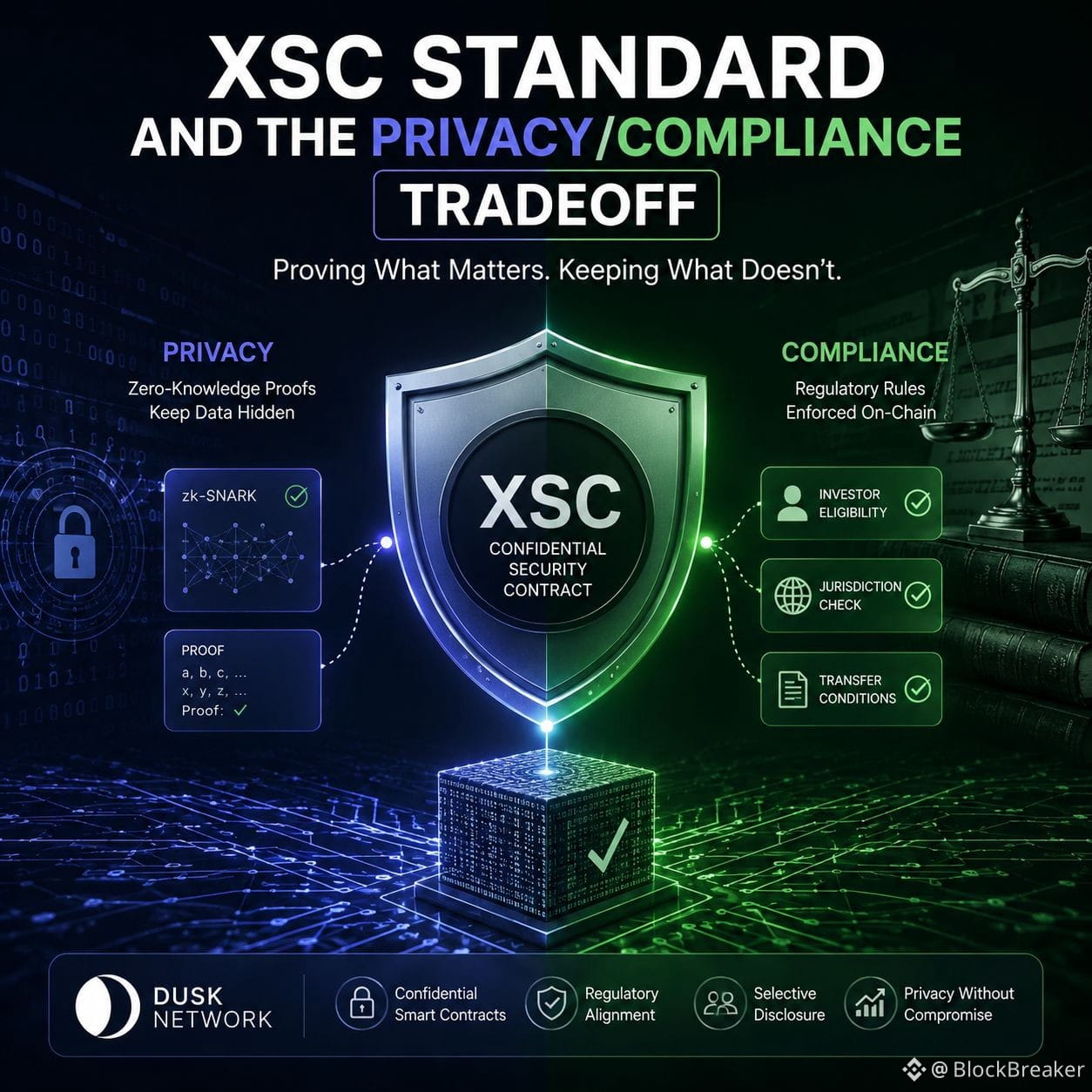
المعيار XSC ومفارقة الخصوصية/الامتثال
أعود باستمرار إلى سؤالٍ مزعج واحد حول XSC: هل يمكن جعل المعاملة المالية خاصة دون جعل منطق الامتثال الأساسي صارمًا بشكلٍ مفرط؟
الجزء المثير للاهتمام في تصميم Dusk ليس فقط أن براهين عدم المعرفة يمكنها إخفاء تفاصيل المعاملة. فـ XSC مبنية حول البرهنة على أن شروطًا معيّنة محققة دون كشف كل ما يكمن خلف البرهان. يصف مواصفها أنواع البراهين لأشياء مثل تضمين مجموعة، والمعرفة، والمساواة، وفحوصات النطاق، والتفويض/التفويضات، بينما تُعرّف العقدة نفسها القواعد التي يجب على المحفظة تطبيقها.
يبدو ذلك نظيفًا حتى تنظر إلى الجانب القانوني. التنظيم نادرًا ما يكون عبارة منطقية ثنائية دقيقة. “هل هذا المستثمر مؤهل؟” يمكن أن يتحول إلى أسئلة عن الاختصاص القضائي، وتغيّر الحالة، والإعفاءات، وواجبات الإبلاغ، ومن يُسمح له بالتحقق من ماذا.
لقد رأيت أنظمة الخصوصية تُعامل كما لو أن التشفير وحده يحل مشكلة الامتثال. هذا غير صحيح. يمكن لـ ZK إثبات عبارة؛ لكنه لا يمكنه أن يقرر ما إذا كانت العبارة تلتقط نية الجهة التنظيمية. ويُجري البحث في امتثال البلوكشين التمييز نفسه: يمكن للبراهين المُحافظة على الخصوصية أن تقلل الإفصاح غير الضروري، لكن قواعد الحوكمة والتفويض والإفصاح ما زالت مهمة.
لهذا أجد XSC أكثر إثارة للاهتمام باعتبارها مسألة تصميم أكثر من كونها قصة منتج. الاختبار الحقيقي هو ما إذا كان يمكن التعبير عن التمويل المُنظَّم على شكل محددات دقيقة وقابلة للإنفاذ دون أن يؤدي ذلك سرًّا إلى تحويل الخصوصية إلى طبقة إذن أخرى.
تبدأ الأعمال الجادة من هذا التنازع.
المعيار XSC ومفارقة الخصوصية/الامتثال
أعود باستمرار إلى سؤالٍ مزعج واحد حول XSC: هل يمكن جعل المعاملة المالية خاصة دون جعل منطق الامتثال الأساسي صارمًا بشكلٍ مفرط؟
الجزء المثير للاهتمام في تصميم Dusk ليس فقط أن براهين عدم المعرفة يمكنها إخفاء تفاصيل المعاملة. فـ XSC مبنية حول البرهنة على أن شروطًا معيّنة محققة دون كشف كل ما يكمن خلف البرهان. يصف مواصفها أنواع البراهين لأشياء مثل تضمين مجموعة، والمعرفة، والمساواة، وفحوصات النطاق، والتفويض/التفويضات، بينما تُعرّف العقدة نفسها القواعد التي يجب على المحفظة تطبيقها.
يبدو ذلك نظيفًا حتى تنظر إلى الجانب القانوني. التنظيم نادرًا ما يكون عبارة منطقية ثنائية دقيقة. “هل هذا المستثمر مؤهل؟” يمكن أن يتحول إلى أسئلة عن الاختصاص القضائي، وتغيّر الحالة، والإعفاءات، وواجبات الإبلاغ، ومن يُسمح له بالتحقق من ماذا.
لقد رأيت أنظمة الخصوصية تُعامل كما لو أن التشفير وحده يحل مشكلة الامتثال. هذا غير صحيح. يمكن لـ ZK إثبات عبارة؛ لكنه لا يمكنه أن يقرر ما إذا كانت العبارة تلتقط نية الجهة التنظيمية. ويُجري البحث في امتثال البلوكشين التمييز نفسه: يمكن للبراهين المُحافظة على الخصوصية أن تقلل الإفصاح غير الضروري، لكن قواعد الحوكمة والتفويض والإفصاح ما زالت مهمة.
لهذا أجد XSC أكثر إثارة للاهتمام باعتبارها مسألة تصميم أكثر من كونها قصة منتج. الاختبار الحقيقي هو ما إذا كان يمكن التعبير عن التمويل المُنظَّم على شكل محددات دقيقة وقابلة للإنفاذ دون أن يؤدي ذلك سرًّا إلى تحويل الخصوصية إلى طبقة إذن أخرى.
تبدأ الأعمال الجادة من هذا التنازع.