@Dusk $DUSK #dusk
كنت أتصفح وثائق Dusk، وكان هناك شيء واحد يُعيدني إليها باستمرار.
في البداية، ظننت أن الجزء المثير للاهتمام هو فقط أنها تحاول توفير الخصوصية للتطبيقات المالية. لكن كلما تعمقت أكثر في البنية، قلّ شعوري بأن عبارة “سلسلة بلوكشين للخصوصية” هي وصف كامل.
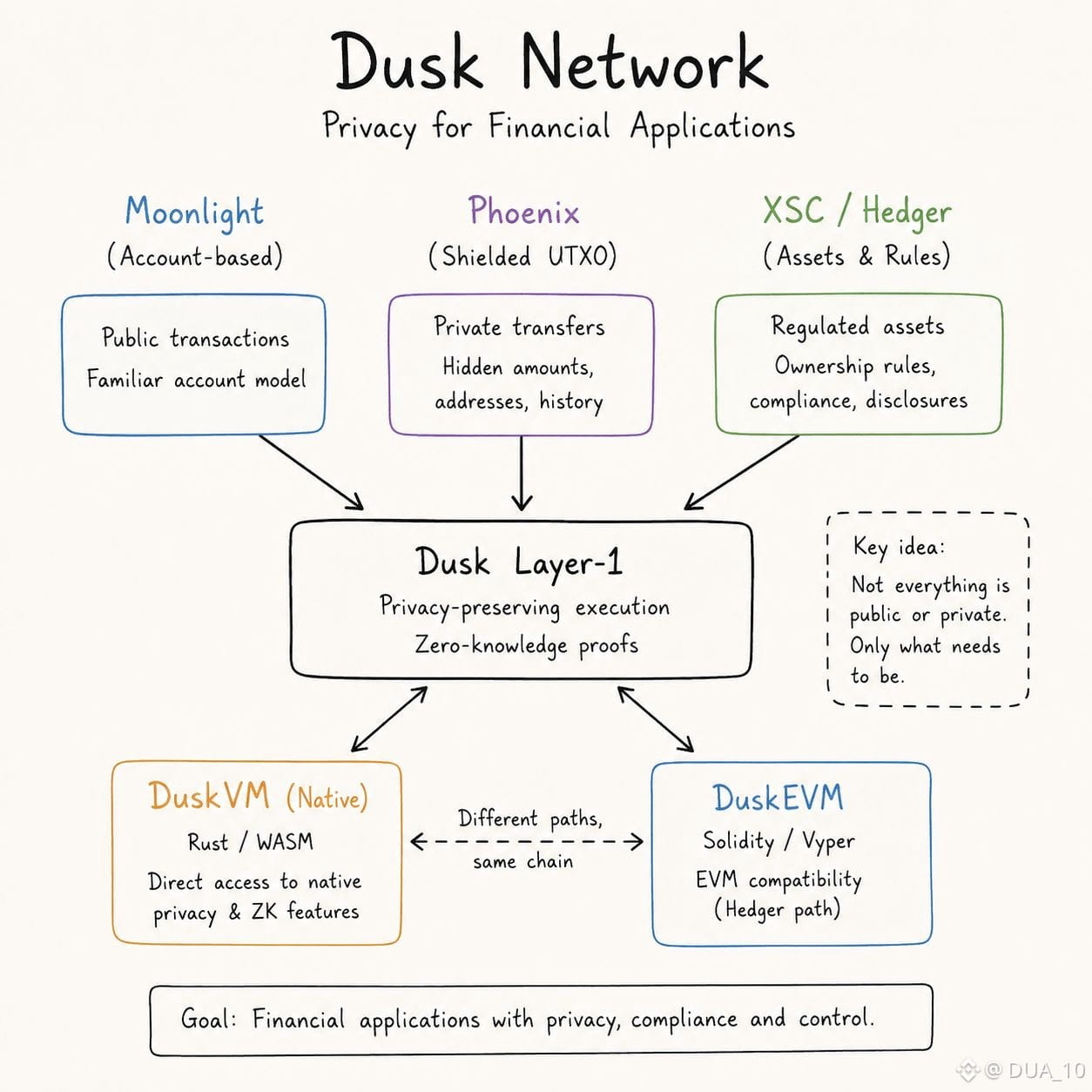
لدى Dusk أجزاء مختلفة تتعامل مع أنواع مختلفة من النشاط. توجد Moonlight للجانب الأكثر ألفة المرتبط بالحسابات، وPhoenix للمعاملات من نوع UTXO المُشفّرة، ثم تصميم XSC/Hedger لأشياء مثل الأصول الخاضعة للتنظيم والقواعد المالية.
هذا جعلني أتوقف لحظة.
لأن إخفاء معاملة ضمن الأصول المالية ليس سوى جزء واحد من المشكلة.
قد تحتاج أيضًا إلى قواعد حول من يمكنه امتلاك شيء ما، ومن يمكنه نقله، وما هي المعلومات التي يُسمح لطرف آخر برؤيتها، أو ما إذا كان التحويل المعني صحيحًا أصلًا.
تتحدث الوثائق عن أشياء مثل الإفصاح الانتقائي، وشهادات الهوية، والقيود على مستوى الأصول. وهذا يجعل نموذج الخصوصية يبدو أقل كونه “اجعل كل شيء غير مرئي” وأكثر كونه “اعرض فقط ما يحتاجه التطبيق فعلًا أن يُفصح عنه”.
أعتقد أن هذا التمييز سهل أن يُفوَّت.
ومن التفاصيل الأخرى التي وجدتها مثيرة للاهتمام أن لدى Dusk كلاً من DuskVM وDuskEVM. تمنح آلة التنفيذ الأصلية العقود إمكانية الوصول إلى قدرات الخصوصية وZK الخاصة بـ Dusk، بينما يُقصد بالجانب الخاص بـ EVM تمكين Solidity/Vyper والأدوات المألوفة.
لذا الآن أتساءل عن شيء مختلف قليلًا.
إذا احتاج تطبيقٌ في النهاية إلى مرونة تطوير EVM، مع الاعتماد بشكل كبير في الوقت نفسه على ميزات الخصوصية الأصلية لدى Dusk، فمتى يصبح هذا الحد الفاصل ملحوظًا فعليًا في الممارسة؟
تعطي التوثيقات صورة واضحة جدًا عن سبب وجود المسارين كليهما.
أنا أكثر اهتمامًا بما يبدو عليه البناء عبر هذا الحد الفاصل فعليًا.
كنت أتصفح وثائق Dusk، وكان هناك شيء واحد يُعيدني إليها باستمرار.
في البداية، ظننت أن الجزء المثير للاهتمام هو فقط أنها تحاول توفير الخصوصية للتطبيقات المالية. لكن كلما تعمقت أكثر في البنية، قلّ شعوري بأن عبارة “سلسلة بلوكشين للخصوصية” هي وصف كامل.
لدى Dusk أجزاء مختلفة تتعامل مع أنواع مختلفة من النشاط. توجد Moonlight للجانب الأكثر ألفة المرتبط بالحسابات، وPhoenix للمعاملات من نوع UTXO المُشفّرة، ثم تصميم XSC/Hedger لأشياء مثل الأصول الخاضعة للتنظيم والقواعد المالية.
هذا جعلني أتوقف لحظة.
لأن إخفاء معاملة ضمن الأصول المالية ليس سوى جزء واحد من المشكلة.
قد تحتاج أيضًا إلى قواعد حول من يمكنه امتلاك شيء ما، ومن يمكنه نقله، وما هي المعلومات التي يُسمح لطرف آخر برؤيتها، أو ما إذا كان التحويل المعني صحيحًا أصلًا.
تتحدث الوثائق عن أشياء مثل الإفصاح الانتقائي، وشهادات الهوية، والقيود على مستوى الأصول. وهذا يجعل نموذج الخصوصية يبدو أقل كونه “اجعل كل شيء غير مرئي” وأكثر كونه “اعرض فقط ما يحتاجه التطبيق فعلًا أن يُفصح عنه”.
أعتقد أن هذا التمييز سهل أن يُفوَّت.
ومن التفاصيل الأخرى التي وجدتها مثيرة للاهتمام أن لدى Dusk كلاً من DuskVM وDuskEVM. تمنح آلة التنفيذ الأصلية العقود إمكانية الوصول إلى قدرات الخصوصية وZK الخاصة بـ Dusk، بينما يُقصد بالجانب الخاص بـ EVM تمكين Solidity/Vyper والأدوات المألوفة.
لذا الآن أتساءل عن شيء مختلف قليلًا.
إذا احتاج تطبيقٌ في النهاية إلى مرونة تطوير EVM، مع الاعتماد بشكل كبير في الوقت نفسه على ميزات الخصوصية الأصلية لدى Dusk، فمتى يصبح هذا الحد الفاصل ملحوظًا فعليًا في الممارسة؟
تعطي التوثيقات صورة واضحة جدًا عن سبب وجود المسارين كليهما.
أنا أكثر اهتمامًا بما يبدو عليه البناء عبر هذا الحد الفاصل فعليًا.