منذ وقت طويل، افترضت أن التوافق مع EVM كان في معظمه مجرد بند تسويقي، أضافته بعض السلاسل لتبدو أكثر ترحيبًا دون أن يغيّر الكثير من التفاصيل الأساسية. لكن كلما تعمّقت في DuskEVM، كلما ضعفت هذه التبريرات.
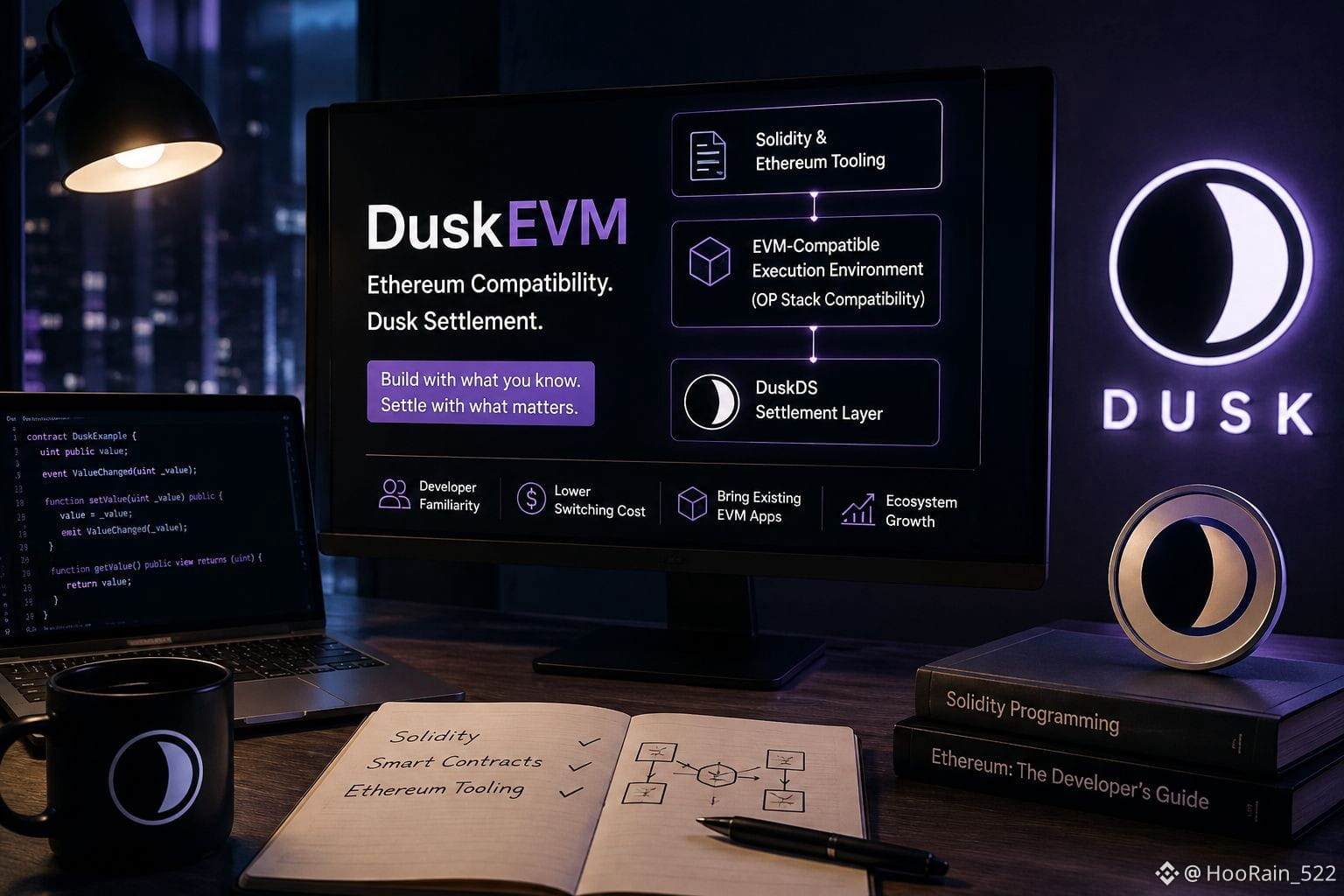
يتيح DuskEVM للمطوّرين كتابة Solidity واستخدام أدوات الإيثريوم المألوفة، مع توفير بيئة تنفيذ متوافقة مع EVM وتتمتع بتوافق مع OP Stack. وتحت هذه التجربة المطوّرة المألوفة، توفر DuskDS طبقة التسوية الأساسية.
هذا الفرق مهم أكثر مما قد يبدو أولًا. تبدو بيئة التنفيذ مألوفة لمطوّري الإيثريوم، لكن التسوية والنهائية الأساسية ترتبط ببنية Dusk الخاصة، بدلًا من ربطها بالطبقة الأساسية لإيثريوم.
وما يفعله ذلك فعليًا هو خفض تكلفة تجربة شيء جديد. لا يحتاج المطوّر إلى إعادة تعلّم لغة أو إعادة بناء البنية التحتية فقط لاختبار ما إذا كانت ميزات الخصوصية والامتثال في Dusk تناسب حالة الاستخدام الخاصة به. وهذا يغيّر الدافع من «أقنعني بالتبديل» إلى «دعني آتي بما لديّ بالفعل وأرى ما الذي سيتغير من تحته».
أما المقابل فهو أن الألفة قد تُخفي الاختلافات الحقيقية في سلوك التسوية إذا افترض الناس أن التوافق مع EVM يعني أن كل شيء يعمل بالطريقة نفسها.
لذلك السؤال هو: هل يؤدي خفض تكلفة التبديل فعلًا إلى تسريع تبنّي التقنية، أم أنه يؤخر فقط النقطة التي يصبح فيها على المطورين التعامل مع الاختلافات الكامنة من الأسفل؟
@Dusk #dusk $DUSK
يتيح DuskEVM للمطوّرين كتابة Solidity واستخدام أدوات الإيثريوم المألوفة، مع توفير بيئة تنفيذ متوافقة مع EVM وتتمتع بتوافق مع OP Stack. وتحت هذه التجربة المطوّرة المألوفة، توفر DuskDS طبقة التسوية الأساسية.
هذا الفرق مهم أكثر مما قد يبدو أولًا. تبدو بيئة التنفيذ مألوفة لمطوّري الإيثريوم، لكن التسوية والنهائية الأساسية ترتبط ببنية Dusk الخاصة، بدلًا من ربطها بالطبقة الأساسية لإيثريوم.
وما يفعله ذلك فعليًا هو خفض تكلفة تجربة شيء جديد. لا يحتاج المطوّر إلى إعادة تعلّم لغة أو إعادة بناء البنية التحتية فقط لاختبار ما إذا كانت ميزات الخصوصية والامتثال في Dusk تناسب حالة الاستخدام الخاصة به. وهذا يغيّر الدافع من «أقنعني بالتبديل» إلى «دعني آتي بما لديّ بالفعل وأرى ما الذي سيتغير من تحته».
أما المقابل فهو أن الألفة قد تُخفي الاختلافات الحقيقية في سلوك التسوية إذا افترض الناس أن التوافق مع EVM يعني أن كل شيء يعمل بالطريقة نفسها.
لذلك السؤال هو: هل يؤدي خفض تكلفة التبديل فعلًا إلى تسريع تبنّي التقنية، أم أنه يؤخر فقط النقطة التي يصبح فيها على المطورين التعامل مع الاختلافات الكامنة من الأسفل؟
@Dusk #dusk $DUSK