
دخلتُ إلى Dusk وأنا أتوقع أن تكون زاوية الخصوصية هي الجزء الأكثر إثارة للاهتمام.
لم تكن كذلك.
ما علق في ذهني فعلًا كان سؤالًا بسيطًا: كيف تفرض شبكةٌ القواعد إذا كانت الشبكة لا تستطيع رؤية ما يحدث؟
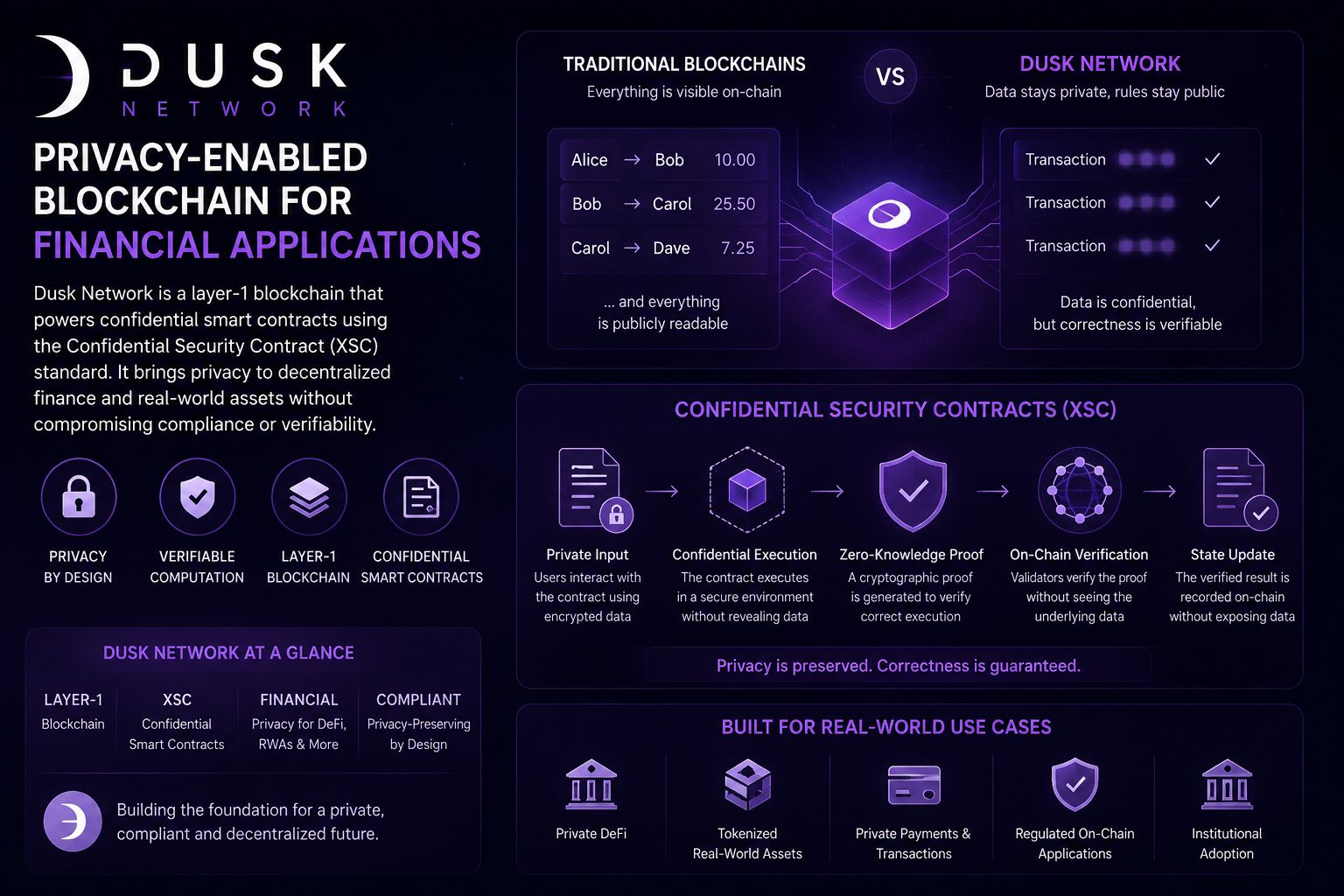
تعتمد معظم السلاسل على الشفافية. يمكن لأي شخص الاطلاع على المعاملات، وتتبع مسار الأموال، والتحقق بشكل مستقل مما يجري. هذا هو النموذج الذي اعتدنا عليه.
يبدو أن Dusk يتعامل مع الأمر بطريقة مختلفة. باستخدام العقود الذكية السرّية، لا يحتاج المدققون إلى الوصول إلى البيانات الأساسية. كل ما يحتاجونه هو دليل على أن القواعد قد تم اتباعها.
كلما فكرت في الأمر أكثر، بدا الأمر أكثر غرابة.
لطالما ربطتُ الثقة بالوضوح. إذا كان شيءٌ مخفيًا، فغالبًا تكون ردة الفعل الطبيعية هي الثقة فيه أقل. لكن Dusk بُني حول فكرة أن النظام يمكن أن يظل جديرًا بالثقة حتى عندما تبقى التفاصيل المهمة خاصة.
هذا لا يعني تلقائيًا أنه أفضل. وفي بعض النواحي، يخلق تحديًا مختلفًا.
عندما يحدث خطأ في سلسلة شفافة، يمكن للناس التحقيق في الأدلة بأنفسهم. في بيئة سرّية، فإنك تعتمد بدرجة أكبر على نزاهة نظام الإثبات أكثر من اعتمادك على قدرتك أنت على فحص ما حدث.
ربما هذا بالضبط ما يحتاجه تطبيقات blockchain المالية.
أو ربما نحن فقط نستبدل شكلًا من أشكال الثقة بآخر ونسمّيه تقدمًا.
بصراحة، لستُ متأكدًا بعد، وربما لهذا السبب بقيت هذه الفكرة عالقة في ذهني.
@Dusk $DUSK #dusk
لم تكن كذلك.
ما علق في ذهني فعلًا كان سؤالًا بسيطًا: كيف تفرض شبكةٌ القواعد إذا كانت الشبكة لا تستطيع رؤية ما يحدث؟
تعتمد معظم السلاسل على الشفافية. يمكن لأي شخص الاطلاع على المعاملات، وتتبع مسار الأموال، والتحقق بشكل مستقل مما يجري. هذا هو النموذج الذي اعتدنا عليه.
يبدو أن Dusk يتعامل مع الأمر بطريقة مختلفة. باستخدام العقود الذكية السرّية، لا يحتاج المدققون إلى الوصول إلى البيانات الأساسية. كل ما يحتاجونه هو دليل على أن القواعد قد تم اتباعها.
كلما فكرت في الأمر أكثر، بدا الأمر أكثر غرابة.
لطالما ربطتُ الثقة بالوضوح. إذا كان شيءٌ مخفيًا، فغالبًا تكون ردة الفعل الطبيعية هي الثقة فيه أقل. لكن Dusk بُني حول فكرة أن النظام يمكن أن يظل جديرًا بالثقة حتى عندما تبقى التفاصيل المهمة خاصة.
هذا لا يعني تلقائيًا أنه أفضل. وفي بعض النواحي، يخلق تحديًا مختلفًا.
عندما يحدث خطأ في سلسلة شفافة، يمكن للناس التحقيق في الأدلة بأنفسهم. في بيئة سرّية، فإنك تعتمد بدرجة أكبر على نزاهة نظام الإثبات أكثر من اعتمادك على قدرتك أنت على فحص ما حدث.
ربما هذا بالضبط ما يحتاجه تطبيقات blockchain المالية.
أو ربما نحن فقط نستبدل شكلًا من أشكال الثقة بآخر ونسمّيه تقدمًا.
بصراحة، لستُ متأكدًا بعد، وربما لهذا السبب بقيت هذه الفكرة عالقة في ذهني.
@Dusk $DUSK #dusk