#dusk $DUSK @Dusk
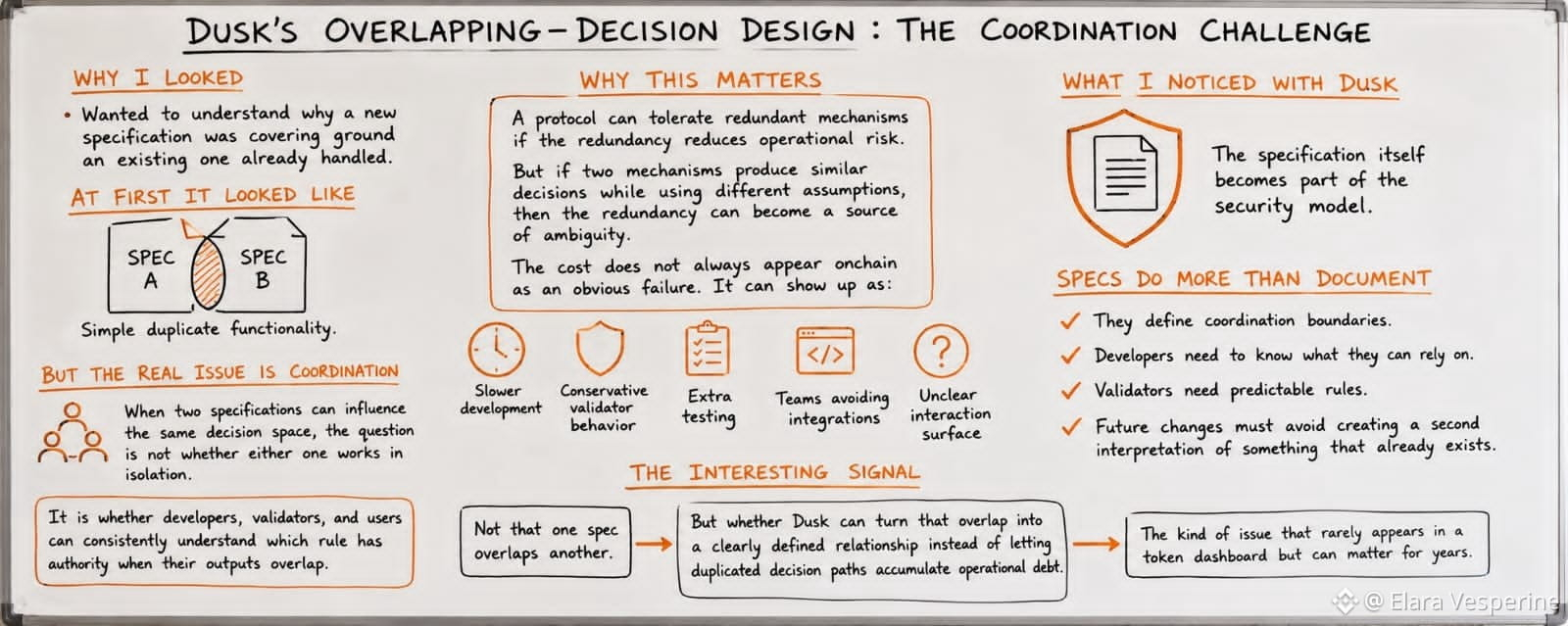
ذهبتُ إلى تصميم “تداخل القرارات” لدى Dusk لأنني أردت أن أفهم لماذا كان هناك مُواصفة جديدة تغطي مساحةً سبق أن تناولتها مُواصفةٌ موجودة بالفعل.
في البداية بدا الأمر كحالةٍ بسيطة من تكرار الوظائف. لكن بعد قراءة الأجزاء بعناية أكبر أرى أن القضية الأكثر إثارة للاهتمام ليست التكرار بحد ذاته بل التنسيق.
عندما يمكن لمواصفتين التأثير في مساحة القرارات نفسها، يصبح السؤال المهم ليس ما إذا كانت إحداهما تعمل على حدة. بل ما إذا كان بإمكان المطوّرين والمُتحقّقين والمستخدمين فهمًا متسقًا أي قاعدة لها السلطة عندما تتداخل مخرجاتهم.
وهذا الأمر أهم مما يبدو.
يمكن لبروتوكولٍ أن يتحمّل آلياتٍ زائدة عن الحاجة إذا كان هذا التكرار يقلّل من المخاطر التشغيلية. لكن إذا أنتجت آليتان قراراتٍ متشابهة مع استخدام افتراضات مختلفة، فقد يتحول التكرار إلى مصدر غموض. وقد لا يظهر الكلفة بالضرورة على السلسلة بوصفه فشلًا واضحًا. فقد تظهر بدلًا من ذلك كتطوير أبطأ، أو سلوكٍ أكثر تحفظًا لدى المُتحقّقين، أو اختبارات إضافية، أو حتى فرق تتجنب بعض عمليات التكامل لأن سطح التفاعل غير واضح.
ما لفت انتباهي في Dusk هو أن المُواصفة نفسها تصبح جزءًا من نموذج الأمان.
كنت أعتقد في السابق أن المواصفات تُعدّ في المقام الأول وثائق لتطبيق التنفيذ. لكن في بروتوكولٍ تتداخل فيه منطقيات اتخاذ القرار، فإنها أيضًا تحدد حدود التنسيق. يحتاج المطوّرون إلى معرفة ما يمكنهم الاعتماد عليه. يحتاج المُتحقّقون إلى قواعد متوقعة. وتحتاج التغييرات المستقبلية إلى تجنب خلق تفسيرٍ ثانٍ بشكلٍ صامت لأمرٍ موجودٍ أصلًا.
لذا فإن الإشارة المثيرة للاهتمام ليست أن مواصفةً ما تتداخل مع أخرى.
بل ما إذا كان بإمكان Dusk تحويل ذلك التداخل إلى علاقةٍ محددة بوضوح بدلًا من ترك مسارات قرارٍ مكررة تتراكم كديون تشغيلية.
إنها نوع المشكلة التي لا تظهر كثيرًا في لوحات عرض الرموز، لكنها قد تهم لسنوات.
ذهبتُ إلى تصميم “تداخل القرارات” لدى Dusk لأنني أردت أن أفهم لماذا كان هناك مُواصفة جديدة تغطي مساحةً سبق أن تناولتها مُواصفةٌ موجودة بالفعل.
في البداية بدا الأمر كحالةٍ بسيطة من تكرار الوظائف. لكن بعد قراءة الأجزاء بعناية أكبر أرى أن القضية الأكثر إثارة للاهتمام ليست التكرار بحد ذاته بل التنسيق.
عندما يمكن لمواصفتين التأثير في مساحة القرارات نفسها، يصبح السؤال المهم ليس ما إذا كانت إحداهما تعمل على حدة. بل ما إذا كان بإمكان المطوّرين والمُتحقّقين والمستخدمين فهمًا متسقًا أي قاعدة لها السلطة عندما تتداخل مخرجاتهم.
وهذا الأمر أهم مما يبدو.
يمكن لبروتوكولٍ أن يتحمّل آلياتٍ زائدة عن الحاجة إذا كان هذا التكرار يقلّل من المخاطر التشغيلية. لكن إذا أنتجت آليتان قراراتٍ متشابهة مع استخدام افتراضات مختلفة، فقد يتحول التكرار إلى مصدر غموض. وقد لا يظهر الكلفة بالضرورة على السلسلة بوصفه فشلًا واضحًا. فقد تظهر بدلًا من ذلك كتطوير أبطأ، أو سلوكٍ أكثر تحفظًا لدى المُتحقّقين، أو اختبارات إضافية، أو حتى فرق تتجنب بعض عمليات التكامل لأن سطح التفاعل غير واضح.
ما لفت انتباهي في Dusk هو أن المُواصفة نفسها تصبح جزءًا من نموذج الأمان.
كنت أعتقد في السابق أن المواصفات تُعدّ في المقام الأول وثائق لتطبيق التنفيذ. لكن في بروتوكولٍ تتداخل فيه منطقيات اتخاذ القرار، فإنها أيضًا تحدد حدود التنسيق. يحتاج المطوّرون إلى معرفة ما يمكنهم الاعتماد عليه. يحتاج المُتحقّقون إلى قواعد متوقعة. وتحتاج التغييرات المستقبلية إلى تجنب خلق تفسيرٍ ثانٍ بشكلٍ صامت لأمرٍ موجودٍ أصلًا.
لذا فإن الإشارة المثيرة للاهتمام ليست أن مواصفةً ما تتداخل مع أخرى.
بل ما إذا كان بإمكان Dusk تحويل ذلك التداخل إلى علاقةٍ محددة بوضوح بدلًا من ترك مسارات قرارٍ مكررة تتراكم كديون تشغيلية.
إنها نوع المشكلة التي لا تظهر كثيرًا في لوحات عرض الرموز، لكنها قد تهم لسنوات.