
DUSK هي واحدة من تلك السلاسل التي كلما قضيت وقتًا أطول في النظر تحت الغطاء، قلّ ما تخبرك به عبارة “سلسلة بلوكشين للخصوصية” عن حقيقة الأمر.
الجزء الذي لفت انتباهي فعلًا هو آلية الإجماع.
لا تحتاج Dusk إلى أن يصرخ كاملُ مجموعة المُتحقِّقين بشأن كل كتلة.
يتم اختيار مجموعة صغيرة.
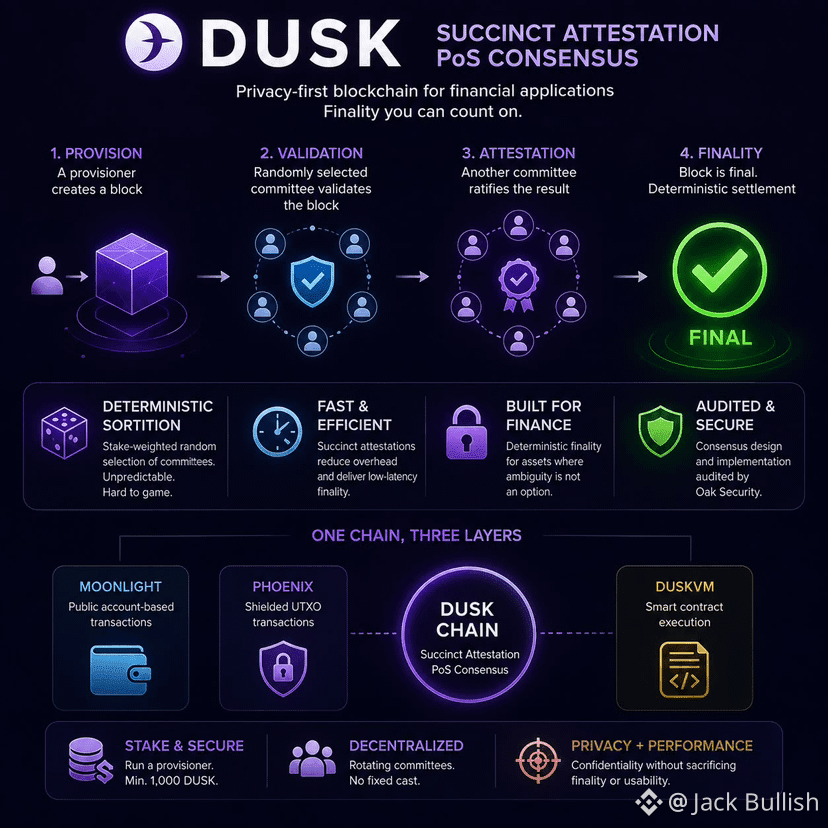
يقترح أحد الأطراف الكتلة، ويتولى آخرون التحقق منها، وتساعد مجموعة أخرى في التصديق عليها.
ثم ينتهي الأمر.
نهائي.
لا مزيد من الجلوس والانتظار والتساؤل عمّا إذا كانت تلك الكتلة ستختفي بعد تأكيدات إضافية ستة.
الجزء الذكي هو كيفية اختيار تلك المجموعات.
تستخدم Dusk اختيارًا عشوائيًا مُرجّحًا بالاستيك، لذلك لا تبقى نفس جهات التحقق المألوفة تتولى نفس المهام مرارًا وتكرارًا. تتبدل اللجنة. وهذا يجعل عملية الإجماع أصعب في التنبؤ بها، وأقل راحة لأي شخص يحاول استغلالها.
وبصراحة، هذا الأمر مهم أكثر بالنسبة إلى Dusk مما قد يكون عليه في بعض L1 عامة.
لأن Dusk تستهدف الشؤون المالية.
بالنسبة للأصول المالية، فإن عبارة “ربما نهائي” وعبارة “نهائي فعليًا” هما شيئان مختلفان جدًا.
ثم يوجد جزء نادرًا ما أرى الناس يذكرونه.
يمكن لـ Dusk أن تستضيف معاملات عامة ومعاملات مُشفّاة وعقودًا ذكية تعيش على الشبكة نفسها.
يتولى Moonlight جانب الحساب العام.
أما Phoenix فيجلب طبقة الخصوصية.
وتتولى DuskVM التنفيذ.
لذلك ليست المسألة المثيرة للاهتمام حقًا:
“هل يمكن لـ Dusk إخفاء المعاملات؟”
بل هي:
“هل يمكنك بناء بنية تحتية مالية تكون فيها الخصوصية دون كلفة تتمثل في تسوية نظيفة وقابلة للتنبؤ؟”
هذه مشكلة أصعب بكثير.
وSuccinct Attestation هي في الأساس إجابة Dusk عن جانب التسوية في هذا الشأن.
لا خدعة لامعة.
فقط لجان، وعشوائية، وتكديس (staking)، وتفضيل شديد جدًا لمعرفة متى تصبح الكتلة مكتملة فعلًا.
قد تتحول هذه الإضافة الهندسية الهادئة إلى أن تكون أكثر أهمية مما يلفت الانتباه أولًا في خطاب الخصوصية.
#dusk $DUSK @Dusk
الجزء الذي لفت انتباهي فعلًا هو آلية الإجماع.
لا تحتاج Dusk إلى أن يصرخ كاملُ مجموعة المُتحقِّقين بشأن كل كتلة.
يتم اختيار مجموعة صغيرة.
يقترح أحد الأطراف الكتلة، ويتولى آخرون التحقق منها، وتساعد مجموعة أخرى في التصديق عليها.
ثم ينتهي الأمر.
نهائي.
لا مزيد من الجلوس والانتظار والتساؤل عمّا إذا كانت تلك الكتلة ستختفي بعد تأكيدات إضافية ستة.
الجزء الذكي هو كيفية اختيار تلك المجموعات.
تستخدم Dusk اختيارًا عشوائيًا مُرجّحًا بالاستيك، لذلك لا تبقى نفس جهات التحقق المألوفة تتولى نفس المهام مرارًا وتكرارًا. تتبدل اللجنة. وهذا يجعل عملية الإجماع أصعب في التنبؤ بها، وأقل راحة لأي شخص يحاول استغلالها.
وبصراحة، هذا الأمر مهم أكثر بالنسبة إلى Dusk مما قد يكون عليه في بعض L1 عامة.
لأن Dusk تستهدف الشؤون المالية.
بالنسبة للأصول المالية، فإن عبارة “ربما نهائي” وعبارة “نهائي فعليًا” هما شيئان مختلفان جدًا.
ثم يوجد جزء نادرًا ما أرى الناس يذكرونه.
يمكن لـ Dusk أن تستضيف معاملات عامة ومعاملات مُشفّاة وعقودًا ذكية تعيش على الشبكة نفسها.
يتولى Moonlight جانب الحساب العام.
أما Phoenix فيجلب طبقة الخصوصية.
وتتولى DuskVM التنفيذ.
لذلك ليست المسألة المثيرة للاهتمام حقًا:
“هل يمكن لـ Dusk إخفاء المعاملات؟”
بل هي:
“هل يمكنك بناء بنية تحتية مالية تكون فيها الخصوصية دون كلفة تتمثل في تسوية نظيفة وقابلة للتنبؤ؟”
هذه مشكلة أصعب بكثير.
وSuccinct Attestation هي في الأساس إجابة Dusk عن جانب التسوية في هذا الشأن.
لا خدعة لامعة.
فقط لجان، وعشوائية، وتكديس (staking)، وتفضيل شديد جدًا لمعرفة متى تصبح الكتلة مكتملة فعلًا.
قد تتحول هذه الإضافة الهندسية الهادئة إلى أن تكون أكثر أهمية مما يلفت الانتباه أولًا في خطاب الخصوصية.
#dusk $DUSK @Dusk