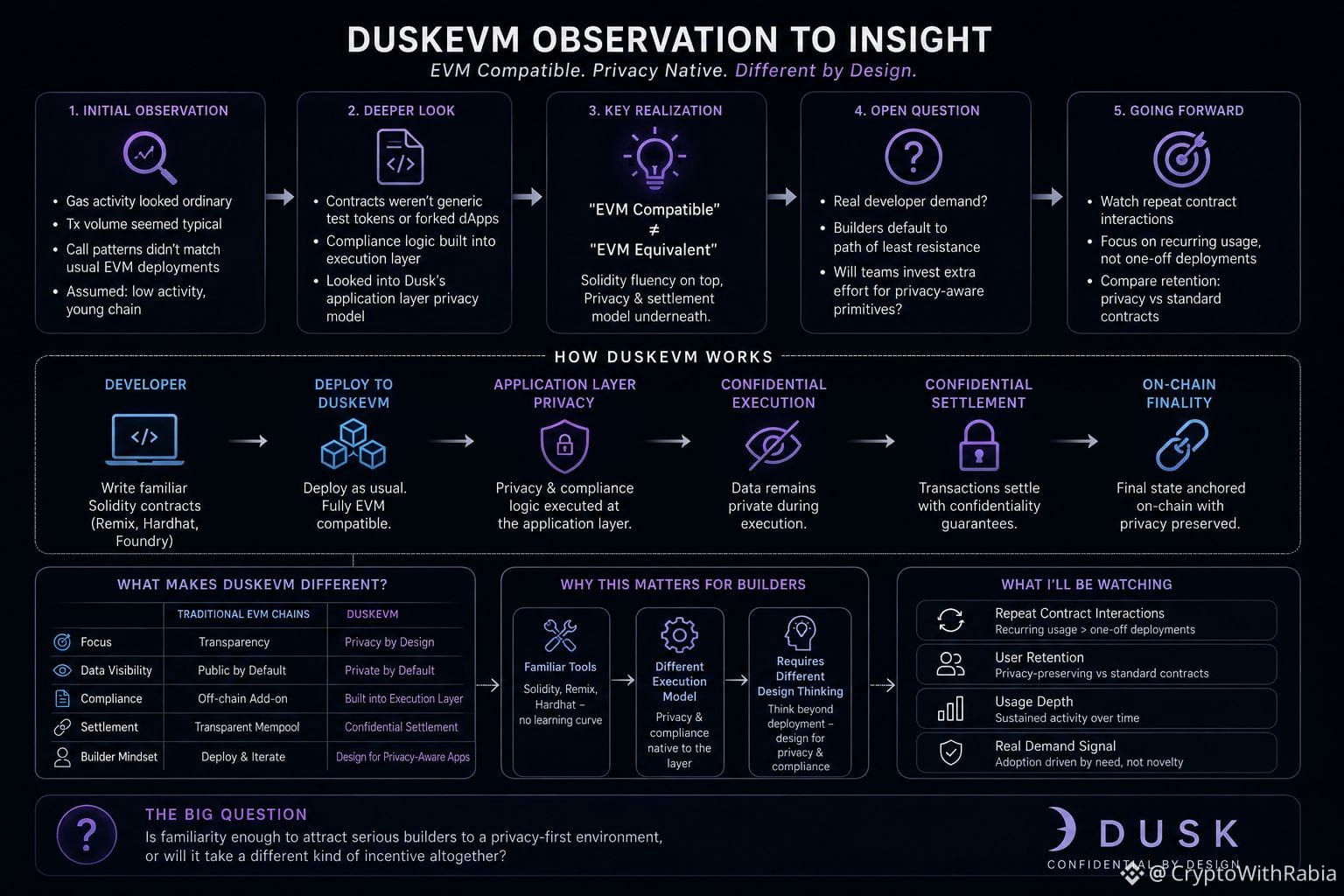
لاحظت شيئًا غريبًا أثناء مقارنة نشاط الغاز عبر عدة شبكات اختبار EVM التي أتابعها. بدت أحجام المعاملات في DuskEVM عادية على السطح، لكن نمط استدعاءات العقود لم يكن مطابقًا لما اعتدت رؤيته في عمليات النشر الجديدة لـ Solidity. افترضت أنها مجرد حالة نشاط منخفض من سلسلة شابة، ولا شيء أكثر.
وبالتعمق، أدركت أن العقود لم تكن مجرد رموز اختبار عامة أو تطبيقات مُستنسخة من نسخ (forked) لواجهة تطبيقات. كان بعضها مصمّمًا بمنطق امتثال مُدمج داخل طبقة التنفيذ نفسها، وهذا ما جعلني أتوقف. عندها بحثت في كيفية قيام Dusk ببناء الخصوصية على مستوى التطبيق بدلًا من إضافتها كحل لاحق.
غيّر ذلك طريقة تفكيري حول "متوافق مع EVM". يتعامل معظم الناس مع التوافق والتكافؤ كأنهما الشيء نفسه، لكنهما ليسا كذلك. يمكن لشبكة ما أن تتكلم Solidity بطلاقة بينما تفرض نموذجًا مختلفًا تمامًا للخصوصية والتسوية من الداخل، وهذا يغير ما يجب على المُنشئين التفكير فيه عند تصميم التطبيقات—ليس مجرد طريقة نشرها.
ما لا أستطيع الإجابة عنه بعد هو مقدار الطلب الحقيقي من المطورين على هذا الدمج. تبدو الخصوصية بمستوى مؤسسي جذابة من الناحية النظرية، لكن الفرق غالبًا ما تلجأ إلى طريق أقل مقاومة. هل ستستثمر الفرق جهدًا إضافيًا لاستخدام اللبنات الأولية الواعية بالخصوصية بشكل صحيح؟ أم ستكتفي بمعاملة DuskEVM كوجهة نشر أخرى فحسب؟ هذا ما يزال غير محسوم بالنسبة لي.
في الفترة المقبلة أريد مراقبة التفاعلات المتكررة بين العقود بدلًا من عمليات النشر لمرة واحدة، لأن الاستخدام المتكرر يخبرني بما هو أهم عن ملاءمة المنتج للسوق أكثر من عدد عمليات النشر. سَأراقب أيضًا ما إذا كانت العقود التي تحافظ على الخصوصية تحتفظ بمستخدمين نشطين مع مرور الوقت مقارنة بالعقود القياسية، لأن هذه الفجوة ستكشف قصة حقيقية عن عمق التبنّي.
ما زلت أتساءل: هل تكفي المألوفة وحدها لجذب المُنشئين الجادّين نحو بيئة تركز على الخصوصية؟ أم أن التبنّي هنا يحتاج إلى نوع مختلف من الحوافز؟ لا أملك إجابة حاسمة بعد؛ لدي فقط نمط يستحق الاستمرار في مراقبته.
@Dusk #dusk $DUSK \n\n$QNTB \n\n$BANK \n
وبالتعمق، أدركت أن العقود لم تكن مجرد رموز اختبار عامة أو تطبيقات مُستنسخة من نسخ (forked) لواجهة تطبيقات. كان بعضها مصمّمًا بمنطق امتثال مُدمج داخل طبقة التنفيذ نفسها، وهذا ما جعلني أتوقف. عندها بحثت في كيفية قيام Dusk ببناء الخصوصية على مستوى التطبيق بدلًا من إضافتها كحل لاحق.
غيّر ذلك طريقة تفكيري حول "متوافق مع EVM". يتعامل معظم الناس مع التوافق والتكافؤ كأنهما الشيء نفسه، لكنهما ليسا كذلك. يمكن لشبكة ما أن تتكلم Solidity بطلاقة بينما تفرض نموذجًا مختلفًا تمامًا للخصوصية والتسوية من الداخل، وهذا يغير ما يجب على المُنشئين التفكير فيه عند تصميم التطبيقات—ليس مجرد طريقة نشرها.
ما لا أستطيع الإجابة عنه بعد هو مقدار الطلب الحقيقي من المطورين على هذا الدمج. تبدو الخصوصية بمستوى مؤسسي جذابة من الناحية النظرية، لكن الفرق غالبًا ما تلجأ إلى طريق أقل مقاومة. هل ستستثمر الفرق جهدًا إضافيًا لاستخدام اللبنات الأولية الواعية بالخصوصية بشكل صحيح؟ أم ستكتفي بمعاملة DuskEVM كوجهة نشر أخرى فحسب؟ هذا ما يزال غير محسوم بالنسبة لي.
في الفترة المقبلة أريد مراقبة التفاعلات المتكررة بين العقود بدلًا من عمليات النشر لمرة واحدة، لأن الاستخدام المتكرر يخبرني بما هو أهم عن ملاءمة المنتج للسوق أكثر من عدد عمليات النشر. سَأراقب أيضًا ما إذا كانت العقود التي تحافظ على الخصوصية تحتفظ بمستخدمين نشطين مع مرور الوقت مقارنة بالعقود القياسية، لأن هذه الفجوة ستكشف قصة حقيقية عن عمق التبنّي.
ما زلت أتساءل: هل تكفي المألوفة وحدها لجذب المُنشئين الجادّين نحو بيئة تركز على الخصوصية؟ أم أن التبنّي هنا يحتاج إلى نوع مختلف من الحوافز؟ لا أملك إجابة حاسمة بعد؛ لدي فقط نمط يستحق الاستمرار في مراقبته.
@Dusk #dusk $DUSK \n\n$QNTB \n\n$BANK \n