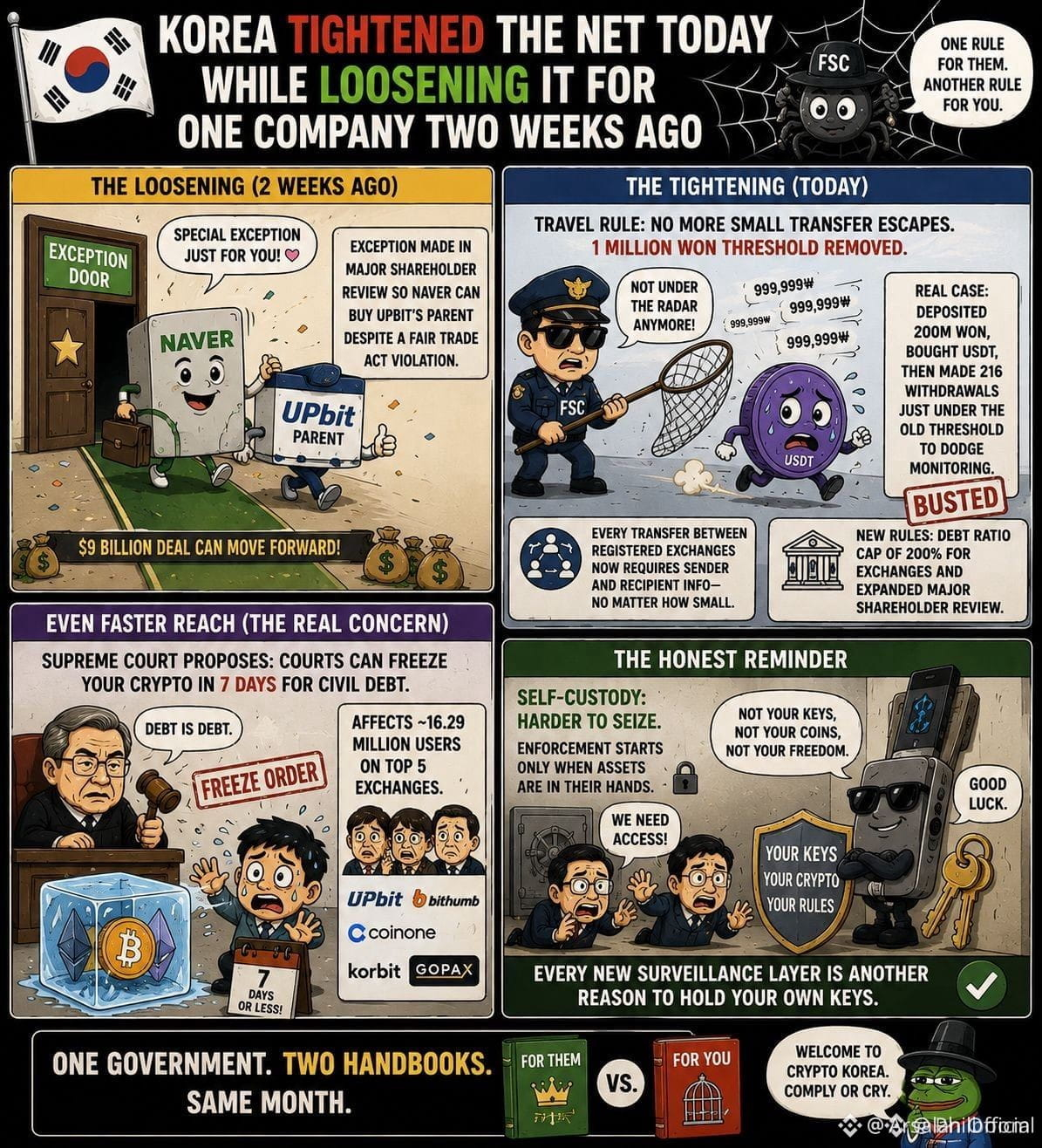
#KoreaApprovesTighterCryptoExchangeRules على الأرجح يشير هذا العنوان إلى أن كوريا الجنوبية وافقت على قواعد أكثر صرامة لمكافحة غسل الأموال فيما يتعلق بتبادلات العملات المشفرة (كريبتو)، لا سيما عبر توسيع ما يُسمى بـ “قاعدة السفر” لتشمل التحويلات الأصغر التي كانت سابقًا تقع تحت عتبة الإبلاغ. تشير تقارير حديثة إلى أن مجلس الوزراء وافق على تعديلات في 11 أغسطس 2026 تُزيل الحد الأدنى القديم البالغ ₩1,000,000، بحيث يُطلب في النهاية معلومات المُرسل/المستلم لجميع عمليات نقل الكريبتو من تبادل إلى تبادل، وليس فقط التحويلات الأكبر. (techtimes.com)
بعبارات أبسط: تجعل كوريا من الصعب نقل الكريبتو بين التبادلات بشكل مجهول عبر أجزاء صغيرة. في الإعداد القديم، كان بإمكان بعض المستخدمين أحيانًا تجنب متطلبات مشاركة الهوية الأكثر صرامة من خلال تقسيم مبلغ كبير إلى العديد من التحويلات الأصغر. تهدف القواعد الجديدة إلى سد هذه الثغرة. (techtimes.com)
الأثر العملي على التبادلات هو:
مزيد من أعمال الامتثال على كل تحويل،
تحقق هوية أكثر صرامة وحفظ سجلات أدق،
احتمال بطء أو قيود أكبر على التحويلات التي تتضمن أطرافًا مقابلة معينة أو منصات خارجية (offshore)، و
ارتفاع التكاليف التشغيلية لمقدمي خدمات الأصول الافتراضية في كوريا. (techtimes.com)
وتوقيت تطبيق هذه القواعد مهم أيضًا. ووفقًا للتقارير، تدخل أجزاء من المرسوم حيز التنفيذ في 20 أغسطس 2026، في حين يُتوقع أن يبدأ تطبيق “قاعدة السفر” ذات العتبة الصفرية نفسها في 20 فبراير 2027 بعد فترة سماح للتنفيذ. (techtimes.com)
ما لا يعنيه ذلك بالضرورة:
لا يعني أن الكريبتو مُحظور في كوريا،
ولا يعني أن جميع المستخدمين سيواجهون ضرائب جديدة فورًا،
ولا يعني تلقائيًا تأثيرًا مباشرًا على مستخدمي Binance إلا إذا كانوا يستخدمون منصات مُنظمة من كوريا أو يتعاملون مع أطراف مقابلة كورية. النقطة الأخيرة هي استنتاج مبني على نطاق القاعدة التي تنطبق على التبادلات المسجلة في كوريا. (techtimes.com)
إذًا الخلاصة من العنوان هي: كوريا الجنوبية تُشدّد متطلبات امتثال التبادلات، وليس أنها تحظر الكريبتو. الهدف هو تقليل مخاطر غسل الأموال وإجبار السوق على تتبع أكثر شفافية لحركة التحويلات. (techtimes.com)$ADA
$DEXE
$MMT
بعبارات أبسط: تجعل كوريا من الصعب نقل الكريبتو بين التبادلات بشكل مجهول عبر أجزاء صغيرة. في الإعداد القديم، كان بإمكان بعض المستخدمين أحيانًا تجنب متطلبات مشاركة الهوية الأكثر صرامة من خلال تقسيم مبلغ كبير إلى العديد من التحويلات الأصغر. تهدف القواعد الجديدة إلى سد هذه الثغرة. (techtimes.com)
الأثر العملي على التبادلات هو:
مزيد من أعمال الامتثال على كل تحويل،
تحقق هوية أكثر صرامة وحفظ سجلات أدق،
احتمال بطء أو قيود أكبر على التحويلات التي تتضمن أطرافًا مقابلة معينة أو منصات خارجية (offshore)، و
ارتفاع التكاليف التشغيلية لمقدمي خدمات الأصول الافتراضية في كوريا. (techtimes.com)
وتوقيت تطبيق هذه القواعد مهم أيضًا. ووفقًا للتقارير، تدخل أجزاء من المرسوم حيز التنفيذ في 20 أغسطس 2026، في حين يُتوقع أن يبدأ تطبيق “قاعدة السفر” ذات العتبة الصفرية نفسها في 20 فبراير 2027 بعد فترة سماح للتنفيذ. (techtimes.com)
ما لا يعنيه ذلك بالضرورة:
لا يعني أن الكريبتو مُحظور في كوريا،
ولا يعني أن جميع المستخدمين سيواجهون ضرائب جديدة فورًا،
ولا يعني تلقائيًا تأثيرًا مباشرًا على مستخدمي Binance إلا إذا كانوا يستخدمون منصات مُنظمة من كوريا أو يتعاملون مع أطراف مقابلة كورية. النقطة الأخيرة هي استنتاج مبني على نطاق القاعدة التي تنطبق على التبادلات المسجلة في كوريا. (techtimes.com)
إذًا الخلاصة من العنوان هي: كوريا الجنوبية تُشدّد متطلبات امتثال التبادلات، وليس أنها تحظر الكريبتو. الهدف هو تقليل مخاطر غسل الأموال وإجبار السوق على تتبع أكثر شفافية لحركة التحويلات. (techtimes.com)$ADA
$DEXE
$MMT