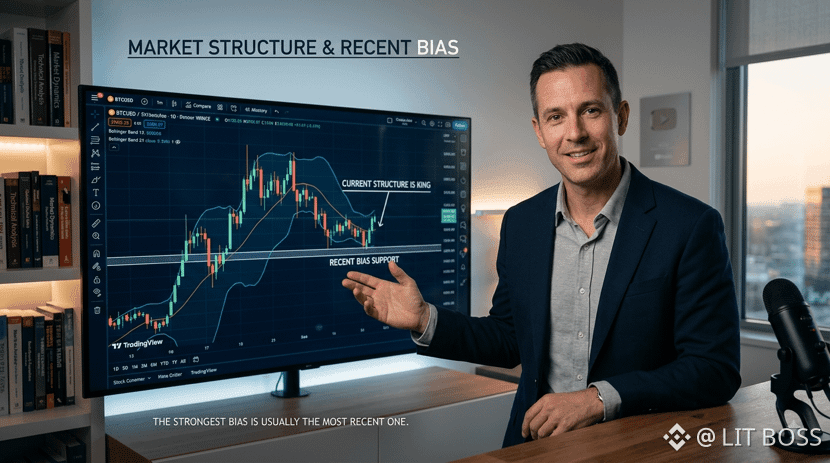

بنية السوق وقوة الانحياز الأخير
في التحليل الفني، يُعد أحد أكثر التحديات المستمرة التي يواجهها المتداولون هو إدارة الإشارات المتضاربة عبر أطر زمنية مختلفة. بينما تحدد الاتجاهات الكلية ذات الأطر الأعلى السياق العام، فإن السوق في اللحظة الحالية تحركه التوريد والطلب والسيولة الراهنة. إن إدراك أن أقوى انحياز هو عادةً الأكثر حداثة أمر أساسي للحفاظ على استراتيجية تداول مرنة وواقعية.
تحدد الاتجاهات الكلية إلى أين وصل السعر، لكن حركة السعر قصيرة الأجل تكشف إلى أين يتجه تدفق الأوامر الآن. يقع المتداولون غالبًا في فخ الجمود الانحيازي؛ حيث تستمر أطروحة صاعدة أو هابطة تكونت قبل أيام أو أسابيع في توجيه اتخاذ القرار رغم وجود تحولات بنيوية واضحة على الرسم البياني. عندما يقوم السوق باجتياز مستوى مهم، أو يكسر بنية محلية، أو يغيّر الزخم، تصبح سلوكيات السعر الفورية هي الأولوية بدلًا من الافتراضات القديمة.
إن الاعتماد بشكل مفرط على انحياز أقدم يخلق انفصالًا خطيرًا بين ما يريد المتداول رؤيته وما يُظهره المخطط فعليًا. إن المشاركين في السوق الذين يعدّلون انحيازهم بناءً على التأرجحات السعرية الأخيرة، وردود الفعل عند المستويات المحورية، والانكسارات البنيوية الفورية يتمتعون بتموضع أفضل بكثير لالتقاط الزخم النشط.
من خلال إعطاء الأولوية لحركة السعر الأخيرة بدلًا من توقعات طويلة المدى جامدة، تقلّل من خطر محاربة تدفق الأوامر السائد. يتطلب النجاح في التنقل عبر بنية السوق إعادة تقييم مستمرة؛ حيث يتم التخلي عن الأطروحات القديمة بإرادة لحظة أن تشير أحدث البيانات إلى ضرورة حدوث انعطافة.
في التحليل الفني، يُعد أحد أكثر التحديات المستمرة التي يواجهها المتداولون هو إدارة الإشارات المتضاربة عبر أطر زمنية مختلفة. بينما تحدد الاتجاهات الكلية ذات الأطر الأعلى السياق العام، فإن السوق في اللحظة الحالية تحركه التوريد والطلب والسيولة الراهنة. إن إدراك أن أقوى انحياز هو عادةً الأكثر حداثة أمر أساسي للحفاظ على استراتيجية تداول مرنة وواقعية.
تحدد الاتجاهات الكلية إلى أين وصل السعر، لكن حركة السعر قصيرة الأجل تكشف إلى أين يتجه تدفق الأوامر الآن. يقع المتداولون غالبًا في فخ الجمود الانحيازي؛ حيث تستمر أطروحة صاعدة أو هابطة تكونت قبل أيام أو أسابيع في توجيه اتخاذ القرار رغم وجود تحولات بنيوية واضحة على الرسم البياني. عندما يقوم السوق باجتياز مستوى مهم، أو يكسر بنية محلية، أو يغيّر الزخم، تصبح سلوكيات السعر الفورية هي الأولوية بدلًا من الافتراضات القديمة.
إن الاعتماد بشكل مفرط على انحياز أقدم يخلق انفصالًا خطيرًا بين ما يريد المتداول رؤيته وما يُظهره المخطط فعليًا. إن المشاركين في السوق الذين يعدّلون انحيازهم بناءً على التأرجحات السعرية الأخيرة، وردود الفعل عند المستويات المحورية، والانكسارات البنيوية الفورية يتمتعون بتموضع أفضل بكثير لالتقاط الزخم النشط.
من خلال إعطاء الأولوية لحركة السعر الأخيرة بدلًا من توقعات طويلة المدى جامدة، تقلّل من خطر محاربة تدفق الأوامر السائد. يتطلب النجاح في التنقل عبر بنية السوق إعادة تقييم مستمرة؛ حيث يتم التخلي عن الأطروحات القديمة بإرادة لحظة أن تشير أحدث البيانات إلى ضرورة حدوث انعطافة.