#southkoreatopcourtproposescryptofreeze
تضع كوريا الجنوبية منصات تبادل العملات المشفرة على مهلة مدتها سبعة أيام بموجب قواعد جديدة للمصادرة.
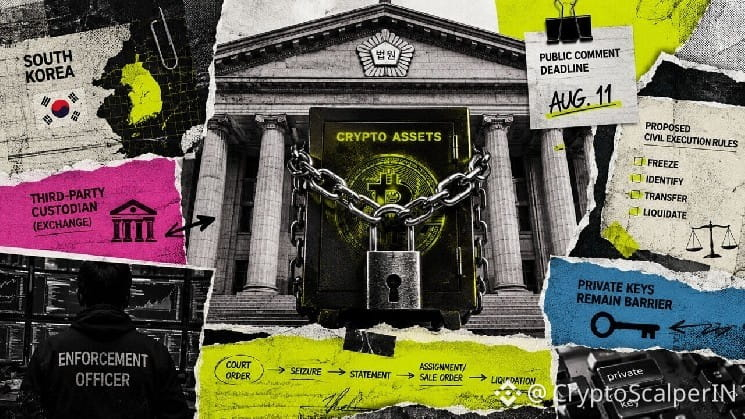
تقترب كوريا الجنوبية من الموعد النهائي في 11 أغسطس لتقديم تعليقات عامة على قواعد مقترحة للمصادرة تخص العملات المشفرة يمكن أن تمنح منصات التبادل مدة سبعة أيام فقط للكشف عن ممتلكات العملاء بمجرد إخطارها بأمر قضائي.
ستؤدي التعديلات المقترحة من المحكمة العليا على قواعد التنفيذ المدني إلى إنشاء عملية موحدة للدائنين لتجميد الأصول الافتراضية التي يمتلكها المدين وتحديدها وتصفيةها.
إذا ما تم اعتمادها ضمن الجدول الزمني الحالي، يُتوقع أن تدخل القواعد حيز التنفيذ في الأول من أكتوبر.
وهذا سيمنح منصات التبادل وغيرها من مقدمي خدمات الأصول الافتراضية قرابة سبعة أسابيع بعد انتهاء فترة التشاور للاستعداد لدور أكثر رسمية في إنفاذ الديون المدنية.
وبالنسبة إلى العملات المشفرة المحتفظ بها عبر أمين حفظ، يمكن للمحكمة أن تعلق حق المدين في استلام الأصول بدلًا من مصادرة العملات نفسها في البداية. وبعد إخطاره، يُحظر على مقدم الخدمة تحويل الأصول المقابلة إلى المدين، كما يفقد المدين القدرة على التصرف في المطالبة.
تضع كوريا الجنوبية منصات تبادل العملات المشفرة على مهلة مدتها سبعة أيام بموجب قواعد جديدة للمصادرة.
تقترب كوريا الجنوبية من الموعد النهائي في 11 أغسطس لتقديم تعليقات عامة على قواعد مقترحة للمصادرة تخص العملات المشفرة يمكن أن تمنح منصات التبادل مدة سبعة أيام فقط للكشف عن ممتلكات العملاء بمجرد إخطارها بأمر قضائي.
ستؤدي التعديلات المقترحة من المحكمة العليا على قواعد التنفيذ المدني إلى إنشاء عملية موحدة للدائنين لتجميد الأصول الافتراضية التي يمتلكها المدين وتحديدها وتصفيةها.
إذا ما تم اعتمادها ضمن الجدول الزمني الحالي، يُتوقع أن تدخل القواعد حيز التنفيذ في الأول من أكتوبر.
وهذا سيمنح منصات التبادل وغيرها من مقدمي خدمات الأصول الافتراضية قرابة سبعة أسابيع بعد انتهاء فترة التشاور للاستعداد لدور أكثر رسمية في إنفاذ الديون المدنية.
وبالنسبة إلى العملات المشفرة المحتفظ بها عبر أمين حفظ، يمكن للمحكمة أن تعلق حق المدين في استلام الأصول بدلًا من مصادرة العملات نفسها في البداية. وبعد إخطاره، يُحظر على مقدم الخدمة تحويل الأصول المقابلة إلى المدين، كما يفقد المدين القدرة على التصرف في المطالبة.