
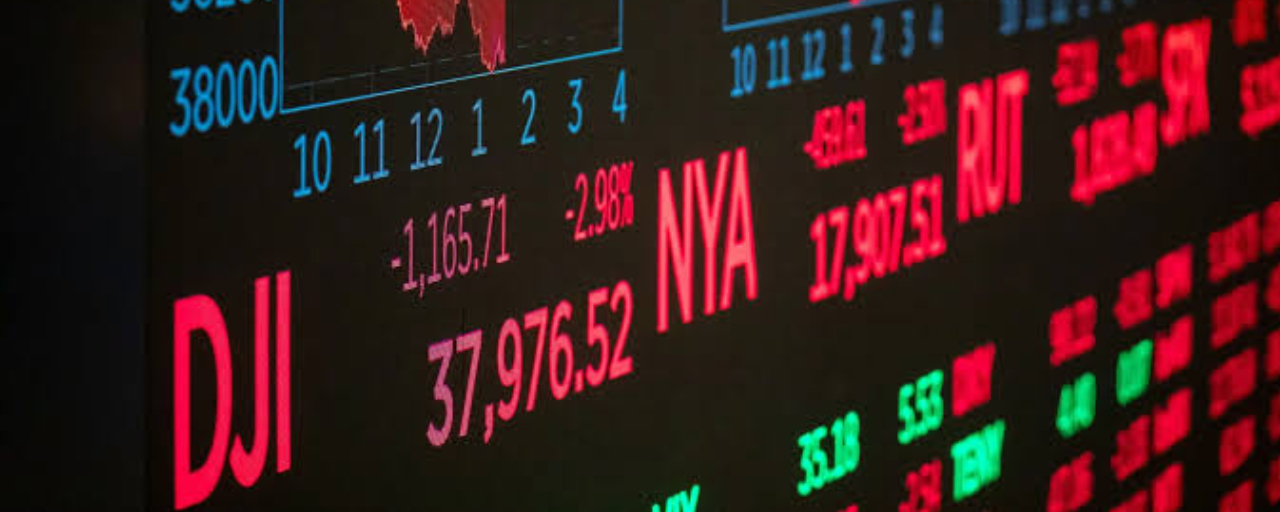
US equity indices opened Monday on the back foot as fading hopes for a near-term Hormuz reopening sent crude sharply higher — the details of which are covered in the morning update. WTI settled up 5.1% at $82.13 a barrel, Brent added 5% to $87.72, and the rise rippled straight into rates: Treasury yields pushed higher across the curve as the oil spike added a fresh wrinkle to the inflation outlook.
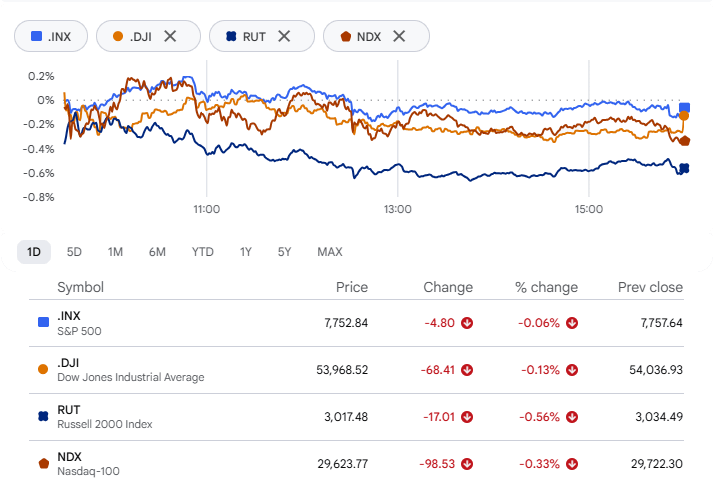
The large caps tried to shrug it off. For a few hours, anyway. A morning rally ran out of steam, and the major indices slid to session lows in early afternoon before clawing back some ground into the close — though not enough to turn green. The Russell 2000 led the retreat, down 0.6%. The Nasdaq Composite slipped 0.3%. The S&P 500 and the Dow both eased 0.1% apiece, finishing barely below Friday's records.
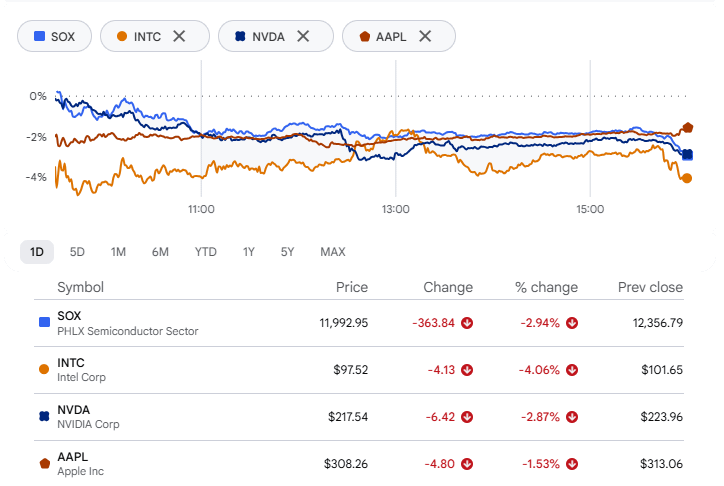
Higher yields did what higher yields do: rate-sensitive corners of the market took the brunt of it. Real estate, utilities, homebuilders and small caps all traded under pressure. Semiconductors had their own rough day too — the PHLX Semiconductor Index fell nearly 3%, unwinding some of last week's sharp rebound. Intel led the chip-sector laggards, dropping 4% after unveiling a $15 billion common stock offering. Nvidia and Apple followed it lower, down 2.9% and 1.5% respectively.
Then there were the single-stock stories, and Monday had no shortage of them.
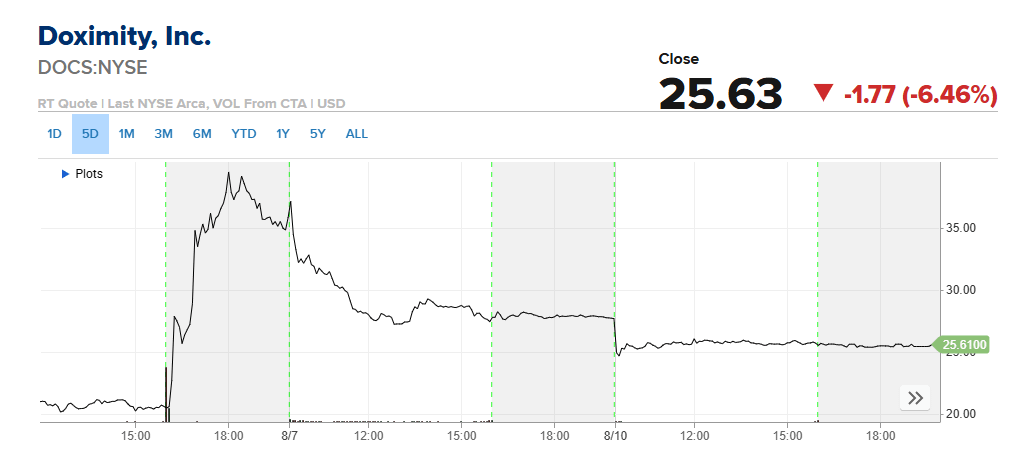
Doximity's rally met its first real skeptic. Wells Fargo's Stan Berenshteyn cut the digital health platform to underweight from equal weight, setting an $18 price target that implies roughly 34% downside from where the stock closed out last week. The timing is almost cruel — Doximity had just posted its best single day in more than a year, surging over 32% on Friday after lifting its full-year revenue guidance and after chief executive Jeffrey Tangney touted an AI search tool that, he said, returns ten times what it costs to run. Berenshteyn wasn't disputing the numbers so much as the multiple: in a Sunday note to clients, he argued the stock now trades in line with faster-growing peers, and that further upside leans on an AI narrative that's genuinely hard to model. Shares gave back more than 6% Monday. Even after Friday's pop, Doximity remains down over 41% for the year.
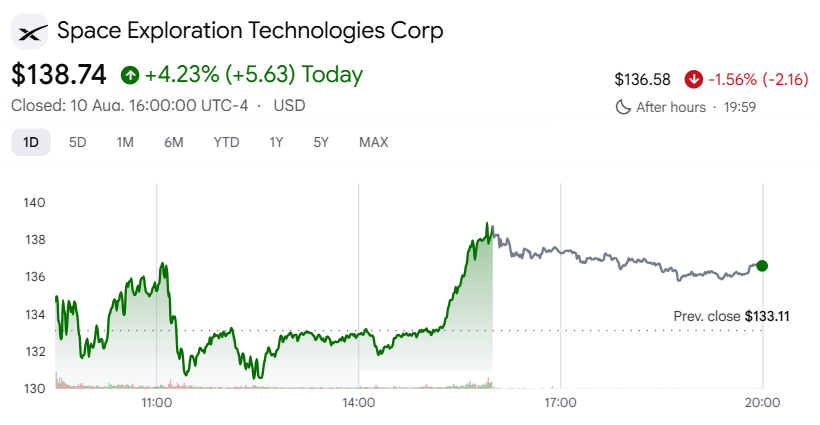
SpaceX had the better afternoon. Shares climbed roughly 4%, closing back above the company's $135 IPO price for the first time since mid-July, as last week's better-than-expected second-quarter results kept winning converts on Wall Street. It's been a wild few months for the stock — as low as $108.27 barely a week ago — but the earnings beat has analysts leaning bullish again. Citi's John Godyn reiterated his buy rating and $200 target, roughly 50% above current levels. Deutsche Bank's Edison Yu, also bullish, pointed to what he called a fast path toward $100 billion in annualised revenue, driven largely by the company's neocloud and Cursor operations.
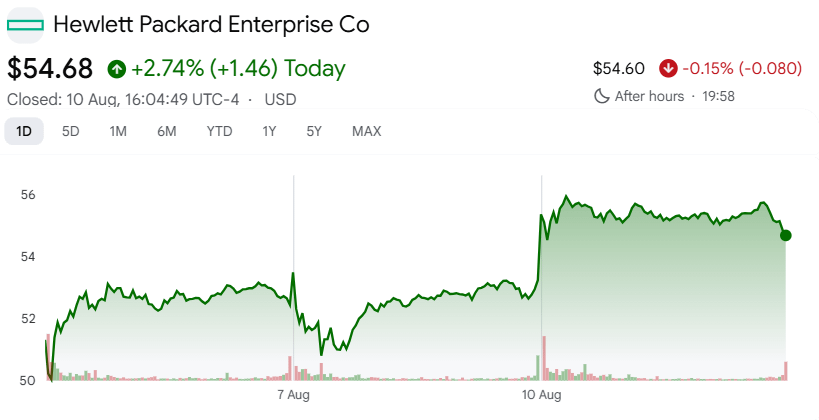
Hewlett Packard Enterprise had its own good news. Morgan Stanley upgraded the stock to overweight from equal-weight, arguing the market is underpricing the gap between HPE's earnings power and where the shares trade. Shares finished the day up nearly 3%, adding to a run of outperformance for the enterprise hardware name.
Sector Analysis:
Best-Performing Sectors
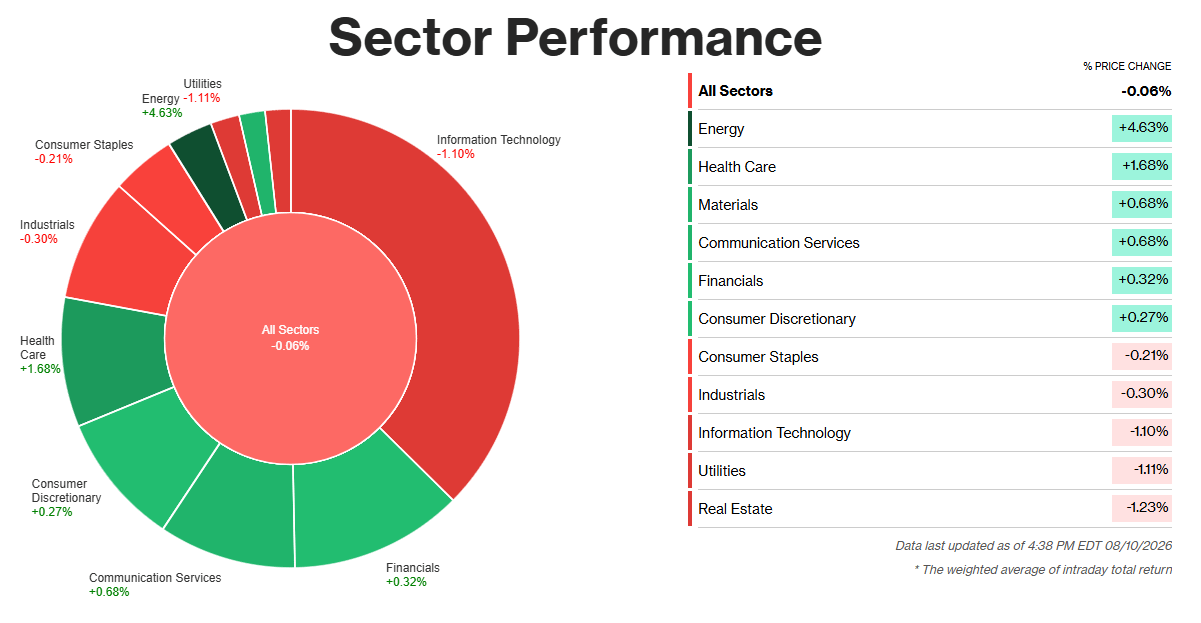
Energy ran away with the session, up 4.63%, as crude prices extended their climb on doubts that Iran and the U.S. will finalize a deal to reopen the Strait of Hormuz. The 10-year Treasury yield gained more than 4 basis points to 4.705% as oil prices climbed and investors looked ahead to a busy week of inflation data, a sign that traders are pricing energy strength into the broader rate picture, not just isolating it to oil stocks. Iran has said it's closing in on a deal with Oman to reopen the strait, but Tehran continues to resist direct negotiations with Washington until several conditions are met — that unresolved standoff is exactly what's keeping a bid under crude.
Health care added 1.68%, riding a wave of strong second-quarter results. AbbVie's Skyrizi and Rinvoq franchises posted double-digit revenue growth that more than offset a steep decline in legacy drug Humira, prompting management to raise its 2026 earnings guidance. Eli Lilly told a similar story, with quarterly revenue climbing sharply and management lifting its full-year outlook. This looks less like a one-day pop and more like a genuine earnings-driven re-rating for defensive pharma names.
Materials rose a modest 0.68%. No single headline stands out as the driver — this looks more like a byproduct of the broader rotation into hard-asset and commodity-linked names alongside energy, rather than a distinct catalyst of its own.
Worst-Performing Sectors
Technology lagged, down 1.10%, weighed by chip-sector jitters. Intel fell 4% after announcing a $15 billion common stock offering, while Nvidia and Apple dropped 2.9% and 1.5%, respectively. Apple's slide had its own trigger: Jefferies downgraded the stock after supply-chain checks suggested the long-rumored all-glass iPhone has been shelved, undercutting the premium-device narrative investors were counting on.
Utilities and real estate — down 1.11% and 1.23% — are classic casualties of a rising-rate tape. With the 10-year yield pushing toward 4.71% on oil-driven inflation worries and a heavy week of Treasury auctions ($58 billion in 3-year notes, $42 billion in 10-year notes, $25 billion in 30-year bonds), these bond-proxy sectors lost their relative income appeal. This reads as sector-wide, rate-sensitivity weakness rather than anything company-specific.
None of Monday's moves will matter much if the week's inflation data doesn't cooperate. July's CPI lands Wednesday, PPI follows Thursday, and both now carry the added weight of an oil shock that barely anyone had on the radar a month ago.