🔐 ماذا سيحدث إذا أصبحت الحواسيب الكمّية قوية بما يكفي لتهديد تشفير بلوكتشين؟
TRON تستعدّ بالفعل لهذا الاحتمال.
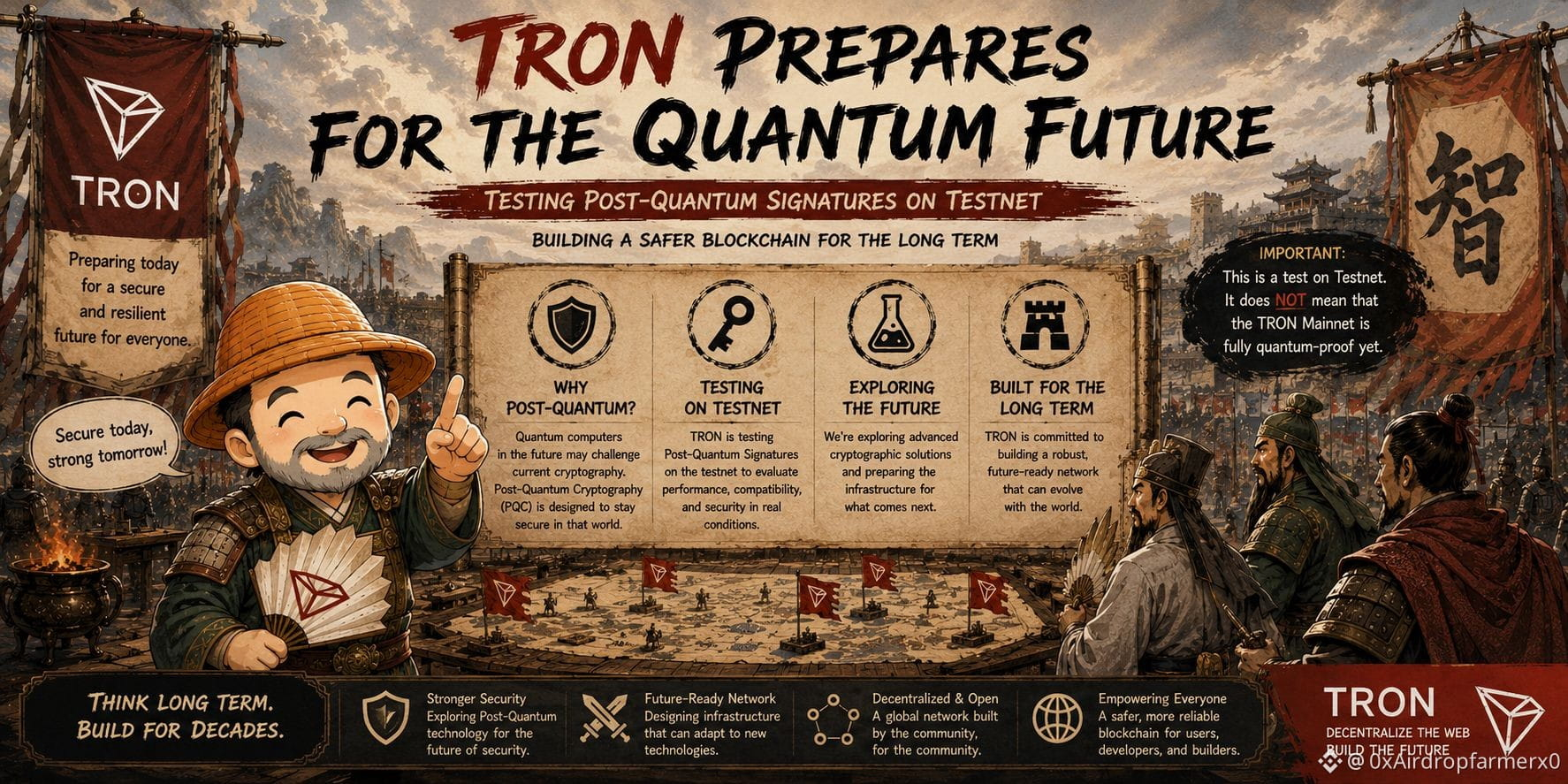
بدأت TRON اختبار تواقيع ما بعد الحقبة الكمّية على شبكتها التجريبية — خطوة مهمّة لاستكشاف كيف يمكن أن تظل بنية بلوكتشين التحتية آمنة في مستقبل يتشكّل بفعل الحوسبة الكمّية.
بعبارات بسيطة:
تعتمد البلوكتشين اليوم بشكل كبير على التواقيع التشفيرية لإثبات الملكية وتفويض المعاملات.
لكن الحواسيب الكمّية القادرة بدرجة كافية قد تفرض في النهاية تحديات جديدة لبعض تشفيرات مفاتيح عامة المستخدمة اليوم.
وهنا يأتي دور التشفير ما بعد الحقبة الكمّية.
تم تصميمه بالاعتماد على مقاربات تشفيرية تهدف إلى البقاء آمنة ضد هجمات كلّ من الحواسيب الكلاسيكية والكمّية.
وأعتقد أن نهج TRON هنا مهم:
🛡️ استكشاف أمان تشفيري أقوى
🧪 اختباره على الشبكة التجريبية أولاً
🔬 تقييم الأداء والتوافق
🏗️ تجهيز البنية التحتية للتطور طويل الأمد
تمييز مهم واحد:
هذا لا يعني أن شبكة TRON الرئيسية (mainnet) أصبحت بالفعل "محصّنة ضد الكم" بالكامل.
ما تفعله TRON الآن هو اختبار تقنية التوقيع ما بعد الحقبة الكمّية على الشبكة التجريبية والاستعداد لما قد يأتي لاحقاً.
قد لا تكون الحوسبة الكمّية تهديداً مباشراً اليوم.
لكن البنية التحتية المصممة لتستمر لعقود لا يمكنها الانتظار حتى يصبح التهديد أمراً عاجلاً قبل الاستعداد له.
يجب ألا يكون السؤال للبلوكتشين:
"كم عدد المعاملات التي يمكننا معالجتها اليوم؟"
فحسب، بل أيضاً:
"هل ستكون بنية أماننا جاهزة لحواسيب الغد؟"
TRON تعمل بالفعل على هذا السؤال. 🔐
@justinsuntron @trondao @TronDao_THA
#TRONGlobalFriends #TGF #TRON #PostQuantum #QuantumComputing #CyberSecurity #Blockchain
TRON تستعدّ بالفعل لهذا الاحتمال.
بدأت TRON اختبار تواقيع ما بعد الحقبة الكمّية على شبكتها التجريبية — خطوة مهمّة لاستكشاف كيف يمكن أن تظل بنية بلوكتشين التحتية آمنة في مستقبل يتشكّل بفعل الحوسبة الكمّية.
بعبارات بسيطة:
تعتمد البلوكتشين اليوم بشكل كبير على التواقيع التشفيرية لإثبات الملكية وتفويض المعاملات.
لكن الحواسيب الكمّية القادرة بدرجة كافية قد تفرض في النهاية تحديات جديدة لبعض تشفيرات مفاتيح عامة المستخدمة اليوم.
وهنا يأتي دور التشفير ما بعد الحقبة الكمّية.
تم تصميمه بالاعتماد على مقاربات تشفيرية تهدف إلى البقاء آمنة ضد هجمات كلّ من الحواسيب الكلاسيكية والكمّية.
وأعتقد أن نهج TRON هنا مهم:
🛡️ استكشاف أمان تشفيري أقوى
🧪 اختباره على الشبكة التجريبية أولاً
🔬 تقييم الأداء والتوافق
🏗️ تجهيز البنية التحتية للتطور طويل الأمد
تمييز مهم واحد:
هذا لا يعني أن شبكة TRON الرئيسية (mainnet) أصبحت بالفعل "محصّنة ضد الكم" بالكامل.
ما تفعله TRON الآن هو اختبار تقنية التوقيع ما بعد الحقبة الكمّية على الشبكة التجريبية والاستعداد لما قد يأتي لاحقاً.
قد لا تكون الحوسبة الكمّية تهديداً مباشراً اليوم.
لكن البنية التحتية المصممة لتستمر لعقود لا يمكنها الانتظار حتى يصبح التهديد أمراً عاجلاً قبل الاستعداد له.
يجب ألا يكون السؤال للبلوكتشين:
"كم عدد المعاملات التي يمكننا معالجتها اليوم؟"
فحسب، بل أيضاً:
"هل ستكون بنية أماننا جاهزة لحواسيب الغد؟"
TRON تعمل بالفعل على هذا السؤال. 🔐
@justinsuntron @trondao @TronDao_THA
#TRONGlobalFriends #TGF #TRON #PostQuantum #QuantumComputing #CyberSecurity #Blockchain