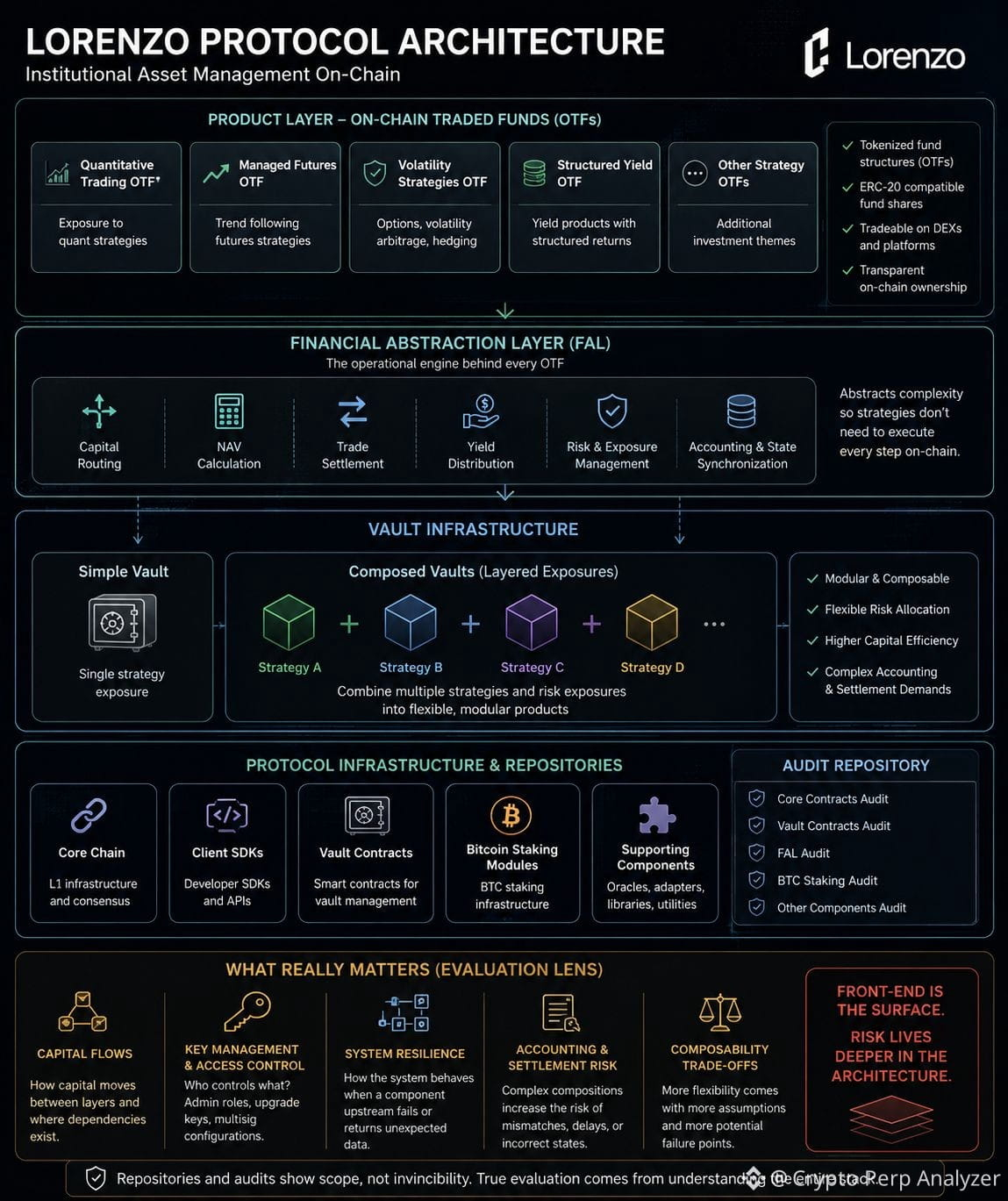
معمارية لورنزو الحالية هي أكثر بكثير من مجرد أموال مُرمّزة.
في صميمها، يقوم البروتوكول بربط الصناديق المتداولة على السلسلة (OTFs)، وبنية تحتية مخصّصة للأقبية (vault)، وطبقة التجريد المالي التي تتكفل بالأعمال الشاقة مثل توجيه رأس المال، وحساب قيمة صافي الأصول (NAV)، والتسوية، وتوزيع العائدات. الميزة الحقيقية هنا تكمن في التغليف: إذ يمكن للورنزو حزم استراتيجيات متنوعة ومعقدة داخل منتجات مالية سلسة ومُنفّذة على السلسلة، دون إجبار كل خطوة ميكانيكية من تلك الاستراتيجيات على التنفيذ مباشرةً على السلسلة.
ما يلفت الانتباه هو كيف يؤدي ذلك إلى تحويل متطلبات التقنية الأساسية.
عندما تستقر استراتيجية واحدة داخل قبو، تكون الأمور مباشرة. لكن بمجرد أن تبدأ في بناء هياكل مركّبة تُركّب أنواعًا مختلفة من التعرض للمخاطر فوق بعضها، يصبح مستوى المنتج مرنًا إلى ما لا نهاية. ما المفاجأة؟ إن هامش الخطأ في المحاسبة والتسوية وتزامن الحالة يتقلص بشكل كبير جدًا مع بدء تفاعل تلك الأجزاء المتحركة.
بالنظر إلى ما تحت الغطاء، تصبح الصورة أوضح. لا تقتصر المستودعات العامة للورنزو على استضافة عدد قليل من العقود الذكية؛ بل تغطي السلسلة الأساسية، وواجهات عميل SDKs، ومنطق الأقبية المعقد، ووحدات إيداع بيتكوين (Bitcoin staking)، وغيرها من المكونات الداعمة. وتنعكس عملية المراجعة (الـ audit) في مستودعها أيضًا، حيث يتم فصلها إلى تقارير أمنية متميزة لشرائح مختلفة من المكدس.
ولتوضيح الأمر: إن قائمة طويلة من المستودعات والمراجعات ليست دليلًا على نظام غير قابل للاختراق. ما تثبته هو أن لورنزو تعمل كمكدس مؤسسي كامل النطاق بدلًا من كونها بروتوكولًا واحدًا منعزلًا.
وهذا يغيّر جذريًا الطريقة التي يتعين عليك بها تقييمه.
واجهة المستخدم الأمامية المصقولة وحزم المنتج هي مجرد السطح. أما اللحم الحقيقي والمخاطر الفعلية فمدفونتان بشكل أعمق: كيف يتدفق رأس المال بين هذه الطبقات التجريدية، وأين تعيش إدارة المفاتيح والتحكمات الإدارية فعليًا، وكيف يتعامل النظام كله مع الحالات الحدّية عندما يتعطل مكوّن في المنبع.
@Lorenzo Protocol #bank $BANK
في صميمها، يقوم البروتوكول بربط الصناديق المتداولة على السلسلة (OTFs)، وبنية تحتية مخصّصة للأقبية (vault)، وطبقة التجريد المالي التي تتكفل بالأعمال الشاقة مثل توجيه رأس المال، وحساب قيمة صافي الأصول (NAV)، والتسوية، وتوزيع العائدات. الميزة الحقيقية هنا تكمن في التغليف: إذ يمكن للورنزو حزم استراتيجيات متنوعة ومعقدة داخل منتجات مالية سلسة ومُنفّذة على السلسلة، دون إجبار كل خطوة ميكانيكية من تلك الاستراتيجيات على التنفيذ مباشرةً على السلسلة.
ما يلفت الانتباه هو كيف يؤدي ذلك إلى تحويل متطلبات التقنية الأساسية.
عندما تستقر استراتيجية واحدة داخل قبو، تكون الأمور مباشرة. لكن بمجرد أن تبدأ في بناء هياكل مركّبة تُركّب أنواعًا مختلفة من التعرض للمخاطر فوق بعضها، يصبح مستوى المنتج مرنًا إلى ما لا نهاية. ما المفاجأة؟ إن هامش الخطأ في المحاسبة والتسوية وتزامن الحالة يتقلص بشكل كبير جدًا مع بدء تفاعل تلك الأجزاء المتحركة.
بالنظر إلى ما تحت الغطاء، تصبح الصورة أوضح. لا تقتصر المستودعات العامة للورنزو على استضافة عدد قليل من العقود الذكية؛ بل تغطي السلسلة الأساسية، وواجهات عميل SDKs، ومنطق الأقبية المعقد، ووحدات إيداع بيتكوين (Bitcoin staking)، وغيرها من المكونات الداعمة. وتنعكس عملية المراجعة (الـ audit) في مستودعها أيضًا، حيث يتم فصلها إلى تقارير أمنية متميزة لشرائح مختلفة من المكدس.
ولتوضيح الأمر: إن قائمة طويلة من المستودعات والمراجعات ليست دليلًا على نظام غير قابل للاختراق. ما تثبته هو أن لورنزو تعمل كمكدس مؤسسي كامل النطاق بدلًا من كونها بروتوكولًا واحدًا منعزلًا.
وهذا يغيّر جذريًا الطريقة التي يتعين عليك بها تقييمه.
واجهة المستخدم الأمامية المصقولة وحزم المنتج هي مجرد السطح. أما اللحم الحقيقي والمخاطر الفعلية فمدفونتان بشكل أعمق: كيف يتدفق رأس المال بين هذه الطبقات التجريدية، وأين تعيش إدارة المفاتيح والتحكمات الإدارية فعليًا، وكيف يتعامل النظام كله مع الحالات الحدّية عندما يتعطل مكوّن في المنبع.
@Lorenzo Protocol #bank $BANK