
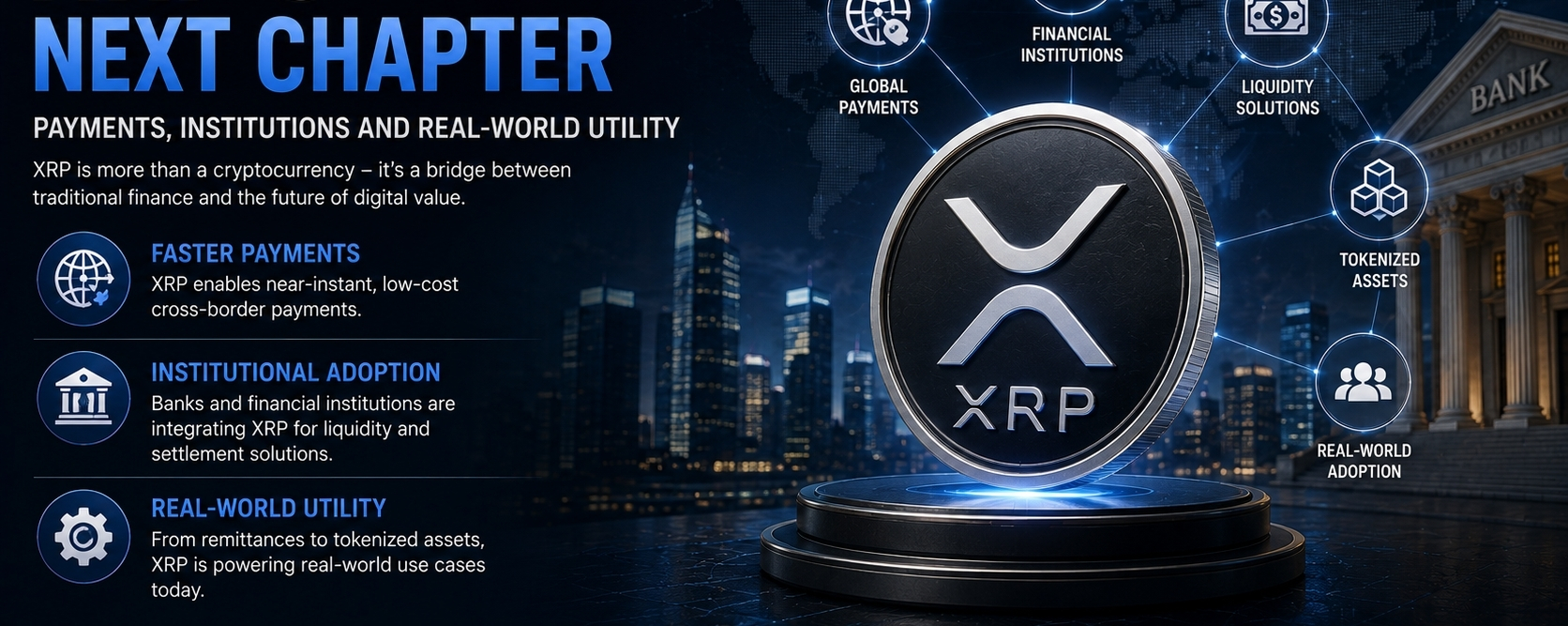

XRP has been part of the crypto market for years, but its bigger story has always been about more than price speculation. Its focus on fast settlement, cross-border payments and financial infrastructure gives it a different narrative from many other major cryptocurrencies.
As blockchain adoption expands, the next chapter for XRP could depend on whether this technology gains deeper use in payments, institutional finance and real-world applications.
Faster Global Payments
Traditional international transfers can involve multiple intermediaries, different banking systems and settlement delays. Blockchain technology offers another approach by allowing value to move digitally across borders.
The XRP Ledger is designed for fast settlement with relatively low transaction costs. This makes payments one of the most important areas to watch when evaluating XRP's long-term utility.
The bigger opportunity is not simply replacing existing payment systems. Blockchain networks could potentially work alongside traditional financial infrastructure and provide additional settlement options.
Institutional Adoption Could Be Important
Institutional participation has become a major theme across crypto. Banks, payment companies, asset managers and other financial organizations are increasingly exploring blockchain-based settlement and tokenization.
For XRP, institutional interest matters because its broader ecosystem has historically focused heavily on financial applications.
However, partnerships and announcements alone are not enough. Investors should watch whether experiments eventually translate into real transaction activity, liquidity and sustained usage.
Stablecoins Add Another Dimension
Stablecoins are becoming an important bridge between traditional currencies and blockchain networks.
Their growth could also benefit networks capable of handling payments efficiently. Stablecoins on the XRP Ledger could potentially support payments, trading and other financial applications while XRP continues serving its own role within the network.
Rather than stablecoins necessarily competing with XRP, the two could potentially serve different purposes within the same ecosystem.
Tokenization and Real-World Assets
Real-world asset tokenization is another opportunity.
Financial assets such as bonds, funds and other instruments can potentially be represented on blockchain networks. If this market continues growing, blockchains capable of supporting payments, asset issuance and settlement could see greater demand.
For XRP Ledger, attracting issuers and financial applications would help expand its utility beyond traditional crypto trading.
Utility Will Matter More Than Hype
XRP has one of crypto's largest communities, but community strength alone cannot determine long-term success.
The important metrics will be network activity, payment volume, liquidity, developer growth, institutional usage and adoption of applications built on the XRP Ledger.
Price can move quickly because of market sentiment, but sustainable ecosystem growth generally takes much longer.
What Comes Next for XRP?
XRP's next chapter could be less about being simply another altcoin and more about whether its ecosystem can secure a meaningful position in blockchain-based finance.
Payments remain its strongest narrative, while institutional adoption, stablecoins and tokenized assets could create additional opportunities.
The real question is simple: Can XRP turn years of financial-infrastructure development into growing real-world usage?
If the answer becomes increasingly clear through actual adoption, XRP could remain an important project as crypto moves from speculation toward broader financial utility.
For educational purposes only, not financial advice.