
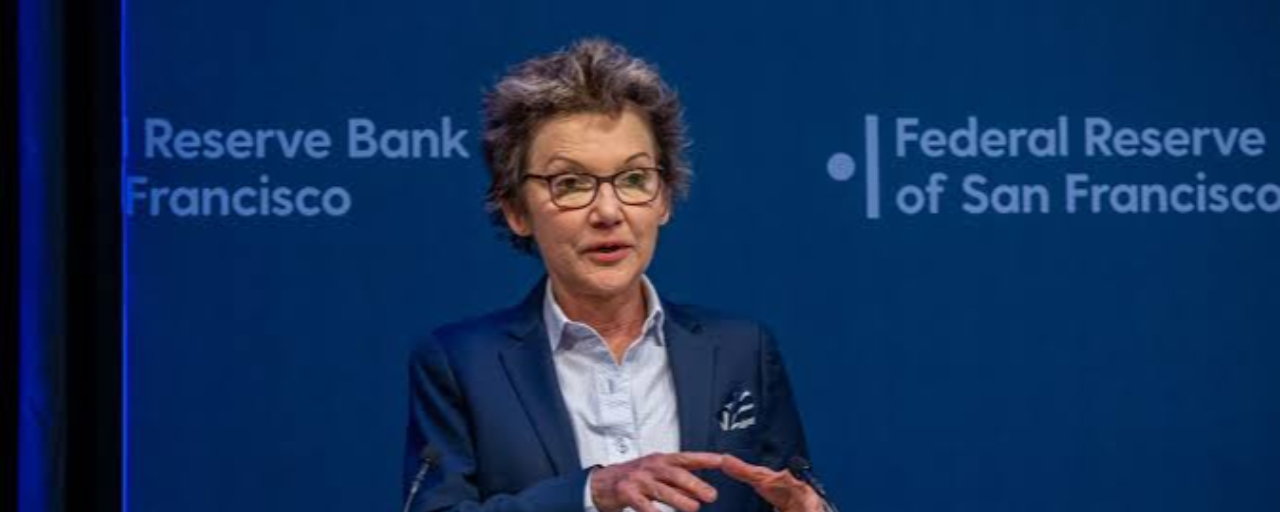
Mary Daly, President of the Federal Reserve Bank of San Francisco, who is not a voting member of the Federal Open Market Committee (FOMC) in 2026 after rotating off the voting seat, threw her full support behind last month's decision to hold rates steady, even as three of her colleagues pushed for a hike.
The FOMC held its target range at 3.5%-3.75% at the July meeting, and Daly called that the right call, stressing that the central bank still needs more data before September to know whether inflation is being driven by fading supply shocks or something more persistent.
She flagged that the Fed faces varied risks in setting policy from here and said it should stay vigilant, watching incoming data closely while remaining ready to act if price pressures build again.
On inflation itself, Daly walked a careful line. Longer-term inflation expectations remain firmly anchored, she said, but warned that shouldn't be taken for granted. She sees "good reasons" to expect the recent run of supply shocks won't leave a lasting mark on prices, even as many still brace for a temporary inflation surge.
Tariffs had an obvious effect on inflation, she acknowledged, though she pointed to early signs that the impact is starting to fade. Still, she flagged real concern about how the public would react to another significant inflation shock, warning that a resurgence of strong price pressures would force the Fed into an aggressive response.
Turning to geopolitical risk, Daly said an end to the Middle East war should ease inflation pressures, noting that consumers are highly focused on oil prices when forming their inflation views. On the labor market, she struck a more sanguine tone, saying the job market is unlikely to spark significant inflation pressure on its own.
She hit a different note on technology, though, pointing to tech spending as a factor pushing inflation higher — a reminder that not every source of price pressure is fading even as others cool.
Monetary Policy
Fully backs holding rates steady in July; says the central bank was right to hold rates steady at the July policy meeting
FOMC voted to hold its rate target steady at 3.5%-3.75% amid ongoing worries about the state of price pressures
Three officials dissented in favor of rate hikes due to the high level of inflation
Other Fed officials have argued the Fed needs to be open to rate hikes, or should boost short-term borrowing costs to bring price pressures back to 2%
Central bank still needs data to determine next policy step
Central bank faces varied risks in setting rate policy
Central bank should be ready to intervene if inflation worsens
Fed should be vigilant to watch the information as it comes in, but be very prepared to take action if needed
"We have a lot of information we need to collect" before the September meeting to determine whether inflation is being driven by supply shocks that will wane over time, or whether a longer-lasting inflation situation is forming
Inflation
Stable inflation expectations should not be taken for granted
Longer-term inflation expectations remain firmly anchored
"Good reasons" to expect supply shocks won't cause lasting inflation impact
Many expect supply shocks to trigger temporary inflation surge
Tariffs had obvious effect on inflation
Some signs tariff impact on inflation starting to fade
Resurgence of strong inflation pressures would require aggressive rate response
Concerns about public reaction to another significant inflation shock
Businesses now have limited pricing power and will struggle to pass on higher input costs
Middle East & Geopolitical Risks
Middle East war ending should ease inflation pressures
Consumers are very focused on oil prices when thinking about inflation, and an end to the Middle East war should fade that factor's contribution to price pressure
Labor Market
Job market unlikely to spark significant inflation pressure
AI & Productivity
Technology spending is pushing inflation higher