قارن كيف يعمل التوقيع عادةً على معظم واجهات المحافظ مقابل ما تفعله ميزة «Ledgers Clear Signing» من أجل «Trustless Bitcoin Vaults» (TBV)، لأن هذا الفرق يوضح فجوة أمنية حقيقية لا يفكر فيها معظم الناس.
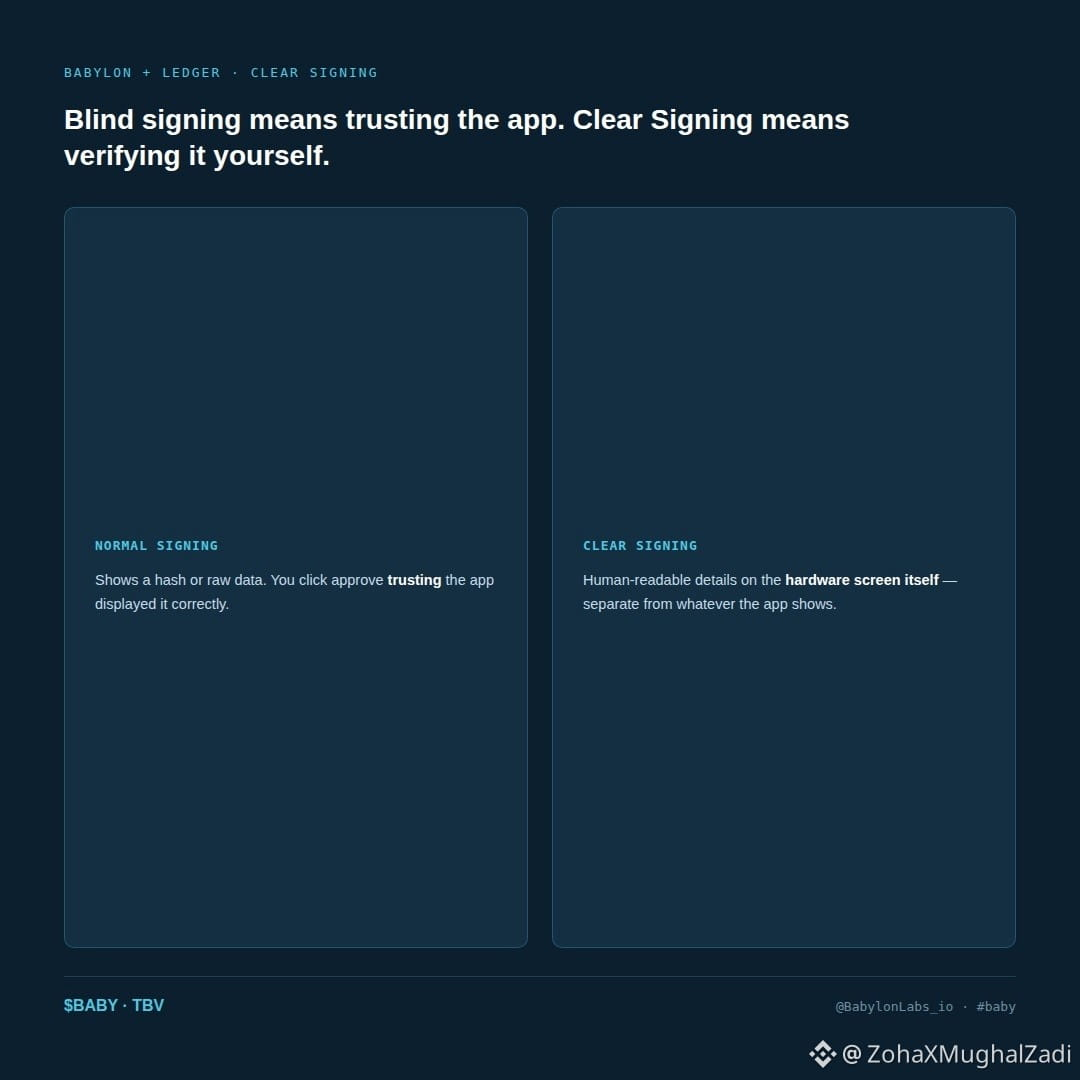
يُظهر توقيع محافظ البرامج المعتاد للمعاملة أحيانًا مجرد قيمة تجزئة أو بيانات خام، ثم تنقر على «موافقة» مع ثقتك بأن التطبيق المعروض قام بعرضها بشكل صحيح. إذا كانت الواجهة مخترَقة أو مُصممة بشكل سيئ، فإنك تقوم بالتوقيع اعتمادًا على الإيمان لا على التحقق فعليًا مما توافق عليه.
تُغير تكاملات «Ledgers» ما يحدث في تلك اللحظة بالذات. تعرض «Clear Signing» تفاصيل المعاملة بصيغة مقروءة للبشر مباشرةً على شاشة جهاز العتاد، بعيدًا عن أي شيء يُظهره المتصفح أو التطبيق لك. يتم عرض مبلغ الإجراء والوجهة بشكل قابل للقراءة على الشاشة، وهي شاشة لا يستطيع التطبيق نفسه التلاعب بها.
فلماذا يهم هذا الأمر أكثر بالنسبة للخزائن تحديدًا مقارنةً بالتحويلات العادية؟
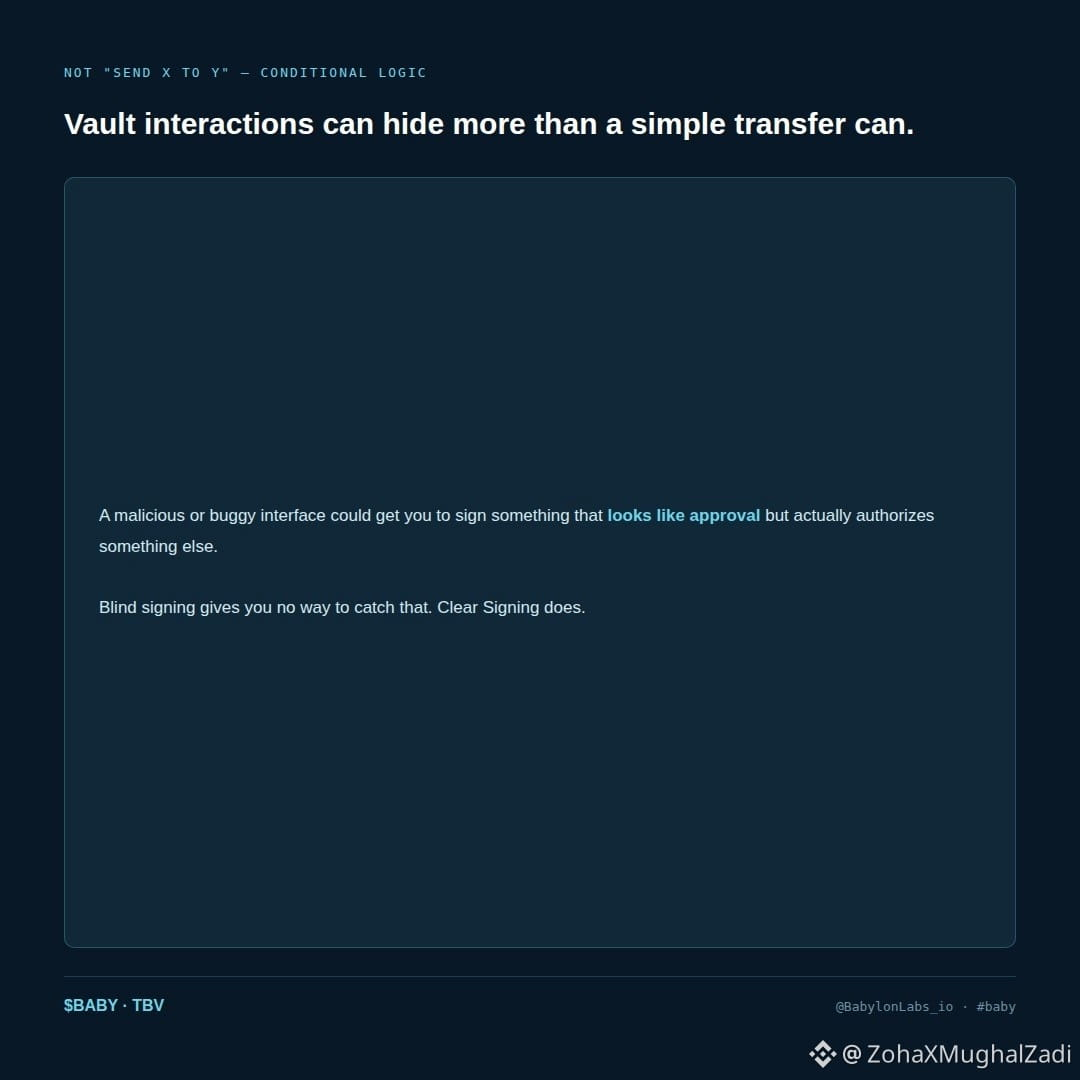
لأن تفاعلات الخزائن تتضمن منطقًا شرطيًا وليس مجرد إرسال «س» إلى «ص». قد يتيح واجهة خبيثة أو بها خلل نظريًا أن توقع على شيء يبدو كموافقة لكنه يصرّح فعليًا بأمر آخر، ويمنحك التوقيع الأعمى لا وسيلة للكشف عن ذلك.
ميزة صغيرة لكنها تُغلق فجوة كانت موجودة في تجربة المستخدم في مجال العملات المشفرة لسنوات، وليست خاصة بـ Babylon—بل تمّت معالجتها أخيرًا هنا.
@BabylonLabs_io $BABY #baby $BANK $SKYAI
يُظهر توقيع محافظ البرامج المعتاد للمعاملة أحيانًا مجرد قيمة تجزئة أو بيانات خام، ثم تنقر على «موافقة» مع ثقتك بأن التطبيق المعروض قام بعرضها بشكل صحيح. إذا كانت الواجهة مخترَقة أو مُصممة بشكل سيئ، فإنك تقوم بالتوقيع اعتمادًا على الإيمان لا على التحقق فعليًا مما توافق عليه.
تُغير تكاملات «Ledgers» ما يحدث في تلك اللحظة بالذات. تعرض «Clear Signing» تفاصيل المعاملة بصيغة مقروءة للبشر مباشرةً على شاشة جهاز العتاد، بعيدًا عن أي شيء يُظهره المتصفح أو التطبيق لك. يتم عرض مبلغ الإجراء والوجهة بشكل قابل للقراءة على الشاشة، وهي شاشة لا يستطيع التطبيق نفسه التلاعب بها.
فلماذا يهم هذا الأمر أكثر بالنسبة للخزائن تحديدًا مقارنةً بالتحويلات العادية؟
لأن تفاعلات الخزائن تتضمن منطقًا شرطيًا وليس مجرد إرسال «س» إلى «ص». قد يتيح واجهة خبيثة أو بها خلل نظريًا أن توقع على شيء يبدو كموافقة لكنه يصرّح فعليًا بأمر آخر، ويمنحك التوقيع الأعمى لا وسيلة للكشف عن ذلك.
ميزة صغيرة لكنها تُغلق فجوة كانت موجودة في تجربة المستخدم في مجال العملات المشفرة لسنوات، وليست خاصة بـ Babylon—بل تمّت معالجتها أخيرًا هنا.
@BabylonLabs_io $BABY #baby $BANK $SKYAI