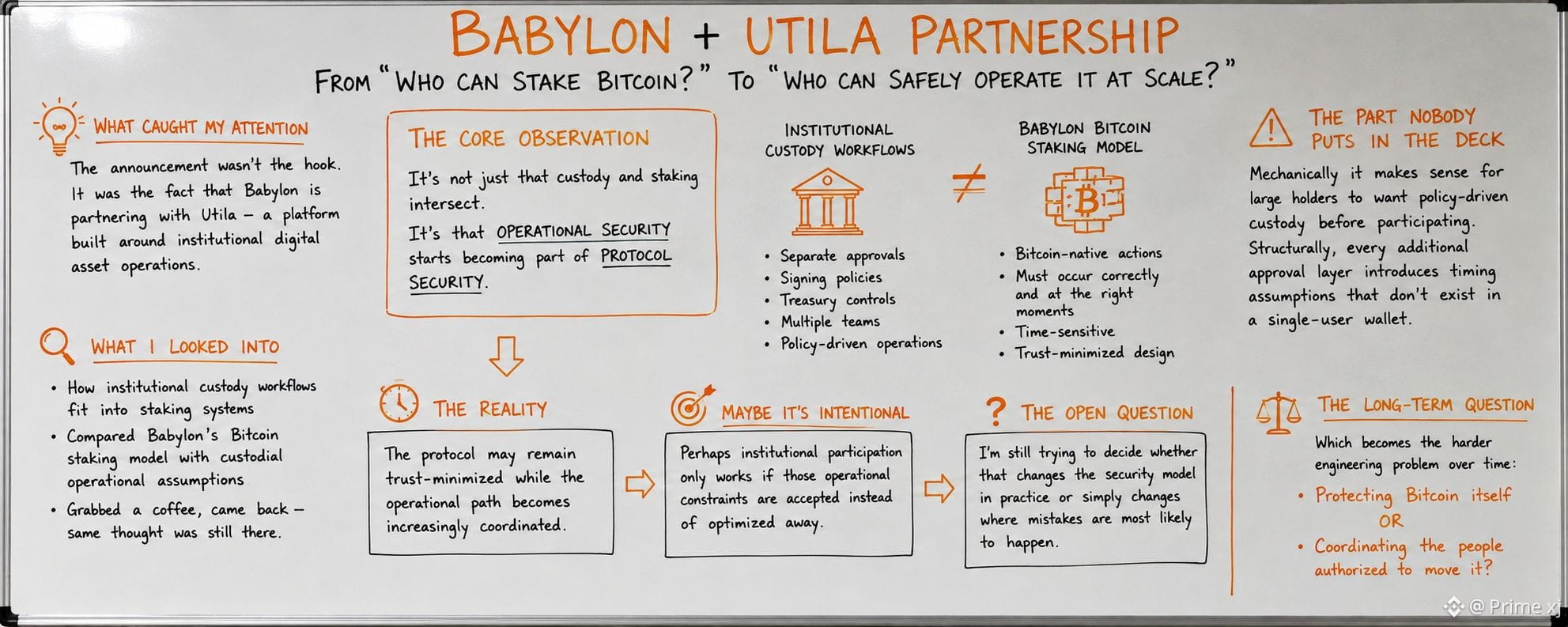
شيءٌ واحدٌ جعلني أتوقف عن التمرير. لم تكن الإعلانات نفسها هي ما جذب انتباهي. بل حقيقة أن «بابل» تتعاون مع «Utila»، وهي منصة بُنيت حول عمليات الأصول الرقمية المؤسسية. وهذا غيّر السؤال من «من يستطيع رهن البيتكوين؟» إلى «من يمكنه تشغيله بأمان على نطاق واسع؟»
بعد ذلك بحثت في كيفية ملاءمة سير عمل الحفظ المؤسسي المعتاد مع أنظمة الرهن بدلًا من قراءة الإعلان مرةً أخرى. ثم عدت إلى مقارنة التوثيق الخاص بنموذج رهن البيتكوين لدى «بابل» مع الافتراضات التشغيلية التي تكون لدى الجهات الحافظة عادةً. أحضرت قهوة، وعدت، وما زالت الفكرة نفسها موجودة.
الجزء المثير للاهتمام ليس فقط أن الحفظ والرهن يتقاطعان الآن. بل إن الأمن التشغيلي يبدأ في أن يصبح جزءًا من أمن البروتوكول. تميل المؤسسات إلى فصل الموافقات وسياسات التوقيع وضوابط الخزينة بين فرق مختلفة. وفي المقابل، يعتمد «بابل» على تنفيذ إجراءات أصيلة على البيتكوين بشكل صحيح وفي اللحظات المناسبة. لا تتنافس هاتان المنظومتان، لكنهما ليست متطابقتين طبيعيًا أيضًا.
هذه هي النقطة التي لا يضعها أحد في الشريحة.
من الناحية الميكانيكية، من المنطقي أن يرغب كبار الحائزين في الحفظ المُدار بالسياسات قبل المشاركة. لكن بنيويًا، فإن كل طبقة موافقات إضافية تضيف افتراضات زمنية لا وجود لها في محفظة مستخدم واحد. قد يظل البروتوكول مُصمَّمًا على تقليل الحاجة إلى الثقة، بينما يصبح المسار التشغيلي أكثر تنسيقًا تدريجيًا.
ربما كان ذلك مقصودًا. وربما لا تعمل المشاركة المؤسسية إلا إذا تم قبول تلك القيود التشغيلية بدلًا من محاولة إزالتها وتحسينها بعيدًا. ما زلت أحاول أن أقرر ما إذا كان ذلك يغيّر نموذج الأمان فعليًا أم أنه يغيّر فقط المكان الذي تكون فيه الأخطاء مرجحة أكثر حدوثًا.
لا أزال أتساءل أيّهما يصبح مع الوقت مشكلة هندسية أصعب: حماية البيتكوين نفسه، أم تنسيق الأشخاص المصرح لهم بتحريكه؟
@BabylonLabs_io
#baby $BABY
بعد ذلك بحثت في كيفية ملاءمة سير عمل الحفظ المؤسسي المعتاد مع أنظمة الرهن بدلًا من قراءة الإعلان مرةً أخرى. ثم عدت إلى مقارنة التوثيق الخاص بنموذج رهن البيتكوين لدى «بابل» مع الافتراضات التشغيلية التي تكون لدى الجهات الحافظة عادةً. أحضرت قهوة، وعدت، وما زالت الفكرة نفسها موجودة.
الجزء المثير للاهتمام ليس فقط أن الحفظ والرهن يتقاطعان الآن. بل إن الأمن التشغيلي يبدأ في أن يصبح جزءًا من أمن البروتوكول. تميل المؤسسات إلى فصل الموافقات وسياسات التوقيع وضوابط الخزينة بين فرق مختلفة. وفي المقابل، يعتمد «بابل» على تنفيذ إجراءات أصيلة على البيتكوين بشكل صحيح وفي اللحظات المناسبة. لا تتنافس هاتان المنظومتان، لكنهما ليست متطابقتين طبيعيًا أيضًا.
هذه هي النقطة التي لا يضعها أحد في الشريحة.
من الناحية الميكانيكية، من المنطقي أن يرغب كبار الحائزين في الحفظ المُدار بالسياسات قبل المشاركة. لكن بنيويًا، فإن كل طبقة موافقات إضافية تضيف افتراضات زمنية لا وجود لها في محفظة مستخدم واحد. قد يظل البروتوكول مُصمَّمًا على تقليل الحاجة إلى الثقة، بينما يصبح المسار التشغيلي أكثر تنسيقًا تدريجيًا.
ربما كان ذلك مقصودًا. وربما لا تعمل المشاركة المؤسسية إلا إذا تم قبول تلك القيود التشغيلية بدلًا من محاولة إزالتها وتحسينها بعيدًا. ما زلت أحاول أن أقرر ما إذا كان ذلك يغيّر نموذج الأمان فعليًا أم أنه يغيّر فقط المكان الذي تكون فيه الأخطاء مرجحة أكثر حدوثًا.
لا أزال أتساءل أيّهما يصبح مع الوقت مشكلة هندسية أصعب: حماية البيتكوين نفسه، أم تنسيق الأشخاص المصرح لهم بتحريكه؟
@BabylonLabs_io
#baby $BABY