في البداية، افترضت أن الأمان المدعوم بالبيتكوين وحده كافٍ لجذب المطورين إلى نظام بيئي، وأن قوة الأمان كانت هي جوهر العرض.
لكن كلما نظرت إلى كيفية نمو الأنظمة البيئية فعليًا، بدا ذلك الافتراض ناقصًا. يختار المطورون بالفعل البنية التحتية الآمنة بدلًا من إعادة بناء الأمان من الصفر، ويُخفِّض بابيلون تلك التكلفة بشكل ملحوظ عبر السماح للسلاسل باستعارة أمن اقتصادي مشترك مدعوم بالبيتكوين بدلًا من التمهيد لمجموعة مُحدِّدين (validator) خاصة بها.
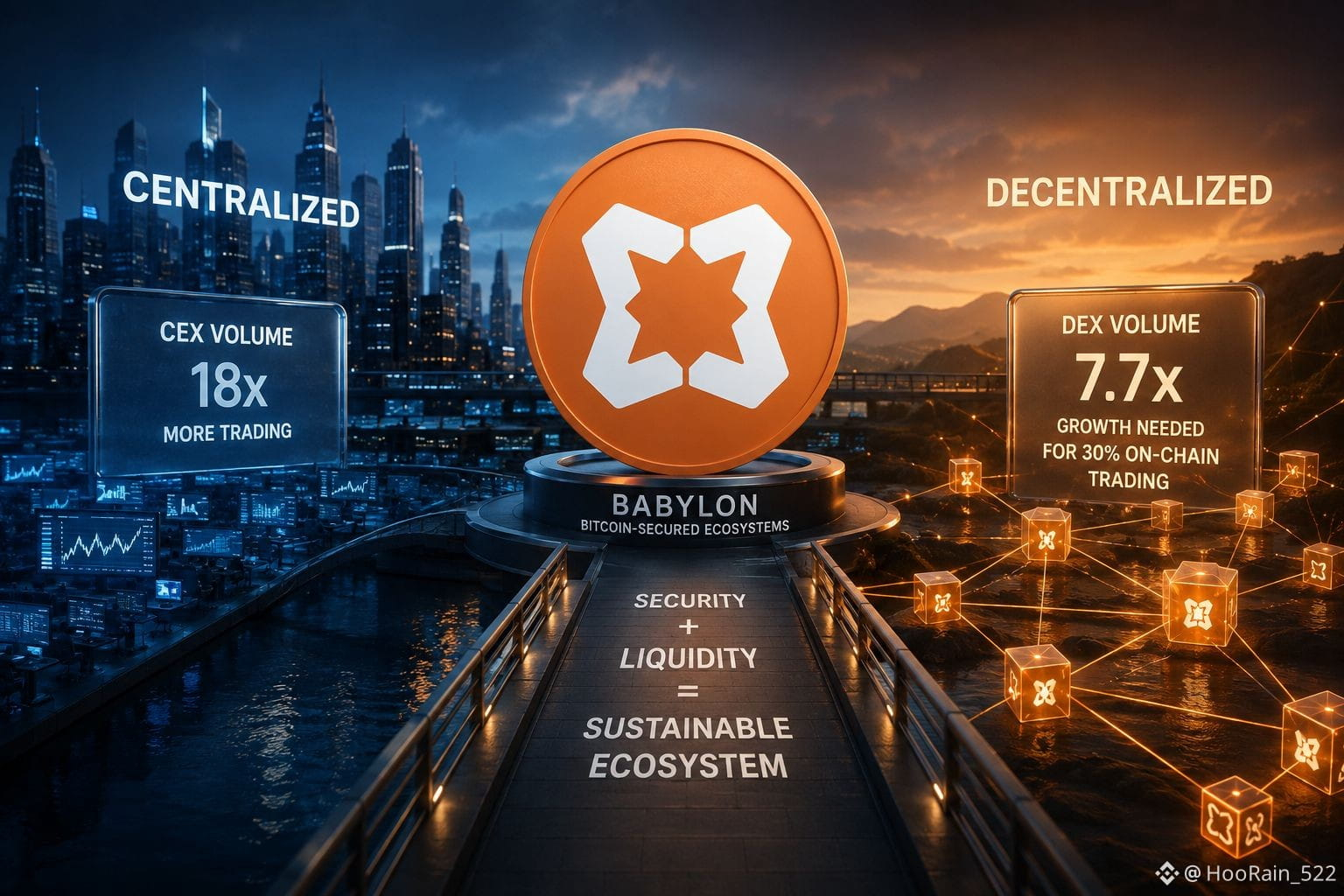
لكن الأمان لا يحل سوى نصف المشكلة. إذا كان معظم نشاط التداول ما يزال يحدث على منصات تداول مركزية، فإن النظام البيئي يظل يعتمد بشكل كبير على البنية التحتية خارج أسواقه داخل السلسلة.
هذه الفجوة تستحق المراقبة، إذ إن سيطرة حجم التداول في منصات CEX على نشاط DEX تشير إلى شيء غير مريح بشأن مدى واقعية التبني اللامركزي في الوقت الحالي.
الأرقام الحالية تجعل هذا التحدي أسهل في الرؤية.
وبعبارة أخرى، إذا ظل التداول عبر الجهات المركزية عند المستويات الحالية، فستحتاج أن ينمو نشاط DEX بنحو 7.7× تقريبًا قبل أن يحدث حوالي 30% من إجمالي التداول على السلسلة. وهذا يوضح مدى بدائية السيولة اللامركزية حتى الآن.
عندما تعمّق النظر في السيولة داخل السلسلة، فإنها تغيّر الصورة: انزلاق أقل، واكتشاف أفضل للأسعار، وتجربة لا يتعين على المستخدمين مغادرة السلسلة من أجلها. ولا تخدم السيولة المستخدمين فقط، بل تجعل البيئة بأكملها أكثر جاذبية للمطورين أيضًا، لأن التطبيقات تحتاج إلى سيولة موثوقة لتعمل بشكل جيد.
ينتهي الأمر بأن يعزز الأمان والسيولة بعضهما بعضًا: تبنّي المطورين يغذي السيولة، والسيولة تجذب المزيد من المطورين.
لذلك ربما لا تكون علامة بابيلون الفارقة الحقيقية هي عدد السلاسل أو أرقام الحجم، بل ما إذا كان يمكن للأمان المدعوم بالبيتكوين أن يستمر في النهاية في دعم اقتصاد داخل السلسلة الخاص به.
هل يمكن للأمان المدعوم بالبيتكوين في النهاية أن يُنشئ سيولة ذاتية الاستدامة، أم أن الأسواق العميقة ستعتمد دائمًا على الحوافز?
@BabylonLabs_io #baby $BABY
لكن كلما نظرت إلى كيفية نمو الأنظمة البيئية فعليًا، بدا ذلك الافتراض ناقصًا. يختار المطورون بالفعل البنية التحتية الآمنة بدلًا من إعادة بناء الأمان من الصفر، ويُخفِّض بابيلون تلك التكلفة بشكل ملحوظ عبر السماح للسلاسل باستعارة أمن اقتصادي مشترك مدعوم بالبيتكوين بدلًا من التمهيد لمجموعة مُحدِّدين (validator) خاصة بها.
لكن الأمان لا يحل سوى نصف المشكلة. إذا كان معظم نشاط التداول ما يزال يحدث على منصات تداول مركزية، فإن النظام البيئي يظل يعتمد بشكل كبير على البنية التحتية خارج أسواقه داخل السلسلة.
هذه الفجوة تستحق المراقبة، إذ إن سيطرة حجم التداول في منصات CEX على نشاط DEX تشير إلى شيء غير مريح بشأن مدى واقعية التبني اللامركزي في الوقت الحالي.
الأرقام الحالية تجعل هذا التحدي أسهل في الرؤية.
وبعبارة أخرى، إذا ظل التداول عبر الجهات المركزية عند المستويات الحالية، فستحتاج أن ينمو نشاط DEX بنحو 7.7× تقريبًا قبل أن يحدث حوالي 30% من إجمالي التداول على السلسلة. وهذا يوضح مدى بدائية السيولة اللامركزية حتى الآن.
عندما تعمّق النظر في السيولة داخل السلسلة، فإنها تغيّر الصورة: انزلاق أقل، واكتشاف أفضل للأسعار، وتجربة لا يتعين على المستخدمين مغادرة السلسلة من أجلها. ولا تخدم السيولة المستخدمين فقط، بل تجعل البيئة بأكملها أكثر جاذبية للمطورين أيضًا، لأن التطبيقات تحتاج إلى سيولة موثوقة لتعمل بشكل جيد.
ينتهي الأمر بأن يعزز الأمان والسيولة بعضهما بعضًا: تبنّي المطورين يغذي السيولة، والسيولة تجذب المزيد من المطورين.
لذلك ربما لا تكون علامة بابيلون الفارقة الحقيقية هي عدد السلاسل أو أرقام الحجم، بل ما إذا كان يمكن للأمان المدعوم بالبيتكوين أن يستمر في النهاية في دعم اقتصاد داخل السلسلة الخاص به.
هل يمكن للأمان المدعوم بالبيتكوين في النهاية أن يُنشئ سيولة ذاتية الاستدامة، أم أن الأسواق العميقة ستعتمد دائمًا على الحوافز?
@BabylonLabs_io #baby $BABY