
سيتذكر معظم الناس يوم الاثنين لأن مؤشر داو جونز أغلق عند مستوى قياسي آخر.
سيستذكر المستثمرون الأذكياء ذلك لأنه كشف السوق بهدوء عن مكان عودة الثقة.
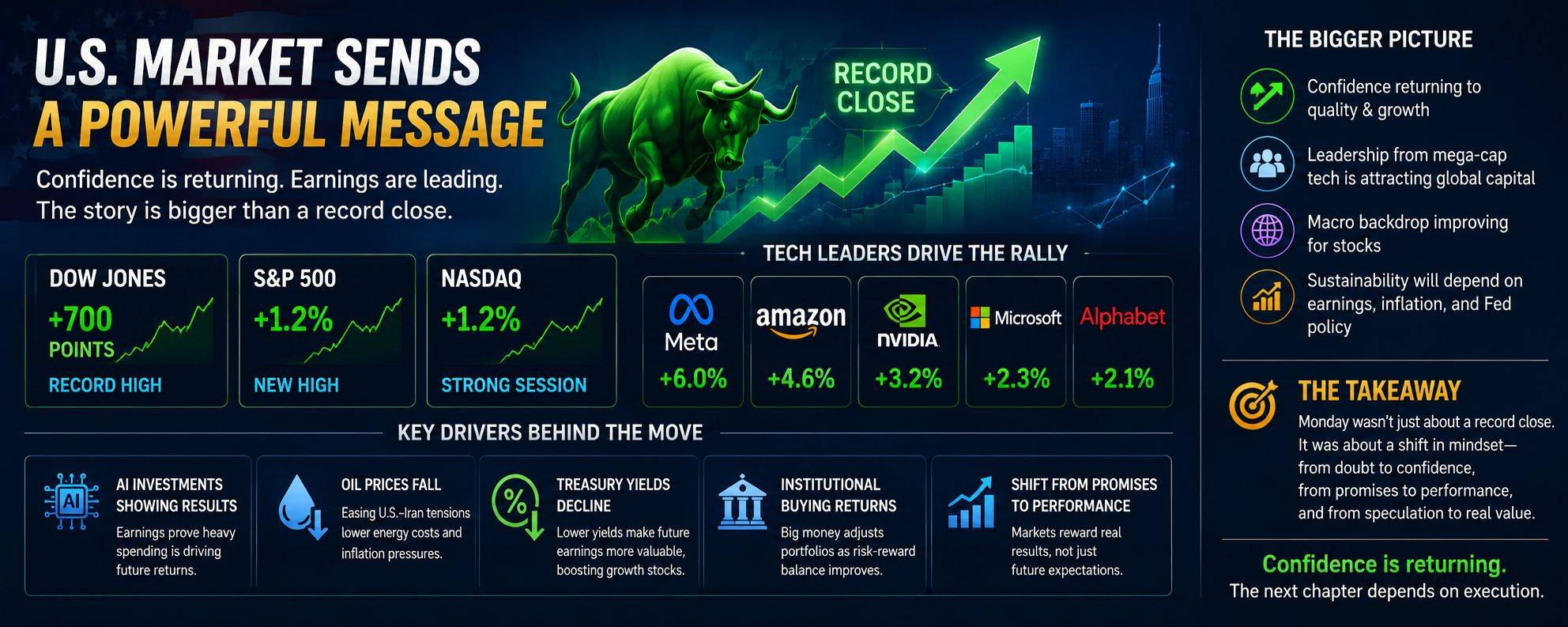
على السطح، بدا الأمر وكأنه مجرد موجة صعود بسيطة. فقد قفز مؤشر داو بما يقرب من 700 نقطة، وارتفع مؤشر S&P 500 إلى قمم جديدة، وسلّم ناسداك واحدة من أقوى جلساته منذ أسابيع. وقفزت أسهم ميتا بنسبة 6%، وارتفع سهم أمازون 4.6%، واستمر سهم نيفيديا في الصعود، بينما حققت مايكروسوفت وألفابت أيضًا مكاسب لافتة.
لكن الأسواق لا تتحرك بعنف كهذا دون سبب.
لم يكن الأمر مدفوعًا بالحماس وحده. بل كان مدفوعًا بتغير التوقعات.
قبل بضعة أسابيع فقط، كانت وول ستريت تسأل عما إذا كانت المليارات التي تُضخ في الذكاء الاصطناعي ستُسفر يومًا عن عوائد ملموسة. كان المستثمرون قلقين من أن شركات التكنولوجيا تنفق كثيرًا وبسرعة كبيرة. دفعت هذه المخاوف كثيرًا من أسهم الشركات المرتبطة بالذكاء الاصطناعي إلى الانخفاض خلال يوليو/تموز، وأوجدت شكوكًا حول ما إذا كان القطاع قد تقدم كثيرًا وبسرعة أكبر من اللازم.
أظهرت تداولات يوم الاثنين أن هذه السردية بدأت تتغير.
وفّرت تقارير الأرباح الأخيرة للمستثمرين شيئًا كانوا ينتظرونه: أدلة على أن الاستثمارات الثقيلة في مجال الذكاء الاصطناعي بدأت تدعم أداءً تجاريًا أقوى. بدلًا من التركيز فقط على ارتفاع التكاليف، بدأت السوق تركز على الأرباح المستقبلية. هذا التحول مهم لأن الأسواق لا تكافئ الإنفاق—بل تكافئ توقعات الأرباح الأعلى.
وصلت رسالة أخرى من الشركات التي تقود موجة الصعود.
لم تكن قطاعات دفاعية هي من حملت السوق. بل كانت أكبر شركات التكنولوجيا في العالم. عندما تتحرك Meta وAmazon وMicrosoft وAlphabet وNvidia معًا، فإنها لا تدفع المؤشرات فحسب للأعلى. بل تؤثر أيضًا في طريقة تفكير المستثمرين العالميين بشأن المخاطر. تمثل هذه الشركات حصة كبيرة من المؤشرات الرئيسية الأمريكية، ما يعني أن قوتها غالبًا ما تجذب مزيدًا من الأموال المؤسسية إلى السوق الأوسع.
وفي الوقت نفسه، أوجدت عدة عوامل اقتصادية كلية بهدوء الخلفية المثالية.
انخفضت أسعار النفط بشكل حاد بعد مؤشرات على إمكانية تخفيف التوترات بين الولايات المتحدة وإيران من خلال مفاوضات جديدة. تؤدي أسعار الطاقة الأقل إلى تقليل ضغوط التضخم وتحسين التوقعات لدى كل من المستهلكين والشركات. كما انخفضت عوائد سندات الخزانة، ما يجعل الأرباح المستقبلية للشركات المرتبطة بالنمو أكثر قيمة في السوق اليوم. قد تبدو هذه التغييرات صغيرة على حدة، لكنها مجتمعة خلقت ظروفًا شجعت المستثمرين على تحمل مخاطر أكبر.
هناك زاوية أخرى تستحق الاهتمام.
نادراً ما تتخذ المؤسسات الكبيرة قرارات عاطفية. فهي تعدّل المحافظ عندما يتغير التوازن بين المخاطر والفرص. بعد ضعف يوليو/تموز، قلّل كثير من المستثمرين المحترفين التعرض للتكنولوجيا وغيرها من قطاعات النمو المرتفع. ومن المرجح أن تكون الأرباح القوية للشركات، وانخفاض عوائد السندات، وتحسن المزاج الجيوسياسي قد دفعت الكثيرين إلى زيادة التعرض مرة أخرى.
يمكن أن يكون هذا النوع من الشراء تأثيره أكبر بكثير من حماس التجزئة، لأن رأس المال المؤسسي يتحرك بمليارات الدولارات، لا بآلافها.
ومع ذلك، يفهم المستثمرون ذوو الخبرة أن جلسة واحدة مميزة لا تضمن اتجاه الجلسة التالية.
شهدت الأسواق موجات صعود قوية من قبل، لكنها فقدت الزخم عندما عاد التضخم، أو ارتفعت عوائد السندات، أو زادت حالة عدم اليقين الجيوسياسي. لذلك فإن الأسابيع القادمة أكثر أهمية من يوم الاثنين نفسه. سيراقب المستثمرون عن كثب بيانات التضخم المقبلة، وتوقعات مجلس الاحتياطي الفيدرالي، وتوجيهات الشركات، ومدى استدامة نمو الأرباح المدفوع بالذكاء الاصطناعي.
إذا استمرت هذه العوامل في التحسن معًا، فقد تنتشر الثقة بعيدًا عن قطاع التكنولوجيا إلى قطاعات المال والصناعة وغيرها من القطاعات الدورية. سيكون ذلك علامة على سوق ثور أوسع وأكثر صحة، وليس مجرد موجة صعود مدعومة من عدد قليل من أسهم الشركات العملاقة.
أكبر درس من يوم الاثنين ليس أن الأسهم ارتفعت.
يتمثل الأمر في أن المستثمرين بدأوا في مكافأة الشركات التي يمكنها إثبات أن استثماراتها طويلة الأجل تخلق قيمة اقتصادية حقيقية. تتحول الأسواق من الوعود إلى الأداء.
ما إذا كانت هذه التطورات ستصبح أساسًا للتقدم الكبير التالي أو مجرد تعافٍ مؤقت سيعتمد على ما ستسلمه الشركات خلال الربعين أو الثلاثة الأرباع القادمة.
في الوقت الراهن، أوضح السوق الأمريكي شيئًا واحدًا: عادت الثقة إلى حيث تكون الأرباح الأقوى، ويتدفق رأس المال نحو الجودة بدلًا من المضاربة، ويصبح المستثمرون مرة أخرى على استعداد لدفع ثمن النمو الذي يعتقدون أنه يمكن أن يستمر.
إنها قصة أكثر أهمية بكثير من مجرد إغلاق قياسي واحد.