#baby $BABY
كنت أظن أن كل جسور بيتكوين مجرد جهة وصيّة مع تسويق أفضل. في النهاية، أليس هناك من يحمل المفاتيح؟
ثم توقفت عن النظر إلى من يتحكم في المحافظ، وبدأت في النظر إلى ما الذي تتحقق منه البروتوكولات فعليًا.
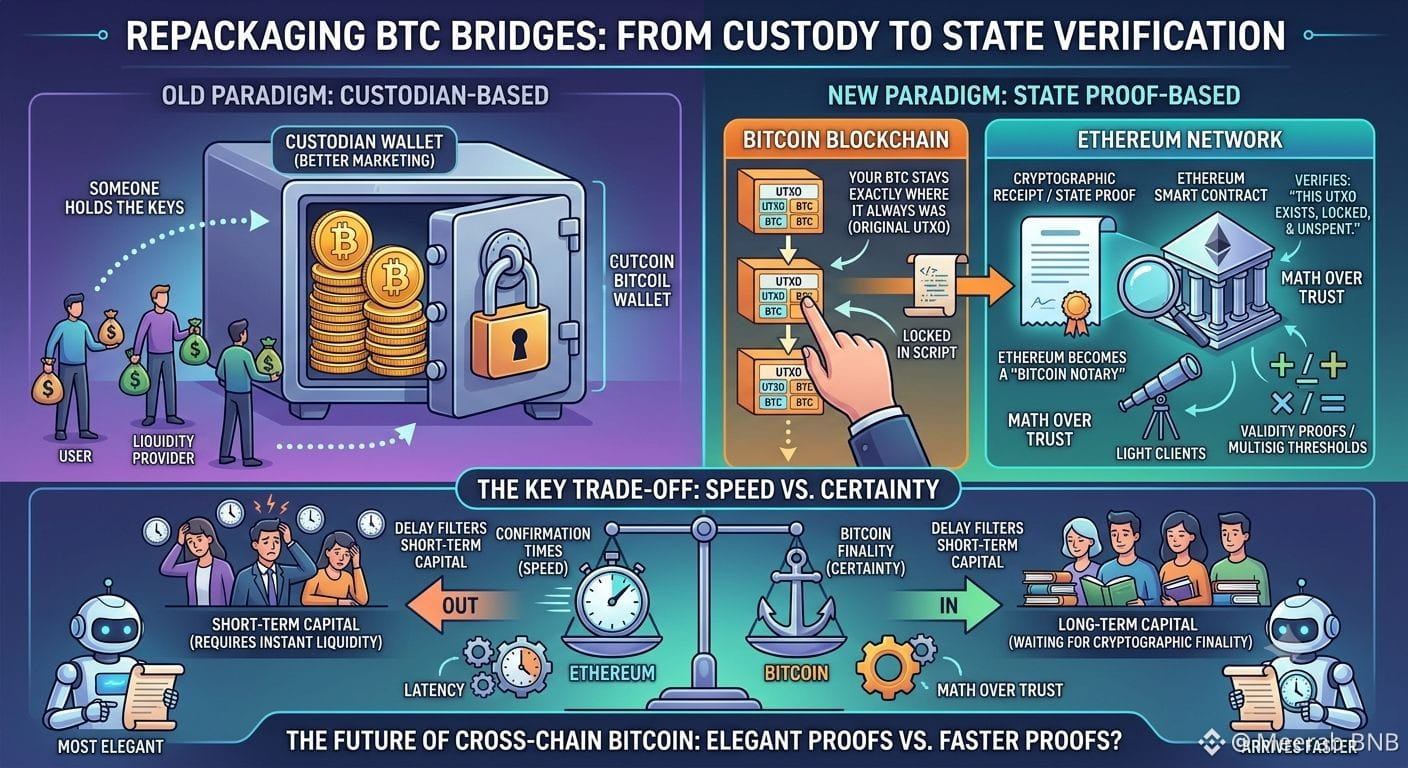
عندها أدركت الأمر. هذه الأنظمة لا تحاول نقل بيتكوينك إلى أي مكان. الـBTC تظل تمامًا حيث كانت دائمًا—في UTXO الأصلي الخاص بها على سلسلة بيتكوين. ما يتم إرساله إلى إيثيريوم ليس العملة نفسها. إنها برهان. إيصال تشفيري يقول: "إن هذا الـUTXO ما يزال موجودًا، وما يزال مقفلًا ضمن هذا الـscript، ولم يقم أحد بصرفه منذ آخر تحقق."
إيثيريوم لا يصبح حاملاً لبيتكوين. بل يصبح موثقًا/موثّقًا لبيتكوين. فهو يراقب حالة بيتكوين عبر عملاء خفاف (light clients)، أو إثباتات صحة (validity proofs)، أو عتبات multisig تكون أكثر تعلقًا بالـرياضيات منها بالثقة.
المقايضة الحقيقية ليست وصائيًا مقابل غير وصائي. إنها السرعة مقابل اليقين.
بيتكوين لديها الحسم النهائي (finality). إيثيريوم لديه أزمنة التأكيد. والجسر يجب أن يستمر في تحديث تلك الإثباتات على وتيرة ما. في أغلب الأحيان، لا يهم هذا التأخر كثيرًا. لكن عندما تبدأ الأسعار بالتمايل بقوة، تصبح تلك الدقائق القليلة كأنها أبدية.
وهنا الجزء الدقيق—هذا التأخير يغيّر حتى من يرغب في المشاركة. الأشخاص الذين يرون أن الانتظار حتى يتحقق الحسم النهائي تشفيريًا أمرٌ مقبول هم نوع مختلف عن أولئك الذين يحتاجون إلى سيولتهم فورًا. التقنية ليست فقط بإزالة الوسطاء. بل هي تقوم بفلترة رأس المال قصير الأجل بهدوء.
إذا كان مستقبل بيتكوين عبر السلاسل المتقاطعة يتمثل في إثبات الحالة بدلًا من نقل العملات من مكان لآخر، فأتساءل: هل سيكون البروتوكول الفائز هو الذي يمتلك أكثر نظام إثبات أناقة؟ أم الذي ببساطة يجعل وصول تلك الإثباتات أسرع قليلًا؟
@BabylonLabs_io $BABY
كنت أظن أن كل جسور بيتكوين مجرد جهة وصيّة مع تسويق أفضل. في النهاية، أليس هناك من يحمل المفاتيح؟
ثم توقفت عن النظر إلى من يتحكم في المحافظ، وبدأت في النظر إلى ما الذي تتحقق منه البروتوكولات فعليًا.
عندها أدركت الأمر. هذه الأنظمة لا تحاول نقل بيتكوينك إلى أي مكان. الـBTC تظل تمامًا حيث كانت دائمًا—في UTXO الأصلي الخاص بها على سلسلة بيتكوين. ما يتم إرساله إلى إيثيريوم ليس العملة نفسها. إنها برهان. إيصال تشفيري يقول: "إن هذا الـUTXO ما يزال موجودًا، وما يزال مقفلًا ضمن هذا الـscript، ولم يقم أحد بصرفه منذ آخر تحقق."
إيثيريوم لا يصبح حاملاً لبيتكوين. بل يصبح موثقًا/موثّقًا لبيتكوين. فهو يراقب حالة بيتكوين عبر عملاء خفاف (light clients)، أو إثباتات صحة (validity proofs)، أو عتبات multisig تكون أكثر تعلقًا بالـرياضيات منها بالثقة.
المقايضة الحقيقية ليست وصائيًا مقابل غير وصائي. إنها السرعة مقابل اليقين.
بيتكوين لديها الحسم النهائي (finality). إيثيريوم لديه أزمنة التأكيد. والجسر يجب أن يستمر في تحديث تلك الإثباتات على وتيرة ما. في أغلب الأحيان، لا يهم هذا التأخر كثيرًا. لكن عندما تبدأ الأسعار بالتمايل بقوة، تصبح تلك الدقائق القليلة كأنها أبدية.
وهنا الجزء الدقيق—هذا التأخير يغيّر حتى من يرغب في المشاركة. الأشخاص الذين يرون أن الانتظار حتى يتحقق الحسم النهائي تشفيريًا أمرٌ مقبول هم نوع مختلف عن أولئك الذين يحتاجون إلى سيولتهم فورًا. التقنية ليست فقط بإزالة الوسطاء. بل هي تقوم بفلترة رأس المال قصير الأجل بهدوء.
إذا كان مستقبل بيتكوين عبر السلاسل المتقاطعة يتمثل في إثبات الحالة بدلًا من نقل العملات من مكان لآخر، فأتساءل: هل سيكون البروتوكول الفائز هو الذي يمتلك أكثر نظام إثبات أناقة؟ أم الذي ببساطة يجعل وصول تلك الإثباتات أسرع قليلًا؟
@BabylonLabs_io $BABY