
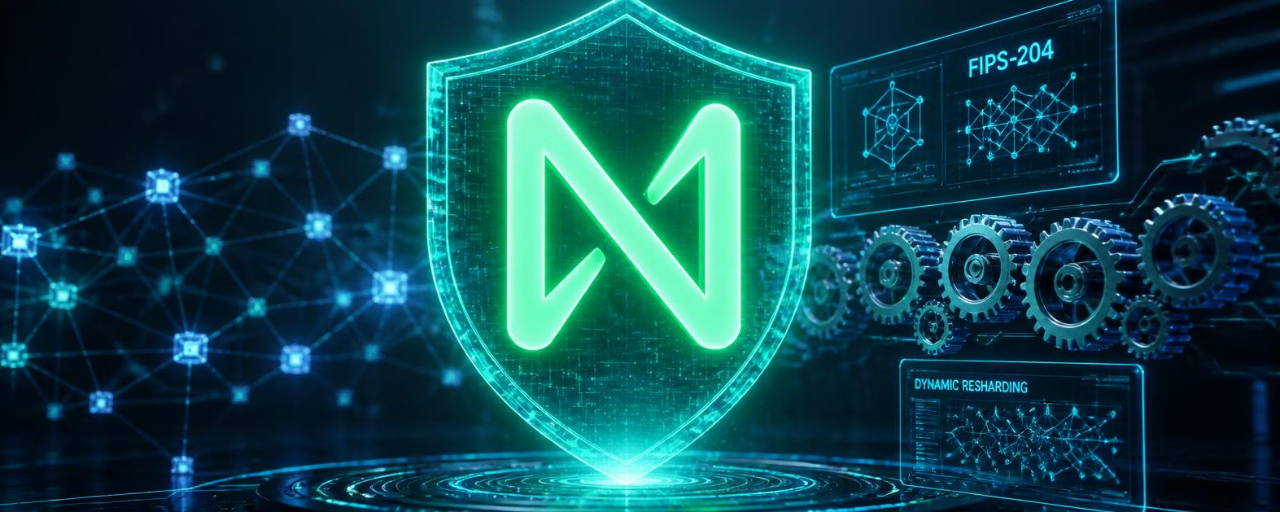
In a major step forward for blockchain security, $NEAR Protocol has launched Nearcore 2.13, introducing quantum-safe enhancements and dynamic resharding. 🚀 The upgrade integrates NIST-approved FIPS-204 signing, providing protection against potential quantum attacks, and simplifies capacity management with dynamic resharding. This positions NEAR as a robust competitor in the evolving blockchain landscape. Let's break down what this means. 🧐
The Upgrade: Quantum-Safe Security and Scalability 🛡️
Nearcore 2.13 brings two major upgrades that are now live on the NEAR mainnet:
FIPS-204 Signing: This integrates a quantum-safe authentication method, preparing the network against future quantum computing threats. This is a crucial step for long-term viability and security.
Dynamic Resharding: This automates throughput management, allowing the network to scale seamlessly without manual coordination. This improves scalability and performance.
Why It Matters: A Competitive Edge ⚔️
The upgrade positions NEAR Protocol as a forward-thinking blockchain that is preparing for the future.
Quantum Resistance: As quantum computing advances, the threat to current cryptographic standards grows. NEAR's integration of FIPS-204 signing ensures it remains secure against these future threats.
Scalability: Dynamic resharding simplifies capacity management, making NEAR more attractive to developers and users who need high throughput and low transaction fees.
The Market Impact: A Catalyst for Growth? 📈
While the token price shows no recent movement, the upgrade could lead to increased interest and activity in the coming days. The introduction of quantum-safe technology and improved scalability may attract both developers and users looking for secure and efficient blockchain solutions.
Key Levels to Watch 🎯
User Engagement: Increased activity following the upgrade could signal a positive response.
Transaction Volumes: Higher volumes would indicate growing adoption and network usage.
Final Takeaway
NEAR Protocol's Nearcore 2.13 upgrade is a significant development that enhances both security and scalability. The integration of quantum-safe technology is a forward-looking move that could give NEAR a competitive edge. The network's ability to attract developers and users will be key to its long-term success.
Will NEAR Protocol's quantum-safe upgrade be a game-changer? Let me know your thoughts below! 👇