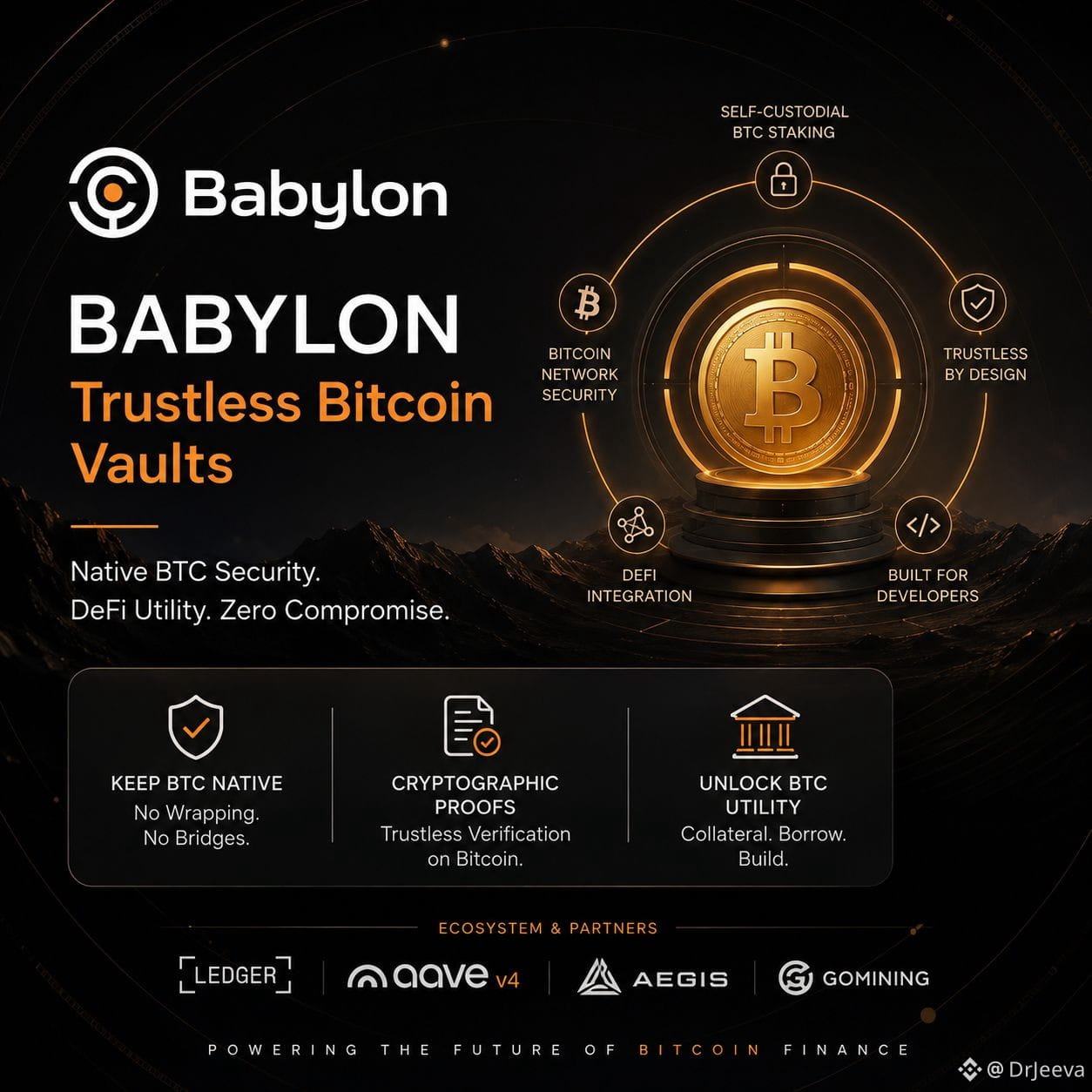
لقد تحرك السوق مجددًا بشكل جانبي، لذا انتهى بي الأمر إلى قضاء مساءي في القراءة عن Babylon بدلًا من التحديق في مخططات الأسعار. كنت أعرف ذلك مسبقًا في سياق إيداع/تخزين Bitcoin (st staking)، لكنني كنت أتساءل هل دفعه الأخير حول Trustless Bitcoin Vaults كان فعلًا يحل مشكلة أم أنه مجرد يمنح BTCFi سردية جذابة أخرى.
في البداية توقعت تصميمًا جديدًا لنسخة “مغلّفة” من البيتكوين مع علامة تجارية مختلفة. كلما قرأت أكثر، أدركت أن الفريق يحاول إبقاء البيتكوين على شبكة البيتكوين مع جعله قابلًا للاستخدام كضمان عبر إثباتات تشفيرية بدلًا من الجسور التقليدية أو الوسطاء/الحُفظاء. بدا ذلك أكثر طموحًا مما كنت أظنه في البداية.
الجزء الذي جعلني أتوقف فعلًا هو عمل Babylon مع Aave v4. بدلًا من نقل البيتكوين نفسه، يقدم النظام تمثيلًا مخصصًا للتطبيق للـ BTC المُقفل، بينما تبقى العملات الحقيقية خاضعة لنموذج الأمان الخاص بالبيتكوين. كما أن دعم Ledger وخطط الإقراض بسعر ثابت عبر تعاون Aegis توحي بأنهم يفكرون في ما هو أبعد من حالة استخدام واحدة.
ومع ذلك، هذه هي بالضبط النقطة التي ينطلق عندها شكوكي. فقد رأى حاملو البيتكوين عبر السنوات الكثير من ادعاءات “ثقة-معدومة” (trustless)، لذا ستعتمد عملية التبني الحقيقي على مدى أداء هذه التصاميم تحت الضغط وعلى ما إذا كان المطورون يبنون فعلًا حولها.
بالنسبة للأشخاص الذين يرفضون لفّ/تغليف BTC لكنهم ما زالوا يريدون أن يعمل بجهد أكبر، أصبحت Babylon واحدة من أكثر التجارب إثارة للاهتمام. اهتمامي أقل بالوعود وأكثر بمراقبة ما إذا كان الطلب الحقيقي على الاقتراض، والتكاملات، والأمن على المدى الطويل يمكن أن يواكب الرؤية.
@BabylonLabs_io
#baby $BABY
في البداية توقعت تصميمًا جديدًا لنسخة “مغلّفة” من البيتكوين مع علامة تجارية مختلفة. كلما قرأت أكثر، أدركت أن الفريق يحاول إبقاء البيتكوين على شبكة البيتكوين مع جعله قابلًا للاستخدام كضمان عبر إثباتات تشفيرية بدلًا من الجسور التقليدية أو الوسطاء/الحُفظاء. بدا ذلك أكثر طموحًا مما كنت أظنه في البداية.
الجزء الذي جعلني أتوقف فعلًا هو عمل Babylon مع Aave v4. بدلًا من نقل البيتكوين نفسه، يقدم النظام تمثيلًا مخصصًا للتطبيق للـ BTC المُقفل، بينما تبقى العملات الحقيقية خاضعة لنموذج الأمان الخاص بالبيتكوين. كما أن دعم Ledger وخطط الإقراض بسعر ثابت عبر تعاون Aegis توحي بأنهم يفكرون في ما هو أبعد من حالة استخدام واحدة.
ومع ذلك، هذه هي بالضبط النقطة التي ينطلق عندها شكوكي. فقد رأى حاملو البيتكوين عبر السنوات الكثير من ادعاءات “ثقة-معدومة” (trustless)، لذا ستعتمد عملية التبني الحقيقي على مدى أداء هذه التصاميم تحت الضغط وعلى ما إذا كان المطورون يبنون فعلًا حولها.
بالنسبة للأشخاص الذين يرفضون لفّ/تغليف BTC لكنهم ما زالوا يريدون أن يعمل بجهد أكبر، أصبحت Babylon واحدة من أكثر التجارب إثارة للاهتمام. اهتمامي أقل بالوعود وأكثر بمراقبة ما إذا كان الطلب الحقيقي على الاقتراض، والتكاملات، والأمن على المدى الطويل يمكن أن يواكب الرؤية.
@BabylonLabs_io
#baby $BABY