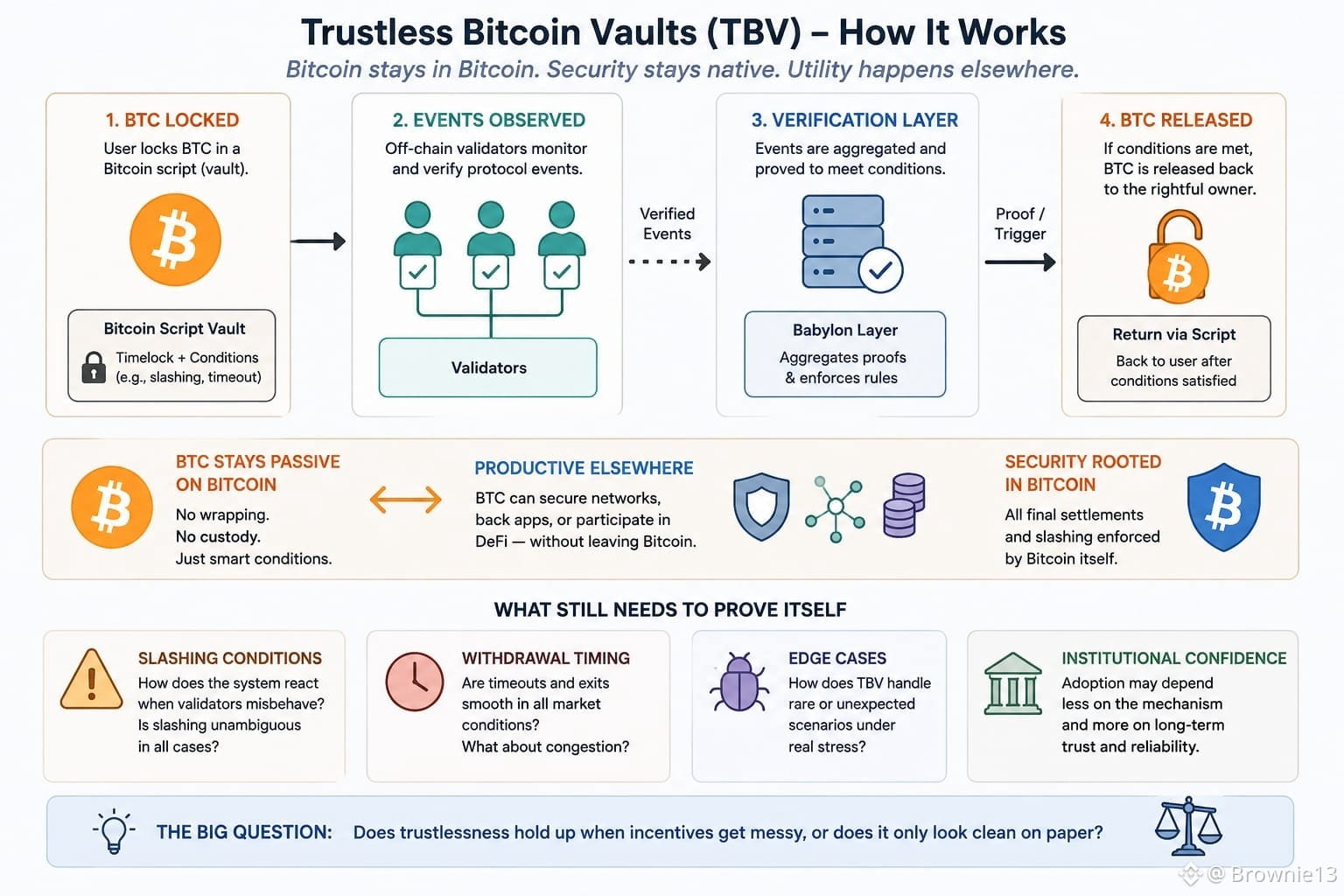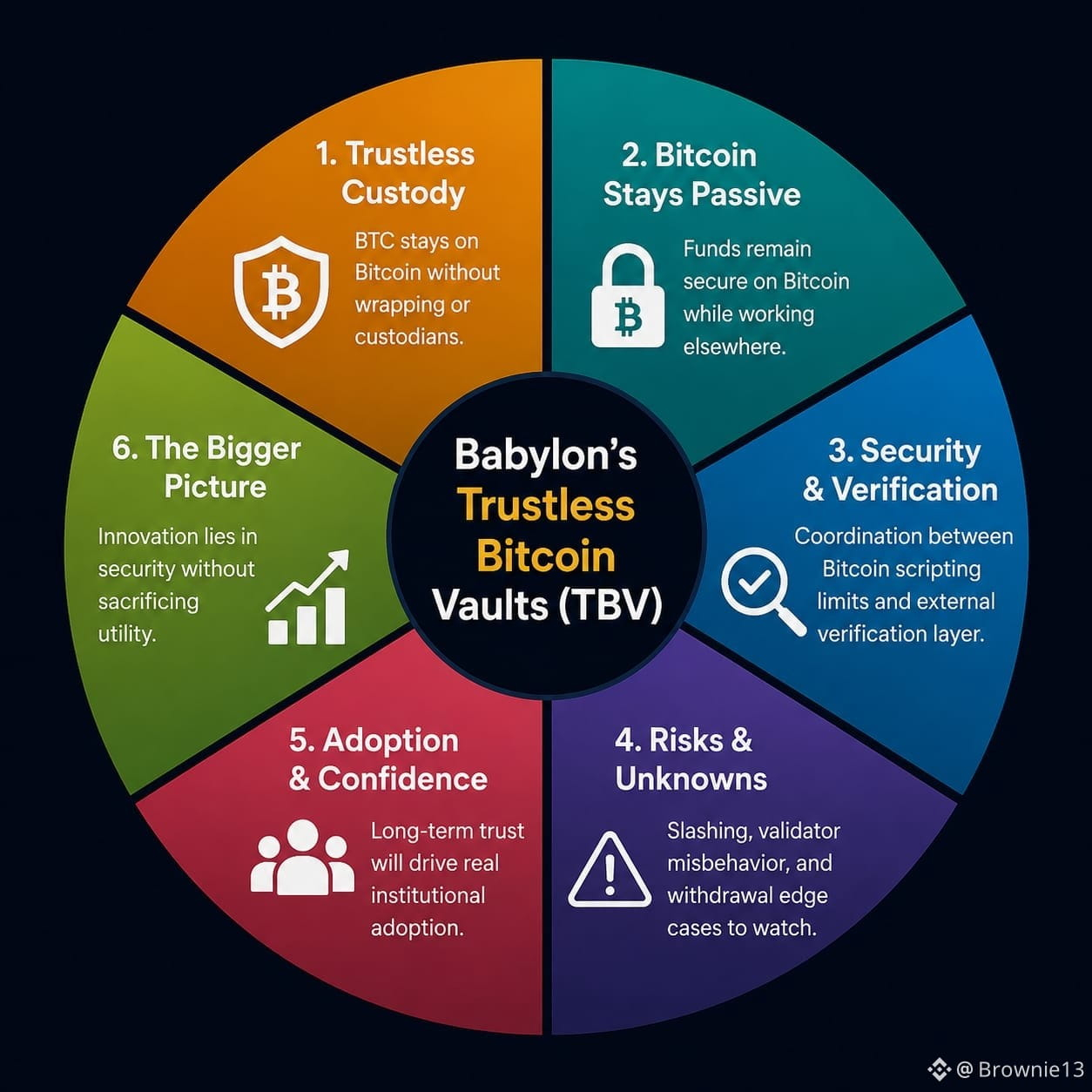
كنت أبحث في كيفية تعامل صناديق بيتكوين غير الموثوقة في بابل فعليًا مع مشكلة الحفظ (custody)، ولاحظت شيئًا جعلني أتوقف بدلًا من المضي بسرعة. تبدو فكرة قفل BTC دون لفّه (wrapping) أو الثقة بوصيّ (custodian) بسيطة عندما تقولها بسرعة، لكن كلما تعمقت أكثر أدركت كم يتطلب ذلك من تنسيق بين حدود البرمجة النصية (scripting) الخاصة ببيتكوين نفسها وأي طبقة تحقق (verification layer) تجلس فوقها.
ما يبدو مثيرًا للاهتمام هو الطريقة التي تحاول بها TBV إبقاء بيتكوين في وضع سلبي (passive) مع أن تكون منتجة في مكان آخر أيضًا، وكأن الأصل موجود دون أن يتحرك فعليًا. أحيانًا أتساءل ما إذا كان هذا هو مكان الابتكار الحقيقي، ليس في العائد (yield) أو عمليات التكامل (integrations)، بل في إقناع حاملي BTC بأن الأمان لا ينبغي التضحية به من أجل المنفعة. هذا يجعلني أفكر في عدد المحاولات السابقة التي وعدت بشيء مشابه وفشلت بهدوء عندما اختبر رأس المال الحقيقي تلك الافتراضات.
ومع ذلك، لست متأكدًا تمامًا من كيفية تصرف ذلك تحت الضغط. قد تكشف شروط الإيقاع (Slashing)، أو سوء سلوك المُدرِكين/المُتحققين (validators)، أو حالات الحافة في توقيت عمليات السحب عن شقوق لا تظهر في الأسواق الهادئة. السؤال الذي يخطر في بالي هو ما إذا كانت اللامركزية/عدم الاعتماد على الثقة (trustlessness) تظل قائمة بالطريقة نفسها عندما تتعقد الحوافز، أم أنها تبدو نظيفة فقط في الوثائق.
من الخارج، قد يعتمد تبنّي الأمر بدرجة أقل على الآلية وأكثر على ما إذا كانت المؤسسات تشعر بالراحة الكافية للاعتماد عليها على المدى الطويل. من أين تأتي الثقة فعلًا هنا؟
البنية تبدو مدروسة اليوم، لكن كيفية تصرفها لاحقًا ما زالت سؤالًا مفتوحًا... على أي حال، الأيام ستخبر👍
@BabylonLabs_io
#baby $BABY
ما يبدو مثيرًا للاهتمام هو الطريقة التي تحاول بها TBV إبقاء بيتكوين في وضع سلبي (passive) مع أن تكون منتجة في مكان آخر أيضًا، وكأن الأصل موجود دون أن يتحرك فعليًا. أحيانًا أتساءل ما إذا كان هذا هو مكان الابتكار الحقيقي، ليس في العائد (yield) أو عمليات التكامل (integrations)، بل في إقناع حاملي BTC بأن الأمان لا ينبغي التضحية به من أجل المنفعة. هذا يجعلني أفكر في عدد المحاولات السابقة التي وعدت بشيء مشابه وفشلت بهدوء عندما اختبر رأس المال الحقيقي تلك الافتراضات.
ومع ذلك، لست متأكدًا تمامًا من كيفية تصرف ذلك تحت الضغط. قد تكشف شروط الإيقاع (Slashing)، أو سوء سلوك المُدرِكين/المُتحققين (validators)، أو حالات الحافة في توقيت عمليات السحب عن شقوق لا تظهر في الأسواق الهادئة. السؤال الذي يخطر في بالي هو ما إذا كانت اللامركزية/عدم الاعتماد على الثقة (trustlessness) تظل قائمة بالطريقة نفسها عندما تتعقد الحوافز، أم أنها تبدو نظيفة فقط في الوثائق.
من الخارج، قد يعتمد تبنّي الأمر بدرجة أقل على الآلية وأكثر على ما إذا كانت المؤسسات تشعر بالراحة الكافية للاعتماد عليها على المدى الطويل. من أين تأتي الثقة فعلًا هنا؟
البنية تبدو مدروسة اليوم، لكن كيفية تصرفها لاحقًا ما زالت سؤالًا مفتوحًا... على أي حال، الأيام ستخبر👍
@BabylonLabs_io
#baby $BABY